Pencil Cactus
Euphorbia tirucalli
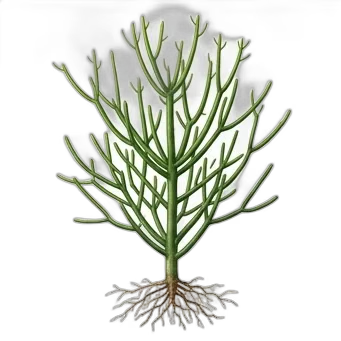
The morning I first pruned a greenhouse-grown Euphorbia tirucalli, I learned a lesson about its caustic defense mechanism the hard way. I reached past a crowded bench of succulents without wearing gloves, nicked a stem, and spent the rest of the afternoon frantically washing my hands after a drop of milky latex grazed my skin and started to burn. That tactile, unforgettable encounter taught me respect for a plant that looks deceptively delicate. Beneath those slender, pencil-thin green branches lies a rugged, architectural survivor capable of transforming an indoor corner or a xeriscaped garden into a striking focal point.
1. Botanical Overview & Natural Habitat

The plant's common name stems from its cylindrical, pencil-thick, succulent branches that radiate upward and outward. True leaves are tiny, ephemeral, and drop off shortly after emerging to minimize water loss, leaving the green stems to perform photosynthesis—a process known as stem assimilation. During times of drought or intense seasonal heat, the tips of the stems can flush a striking coppery-orange or coral hue, earning it another popular moniker: the Firestick Plant.
Understanding its native ecology dictates how we cultivate it. Euphorbia tirucalli thrives in poor, rocky, well-draining soils under intense, unfiltered solar radiation. It has adapted to survive months of drought by storing moisture in its spongy interior stem tissues. For a deeper dive into the taxonomy and structural adaptations of the wider Euphorbia genus, you can consult the Royal Botanic Gardens, Kew.
2. Essential Environmental & Care Requirements
Replicating an African semi-arid environment indoors or in a mild-winter garden requires precision. Light, temperature, and moisture are the three pillars of Euphorbia tirucalli health.
| Parameter | Optimal Condition | Common Mistake | Why It Matters |
|---|---|---|---|
| Light | 6+ hours of direct sun daily | Placing in a dim interior corner | Low light causes etiolation, weak, pale stems, and eventual root rot. |
| Temperature | 65°F to 85°F (18°C to 29°C) | Exposing to frost or drops below 35°F (2°C) | Freezing temperatures turn the succulent stems to mush as cellular walls rupture. |
| Soil | Gritty, fast-draining cactus mix (pH 6.0–7.5) | Using heavy potting soil with high peat content | Dense soil retains moisture too long, suffocating roots and inviting fungal pathogens. |
| Watering | Soak-and-dry method when dry to 3 inches (7.6 cm) | Frequent, shallow sips | Inconsistent moisture encourages shallow root development and structural instability. |
Light is paramount. If you are growing your Pencil Cactus indoors, place it directly in front of a south-facing or west-facing window. Without bright light, the new growth becomes spindly, pale, and structurally weak. Outdoors, it thrives in USDA Hardiness Zones 10 through 11. If you live in a cooler climate, treat it as a container plant that spends summers on a sunny patio and winters indoors.
Watering must follow a strict rhythm. Always check the soil depth with your finger or a moisture meter; if the top 3 inches (7.6 cm) are bone dry, it is time to irrigate. Drench the pot until water runs freely through the drainage holes, then empty the saucer immediately. Never let the pot sit in standing water.
💡 Pro-Tip: If you notice your Pencil Cactus turning a vibrant, stressed coral-orange color during late autumn or early winter, do not panic. This is often a healthy response to cooler night temperatures (around 50°F to 55°F / 10°C to 13°C) combined with bright winter sun, rather than a sign of distress.
3. Step-by-Step Cultivation, Feeding & Propagation
Propagation of Euphorbia tirucalli is remarkably reliable if done with the proper safety precautions. Because the plant produces a toxic latex sap, you must wear nitrile or heavy rubber gloves, protective eyewear, and long sleeves before making any cuts. For additional guidance on safe handling and toxic plant management, review resources provided by the University of Florida IFAS Extension.
Follow this step-by-step protocol to propagate your Pencil Cactus from stem cuttings:
- Select Healthy Stock: Choose a firm, disease-free branch tip measuring 4 to 6 inches (10 to 15 cm) long during the active growing season in spring or early summer.
- Make a Clean Cut: Using a sharp, sterilized pruning shear, make a swift, clean cut at a 45-degree angle.
- Stop the Sap Flow: Immediately spray the cut end of the mother plant and the cutting with lukewarm water to wash away the dripping latex, or press a damp paper towel against the wound.
- Callus the Wound: Place the cutting in a warm, dry, shaded location for 7 to 14 days. A hard, protective callus must form over the cut surface to prevent rot when planted.
- Prepare the Medium: Fill a small terracotta pot with a pre-moistened mixture of 50% perlite and 50% cactus potting soil.
- Plant the Cutting: Insert the callused end of the cutting 1 to 1.5 inches (2.5 to 3.8 cm) deep into the dry-to-touch medium. Tamp the soil gently around the base for stability.
- Rooting Phase: Place the pot in bright, indirect light. Withhold water for the first 14 days, then begin light misting. Roots will typically establish within 30 to 45 days, at which point you can transition to the standard soak-and-dry watering regime.
Fertilization should be approached with restraint. Euphorbia tirucalli is not a heavy feeder. Apply a balanced, water-soluble succulent fertilizer diluted to half-strength once every 4 weeks strictly during the active growing season (spring through mid-summer). Cease all fertilization entirely in autumn and winter when the plant enters dormancy.
4. Common Problems, Pests & Troubleshooting
Even resilient succulents run into trouble when environmental parameters drift off target. Here is how to diagnose and correct the most common issues:
- Stem Rot and Mushy Base: Caused by overwatering or dense, poorly draining soil. To save the plant, slice away all rotten, brown, or translucent tissue with a sterile blade until you hit clean, white, latex-bleeding wood. Let the remaining healthy sections callus for 10 days and replant in fresh, gritty soil.
- Leaf and Stem Drop: A minor drop of old needles is normal, but rapid dropping of green branches usually points to sudden temperature drops, drafts from an AC vent, or severe underwatering. Check your environmental conditions and stabilize the ambient temperature above 60°F (15°C).
- Mealybugs and Scale: These sap-sucking insects hide in the tight joints between cylindrical branches. Look out for white, cottony masses or small, immobile brown bumps. Treat infestations immediately by dabbing the pests with a cotton swab soaked in 70% isopropyl alcohol, or spray thoroughly with horticultural soap.
⚠️ Important Caution: The white milky latex sap of Euphorbia tirucalli is extremely toxic and irritating. It contains triterpene esters that cause severe contact dermatitis, temporary blindness if it enters the eyes, and intense pain if ingested. Always keep this plant well out of reach of curious pets and toddlers, and wash any tools immediately after pruning.

5. Frequently Asked Questions
Can a Pencil Cactus live outside year-round?
Yes, but only if you live in USDA Hardiness Zones 10 through 11, where temperatures never drop below freezing. In any colder climate, it must be grown in a container and brought indoors before the first autumn frost threatens.
How do I stop my Pencil Cactus from turning yellow?
Yellowing stems typically signal overwatering, root rot, or a lack of sufficient sunlight. Check the soil moisture immediately. If the soil is wet, withhold water and improve drainage. If the soil is dry, ensure the plant is receiving at least 6 hours of direct sun daily.
Is the Pencil Cactus poisonous to cats and dogs?
Yes. The milky sap is highly toxic to domestic pets. Ingestion can cause severe mouth and stomach irritation, drooling, vomiting, and diarrhea. Skin or eye contact with the sap leads to painful inflammation, making placement a critical consideration in pet-friendly homes.
How often should I repot a mature Pencil Cactus?
Repotting is generally necessary only every 2 to 3 years in spring, or when you notice roots circling out of the drainage holes. Choose a pot that is only 1 to 2 inches (2.5 to 5 cm) wider in diameter than the previous one, as excess soil volume retains unwanted moisture and stresses the root system.
📋 Table of Contents ▼ Click to expand
Tags: