Peace Lily
Spathiphyllum wallisii
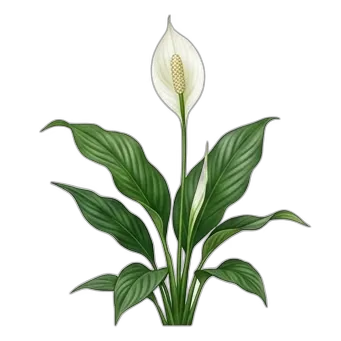
A drooping Spathiphyllum with leaves draped over a ceramic pot like wet laundry and greenish-brown white spathes often suffers from roots suffocating in a waterlogged peat bog rather than needing water. Trimming rotting root systems, flushing the soil, and relocating the specimen ten feet back from a blazing south-facing window revives the plant, proving the Peace Lily is not fragile but simply honest about its boundaries.
1. Botanical Overview & Natural Habitat

Unlike true lilies (Lilium species), the Peace Lily is not a bulbous plant. Instead, it grows from a subterranean rhizome system that produces a dense cluster of glossy, dark green, lanceolate leaves. These leaves measure between 12 to 24 inches (30 to 60 cm) in length and feature prominent midribs designed to channel heavy tropical rainfall down to the root zone.
The iconic bloom of the Spathiphyllum is actually a specialized inflorescence. What most people call the "flower" is a modified white, cream, or pale green leaf called a spathe. Wrapped around a central, finger-like spike known as a spadix, this spathe acts as a visual flag to attract insect pollinators in the dim understory of the rainforest. Over the course of 30 to 45 days, the pristine white spathe slowly transitions to a pale green before fading entirely as the plant redirects its energy toward vegetative growth.
Understanding this native habitat explains every single requirement of indoor cultivation. In the wild, these plants receive filtered, dappled sunlight, high ambient humidity, consistently moist but extraordinarily well-aerated organic soils, and temperatures that rarely drop below 60°F (15.6°C). When we bring them into our homes, our primary job as cultivators is to mimic these equatorial forest floor conditions as closely as possible.
2. Essential Environmental & Care Requirements
Mastering the indoor cultivation of Spathiphyllum wallisii requires balancing four core environmental pillars: light, water, temperature, and soil composition. Deviate too far from these parameters, and your plant will stage a dramatic protest.
| Parameter | Optimal Condition | Common Mistake | Why It Matters |
|---|---|---|---|
| Light | Bright, indirect light (75–150 foot-candles) | Direct, unshaded afternoon sun | Intense rays scorch the delicate leaf tissue, causing irreversible brown patches. |
| Watering | Water thoroughly when the top 1.5 to 2 inches (3.8 to 5 cm) dry out | Keeping the soil constantly soggy | Permanent saturation starves roots of oxygen, leading to Phytophthora root rot. |
| Temperature | 65°F to 80°F (18°C to 27°C) | Placement near cold drafts or heating vents | Temperatures below 55°F (12.8°C) stunt cellular growth and induce shock. |
| Soil Mix | Rich, chunky, acidic medium (pH 5.6–6.5) | Heavy, dense standard potting soil | Compacted media prevents adequate drainage and suffocates the rhizomes. |
Light management is where most growers err. While Peace Lilies are frequently marketed as "low light plants" that can survive in windowless offices, this is a botanical half-truth. They can survive in low light by shutting down active growth, but they will never truly thrive or produce their signature white spathes. Aim for an eastern exposure or set the plant 4 to 6 feet back from a southern or western window.
💡 Pro-Tip: If your Peace Lily refuses to bloom year after year, the culprit is almost always insufficient light. Move the container just a few feet closer to a natural light source, or supplement with a full-spectrum LED grow light for 10 to 12 hours daily, and you will typically trigger flower spike development within 60 days.
Watering technique dictates the longevity of your plant. Instead of adhering to a rigid calendar schedule—such as watering every Tuesday—always evaluate the physical moisture of the growing medium. Push your index finger 2 inches (5 cm) deep into the soil. If it feels dry and crumbly at that depth, it is time for a thorough soaking until water runs freely through the container's drainage holes.
Humidity is the final piece of the puzzle. Residential heating and air conditioning systems often strip indoor air down to 20% or 30% relative humidity, whereas Spathiphyllum demands 50% or higher. For comprehensive guidelines on managing indoor tropical humidity and plant health, consult the Royal Horticultural Society.
3. Step-by-Step Cultivation, Feeding & Propagation
Propagation of Spathiphyllum wallisii is remarkably straightforward because the plant naturally multiplies by expanding its root rhizomes and producing distinct offshoots, or "pups." Spring, right as the natural growing season commences, is the optimal time to divide and repot your specimens.
Step-by-Step Division and Repotting Sequence
- Unpot the Specimen: Gently ease the Peace Lily out of its existing container. Support the base of the stems with one hand while tapping the rim of the pot against a firm surface to loosen the root ball.
- Clean the Root Zone: Shake and gently tease away the old, depleted potting medium from the roots. Use your fingers to untangle the dense web of rhizomes so you can clearly see where individual offshoots originate.
- Inspect and Separate: Locate natural division points where smaller plantlets have formed their own distinct root systems attached to the main mother plant. Using a sharp, sterilized pruning knife or shears, cut cleanly through the connecting rhizome tissue, ensuring each new section retains at least 3 to 4 healthy leaves and an adequate share of roots.
- Prepare the New Medium: Mix a custom soil blend consisting of 40% high-quality organic compost or peat, 30% perlite or coarse horticultural pumice, and 30% orchid bark to ensure maximum aeration and moisture retention.
- Pot Upward: Place each division into a container just 1 to 2 inches (2.5 to 5 cm) larger in diameter than its root mass, keeping the crown at the exact same soil depth it previously enjoyed. Planting too deep invites stem rot; planting too high exposes vulnerable roots.
- Settle and Water: Water the newly potted divisions thoroughly to settle the soil around the roots, then place them in warm, bright, indirect light with high humidity while they recover from transplant shock.
Feeding should be approached with a "less is more" philosophy. Peace Lilies are light feeders compared to heavy-flowering outdoor annuals. During the active growing season from April through September, apply a balanced, water-soluble houseplant fertilizer diluted to half-strength once every 4 to 6 weeks. Never fertilize a dry plant or a specimen experiencing active stress, as concentrated mineral salts will quickly burn the sensitive root tips. Cease fertilization entirely from October through March when natural light levels drop and the plant enters a period of semi-dormancy.
4. Common Problems, Pests & Troubleshooting
Even with meticulous care, indoor environments present challenges. Recognizing the early warning signs of distress allows you to course-correct before minor issues become fatal.
- Sudden Wilting: If your Peace Lily dramatically collapses flat against the pot, check the soil. If it is bone dry, you are witnessing the plant's famous dramatic thirst response; it will typically rebound within 4 to 6 hours after a thorough soaking. If the soil is soaking wet and the leaves are limp, you are dealing with root rot.
- Tip Burn (Brown Leaf Tips): Crispy, brown leaf tips are almost universally caused by chemical sensitivity to fluoride or chlorine found in tap water, or by chronically low ambient humidity. Switch to distilled, reverse-osmosis, or collected rainwater, and increase local humidity using a pebble tray or mechanical humidifier.
- Yellowing Lower Leaves: An occasional yellowing of the oldest, lowest leaves is a natural part of the plant's life cycle. However, if multiple leaves turn yellow simultaneously, you are likely overwatering or experiencing poor drainage.
- Pest Infestations: While generally resilient, stressed Peace Lilies can attract common indoor pests like spider mites, mealybugs, and fungus gnats. Spider mites thrive in dry, warm air and leave fine webbing across the undersides of leaves.
⚠️ Important Caution: All parts of the Spathiphyllum plant contain microscopic needle-like crystals of calcium oxalate. If ingested by curious cats, dogs, or small children, these crystals cause immediate, intense burning and irritation of the oral cavity, excessive drooling, and difficulty swallowing. Keep your Peace Lily elevated and out of reach of household pets. For clinical data on plant toxicologies, reference resources provided by the ASPCA Animal Poison Control Center.

5. Frequently Asked Questions
Why is my Peace Lily drooping even though the soil is wet?
When a Peace Lily droops despite having wet soil, it is a textbook indicator of root rot. When the root system is suffocated by chronic overwatering or compacted soil, the roots decay and can no longer transport water up to the foliage, resulting in the exact same physical wilt as severe dehydration. Unpot the plant immediately, inspect the roots, prune away any black, mushy sections, and repot in fresh, well-aerated medium.
How often should I water my Peace Lily?
There is no universal calendar day for watering; instead, water your Peace Lily whenever the top 1.5 to 2 inches (3.8 to 5 cm) of the soil mix feels completely dry to the touch. Depending on your home's indoor climate, container size, and season, this typically translates to every 7 to 14 days during the active spring and summer months, and every 14 to 21 days during the winter dormancy period.
Can a Peace Lily survive in a room with no windows?
No plant can survive indefinitely in a completely windowless room without artificial intervention. While a Peace Lily can tolerate low-light office environments better than many tropical species, it requires either a source of natural indirect light or a dedicated horticultural LED grow light providing at least 100 foot-candles for 10 to 12 hours daily to maintain cellular health and carry out photosynthesis.
Why are the leaves on my Peace Lily turning yellow?
Yellowing foliage on a Spathiphyllum points to one of three primary stressors: overwatering, natural aging of the oldest bottom leaves, or nutrient deficiencies. If multiple leaves across the entire plant turn yellow and feel soft or limp, back off on your watering frequency. If only the lowest, oldest leaf turns yellow and drops while the rest of the plant looks vibrant, it is simply shedding old foliage to fuel new growth.
📋 Table of Contents ▼ Click to expand
Tags: