

Parlor Palm
Chamaedorea elegans
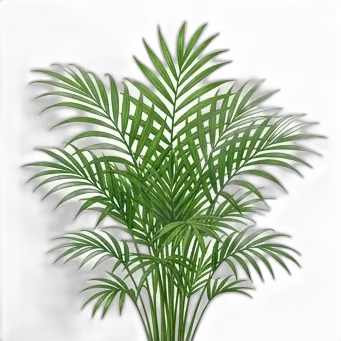
Late November brings bitter frost that coats cold frames in thick ice, while Chamaedorea elegans thrives beneath heavy timber benches in cramped 4-inch (10 cm) nursery pots with soft, feathery emerald fronds. These small palms adapt well to indoor conditions like drafty kitchen windowsills, making them enduring houseplants over many decades.

1. Botanical Overview & Natural Habitat
The Parlor Palm (Chamaedorea elegans), historically known as Neanthe bella, is a small, single-stemmed (though typically sold clumped in groups of 3 to 7 for fullness) understory palm belonging to the Arecaceae family. Endemic to the dense, damp rainforests of southern Mexico and Guatemala, this species has evolved specifically to thrive in the deep, perpetual shade of the jungle floor.
In its natural habitat, Chamaedorea elegans rarely receives direct sunlight. Instead, it captures the fleeting, dappled sunbeams—known as sunflecks—that filter through a multi-tiered rainforest canopy. This evolutionary history dictates every aspect of its care in our homes. Reaching a mature indoor height of 2 to 4 feet (60 to 120 cm) with a spread of 2 feet (60 cm), it grows at a famously deliberate pace, adding only a few inches of vertical height each year.
The fronds are pinnate, measuring up to 24 inches (60 cm) in length, featuring 12 to 20 narrow, lance-shaped leaflets arranged alternately along a slender, arching rachis. Mature specimens—usually those over 5 years old and receiving optimal care—will produce panicles of small, bright yellow, bead-like flowers on branching stems that emerge from the base of the lower fronds. Unlike many indoor palms that demand specialized tropical chambers, the Parlor Palm earned its domestic reputation during the Victorian era because it tolerates the dim, dry conditions of coal-heated parlors remarkably well.
For further botanical classification details, you can consult the Royal Horticultural Society Plant Finder.
2. Essential Environmental & Care Requirements
Growing Chamaedorea elegans successfully indoors requires matching its environment to the microclimate of a Mesoamerican rainforest floor. Let us examine the specific parameters.
| Parameter | Optimal Condition | Common Mistake | Why It Matters |
|---|---|---|---|
| Light | Bright, indirect light (east or north-facing window) | Direct afternoon sun (south-facing) | Direct rays scorch the delicate fronds, turning them bleached-white or crisp brown. |
| Watering | Allow top 1 to 2 inches (2.5 to 5 cm) to dry out | Keeping soil constantly soggy or bone dry | Overwatering rots the fine root system; underwatering causes irreversible tip burn. |
| Temperature | 65°F to 80°F (18°C to 27°C) | Placement near AC vents or freezing windows | Sudden drafts and temperatures below 50°F (10°C) shock the vascular system. |
| Humidity | 40% to 60% relative humidity | Parched indoor air below 30% | Low humidity encourages spider mites and causes leaflet margins to crisp. |
Light and Placement
Position your Parlor Palm within 3 to 5 feet (90 to 150 cm) of an east-facing window, or slightly further back from a bright west or south window where a sheer curtain diffuses the intensity. While it is frequently marketed as a "low light plant," this is a botanical misnomer. It survives in low light by shutting down active growth, but it thrives in gentle, ambient brightness.
Watering Protocols
Always water thoroughly until liquid drains from the base of the pot, then empty the saucer within 15 minutes. Never let the pot sit in standing water. During the active growing season (spring and summer), check the soil moisture every 7 days. In the dormant winter months, extend this interval to every 14 to 21 days as evaporation rates plummet.
💡 Pro-Tip: Tap water loaded with high levels of fluoride, chlorine, and sodium salts will inevitably cause brown, necrotic tips on your Parlor Palm fronds. If your municipal water is heavily treated, collect rainwater or let your tap water sit uncovered in an open bucket for 24 hours to let chlorine gas dissipate before irrigating.
3. Step-by-Step Cultivation, Feeding & Propagation
When it comes to repotting and feeding, less is decidedly more. Because the Parlor Palm possesses a delicate, slow-growing root system, aggressive root disturbance will send the plant into severe shock.
Step-by-Step Repotting Guide
- Timing: Select early spring (March or April) to repot, just as day lengths increase and the plant wakes from winter dormancy.
- Container Selection: Choose a container only 1 to 2 inches (2.5 to 5 cm) larger in diameter than the current pot. Ensure it features at least one functional drainage hole.
- Soil Formulation: Mix a custom blend of 60% high-quality peat- or coir-based potting soil, 20% perlite or pumice for aeration, and 20% organic compost or worm castings. The pH should be slightly acidic to neutral, between 6.0 and 6.5.
- Extraction: Gently invert the pot, tap the rim, and slide the root ball out. Tease apart any tightly circling roots at the bottom with your fingers, but do not aggressively bare-root the plant.
- Planting: Position the palm at the exact same soil depth it was previously growing at. Planting it too deep will smother the stem base and invite fungal rot.
- Settling: Fill in the gaps with your soil blend, firming gently around the root ball to eliminate air pockets. Water lightly to settle the soil, and withhold all fertilizer for 6 weeks to let new root hairs establish.
Feeding Regimen
Feed your Parlor Palm strictly during its active growing phase, from April through September. Dilute a balanced, water-soluble houseplant fertilizer (such as a 10-10-10 or 20-20-20 formulation with micronutrients) to one-quarter strength. Apply this weak solution every 4 weeks. Cease fertilization entirely between October and March, as nutrient build-up in dormant soil will chemically burn the root tips.
For additional cultivation insights rooted in university research, reference the University of Florida IFAS Extension guide on interior palms.
4. Common Problems, Pests & Troubleshooting
Even the most attentive growers encounter issues with indoor palms. Here is how to diagnose and correct them before they compromise the plant's health.
Yellowing Lower Fronds
If the oldest fronds at the very bottom of the plant turn completely yellow and eventually dry up, do not panic. This is a normal, natural aging process. Simply use sterile pruning shears to clip the spent frond cleanly off near the main stem. However, if multiple upper and middle fronds turn yellow simultaneously, you are likely overwatering or experiencing root compaction.
Brown Leaf Tips
Crispy, brown tips are almost universally caused by two environmental factors: low ambient humidity or chemical accumulation from tap water. Mist the foliage daily with distilled water, group the plant with other tropicals to raise local humidity, or invest in a cool-mist tabletop humidifier.
Pests: Spider Mites and Mealybugs
Dry indoor air is an open invitation for two-spotted spider mites (Tetranychus urticae). You will first notice a fine, dusty webbing on the undersides of the leaflets and a stippled, chlorotic appearance on the upper leaf surface. Mealybugs may also appear as white, cottony masses in the tight leaf axils.
- Treatment: Immediately isolate the affected plant. Wash the foliage thoroughly in a sink or shower using a handheld nozzle to physically blast away pests. Follow up by spraying every surface—especially leaf undersides—with insecticidal soap or horticultural neem oil diluted according to the manufacturer's directions. Repeat this treatment every 7 days for a 21-day cycle to break the hatching pest lifecycle.
⚠️ Important Caution: Never use commercial leaf shine products or heavy petroleum-based oils on your Parlor Palm. These chemical agents clog the stomata (the microscopic breathing pores on the leaves), suffocating plant tissue and causing rapid, irreversible blackening of the fronds.

5. Frequently Asked Questions
Is the Parlor Palm safe for cats and dogs?
Yes, Chamaedorea elegans is entirely non-toxic to cats, dogs, and horses. According to the ASPCA, ingestion of the fronds or stems will not result in systemic poisoning or toxic reactions, making it one of the premier pet-safe choices for interior landscaping.
Why are the tips of my Parlor Palm turning brown?
Brown tips are typically caused by low indoor humidity (under 30%), inconsistent watering schedules, or a buildup of fluoride and mineral salts from tap water in the potting soil. Increase ambient humidity using a humidifier and switch to distilled or filtered water for irrigation.
Can I grow a Parlor Palm in a room with no windows?
No. While it tolerates low-light conditions better than most tropical plants, it cannot perform photosynthesis in total darkness. If a room lacks natural windows, you must supply artificial illumination using a dedicated LED full-spectrum grow light positioned 12 to 18 inches (30 to 45 cm) above the plant for 10 to 12 hours daily.
How do I make my Parlor Palm grow faster?
You cannot force a Parlor Palm to defy its natural genetics; it is an inherently slow-growing understory species. However, you can optimize its growth rate by providing bright, indirect light, keeping ambient temperatures consistently between 70°F and 75°F (21°C to 24°C), and applying a quarter-strength balanced fertilizer every 4 weeks throughout the spring and summer.
📋 Table of Contents ▼ Click to expand
Tags:





