
Paperwhite
Narcissus papyraceus
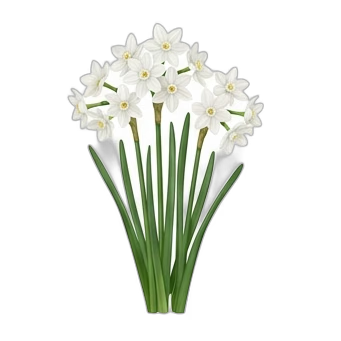
The air in my studio is currently heavy with that unmistakable, musky-sweet fragrance of Narcissus papyraceus. Three weeks ago, on a rainy Tuesday in November, I wedged a dozen bulbs shoulder-to-shoulder into a shallow, vintage stoneware bowl filled with river glass and water. Today, they stand like an army of crisp, ivory soldiers, their bright yellow cups glowing against slate-gray skies outside my window. I have forced thousands of bulbs over horticultural practice, but the paperwhite never fails to deliver instant botanical gratification right when the garden goes dormant.

1. Botanical Overview & Natural Habitat
Narcissus papyraceus, commonly known as the paperwhite, belongs to the Amaryllidaceae family. Unlike many of its bulbous cousins that require a long, freezing winter chilling period (vernalization) to trigger blooms, paperwhites hail from the warm, rocky, Mediterranean basin—stretching from Portugal to Greece and down into North Africa.
In their native habitat, these bulbs wake up with the autumn rains, developing roots and foliage through mild winters before bursting into clusters of fragrant, star-shaped white flowers in late winter or early spring (typically January through March). Because they evolved in frost-tender climates, they do not possess the genetic machinery required to process prolonged freezing temperatures.
Botanically, a paperwhite bulb is a specialized underground storage organ packed with a complete embryonic plant and all the nutritive reserves needed to produce roots, leaves, and umbels of up to 20 flowers per stem. The basal plate at the base of the bulb is where root initiation occurs, while the tunic—the papery outer skin—protects the fleshy scale leaves within. Understanding this structure is essential; when you plant a paperwhite, you are simply waking up a system that is already pre-programmed for rapid, explosive growth.
For further botanical classification details and morphological studies, you can consult the Royal Horticultural Society.
2. Essential Environmental & Care Requirements
Paperwhites are famously easy to grow, but achieving sturdy, upright stems rather than sprawling, leggy vegetation requires careful management of light, temperature, and water.
| Parameter | Optimal Condition | Common Mistake | Why It Matters |
|---|---|---|---|
| Light | 6 to 8 hours of bright, indirect to direct indoor light | Placing bowls in dim corners or dark hallways | Low light causes etiolation, resulting in weak, elongated stems that inevitably flop over. |
| Temperature | 60°F to 65°F (15°C to 18°C) | Keeping containers in overly warm rooms above 70°F (21°C) | High ambient heat accelerates cell elongation, creating tall, spindly plants incapable of supporting heavy flower heads. |
| Water Level | Maintained just below the basal plate (in water culture) | Submerging the entire bulb body in water | Constant submersion of the bulb scales causes basal rot and fungal decay within 48 to 72 hours. |
| Soil/Medium | Well-drained porous potting mix or inert decorative gravel/glass | Heavy, compacted garden soil holding excess moisture | Lack of oxygen around the root zone suffocates developing roots and breeds anaerobic bacteria. |
💡 Pro-Tip: To keep paperwhites short and stocky without commercial growth regulators, use the "cocktail trick." Research from Cornell University demonstrated that watering paperwhites with a 4% to 6% solution of alcohol (such as clear gin, vodka, or rubbing alcohol—never beer or wine due to the sugars) after their initial 2-inch (5 cm) green shoots emerge will stunt stem elongation by 30% without harming the blooms. Avoid using ethyl alcohol concentrations above 10%, as it will cause leaf tip burn.
3. Step-by-Step Cultivation, Feeding & Propagation
Whether you are forcing paperwhites in glass vases with stones or planting them in traditional containers with soil, the execution timeline remains remarkably consistent. Here is your operational blueprint from bulb to bloom.
- Select and Inspect Bulbs: Choose firm, heavy, disease-free bulbs that measure at least 15 to 16 cm in circumference. Reject any bulbs that feel spongy, show signs of blue-green mold on the basal plate, or display bruising.
- Prepare the Vessel: Choose a container at least 3 to 4 inches (7.5 to 10 cm) deep with or without drainage holes. If using a glass container without drainage, fill the bottom 2 inches (5 cm) with clean river stones, decorative glass beads, or horticultural charcoal.
- Position the Bulbs: Place the bulbs shoulder-to-shoulder on top of your gravel layer. They should touch or nearly touch one another; crowding them helps support the vertical growth of neighboring stems later.
- Add Anchoring Material: Fill in around the bulbs with more stones or gravel until they are anchored securely, leaving the top one-third of the bulb and the neck completely exposed to the air.
- Initial Watering: Pour water into the container until the water level reaches just below the base of the bulbs (about 1/4 inch / 0.6 cm below the basal plate). Never let the water actually touch the bottom curve of the bulb.
- Dark Root Initiation: Move the container to a cool, dark location maintained at 50°F to 55°F (10°C to 13°C) for the first 7 to 10 days. Check the water level daily and top off as needed.
- Transition to Light: Once strong white roots have filled the lower medium and green shoots reach 2 inches (5 cm) tall, move the container to a bright, cool room with direct or bright indirect sunlight.
- Maintenance and Rotation: Rotate the container 180 degrees every 48 hours to prevent the flower stalks from leaning toward the light source. Keep the water level strictly maintained at the basal line until blooming concludes.
For comprehensive soil-based cultivation guidelines and pest management frameworks tailored to home horticulturists, visit the University of Missouri Extension.
4. Common Problems, Pests & Troubleshooting
Even resilient bulbs run into physiological snags when indoor environments conflict with their evolutionary needs.
Flopping and Spindly Growth
If your paperwhite stems collapse under the weight of their own flower buds, you are dealing with etiolation. This is caused by a combination of insufficient light and ambient room temperatures that exceed 70°F (21°C). Once stems elongate excessively, they cannot be fixed; you must stake them discreetly with green floral wire and twine, and ensure future batches are placed in cooler, brighter locations immediately upon sprouting.
Yellowing Foliage Before Bloom
When leaf tips turn yellow or brown, check your watering schedule. Irregular water levels—allowing the glass container to run completely dry for even a single day—will cause root tip death and subsequent foliar chlorosis. Conversely, if the water level is too high and touches the bulb tunic, basal rot sets in, cutting off nutrient transport to the leaves.
Lack of Flowers (Blind Bulbs)
If your paperwhites produce abundant, healthy green leaves but fail to push up flower stalks, the bulb suffered from improper pre-storage conditions before you purchased it, or it experienced severe temperature fluctuations during its initial root-initiation phase. Always purchase bulbs from reputable suppliers who store them in temperature-controlled warehouses.
⚠️ Important Caution: All parts of Narcissus papyraceus, especially the bulbs, contain toxic alkaloids such as lycorine. Ingestion can cause severe vomiting, abdominal pain, and diarrhea in humans, cats, and dogs. Keep forcing containers well out of reach of household pets and curious children, and wash your hands thoroughly after handling unplanted bulbs.

5. Frequently Asked Questions
Can I save paperwhite bulbs to bloom again next year?
No, not reliably. When paperwhites are forced indoors—especially in water-only containers—they exhaust nearly all of their stored carbohydrate reserves in a single heavy push of growth. Because they are not hardy in USDA Zones 8 and colder, and because the forcing process depletes their energy cycles, it is far more cost-effective to treat them as annual indoor decor and compost them after the blooms fade.
Why do my paperwhites smell so strong and can I stop the odor?
Paperwhites produce a heavy, musky, sweet fragrance driven by chemical compounds designed to attract nocturnal pollinators in their native Mediterranean range. If you find the scent overwhelming, you can purchase specific cultivars known for a milder scent, such as 'Inbal', or place the blooming containers in a well-ventilated room or a cooler foyer overnight.
Do I need to add plant fertilizer to the water when forcing paperwhites?
No. A paperwhite bulb is a self-contained biological package containing every single nutrient it needs to produce leaves and flowers. Adding commercial liquid fertilizers to the water will not improve bloom size or quality; in fact, excess salts in the water can burn the delicate new roots and encourage bacterial growth in the container.
How long does it take for paperwhites to bloom from start to finish?
From the day you first add water to the container to the moment the first star-shaped flowers open, the entire cycle takes approximately 3 to 5 weeks. If you want continuous blooms throughout the winter holidays and into February, plant a new batch of bulbs every two weeks in a staggered succession.
📋 Table of Contents ▼ Click to expand
Tags: