

False Shamrock
Oxalis triangularis
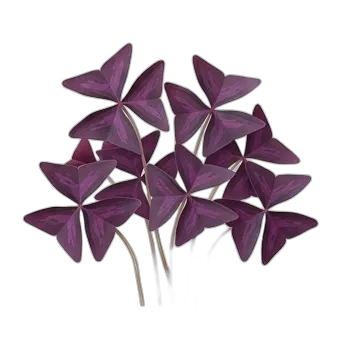
Three winters ago, a gardener named Arthur handed me a terracotta pot that looked like it had been through a lawnmower. It held nothing but crusty soil and a cluster of tiny, papery brown bulbs resembling miniature pinecones. "My mother-in-law said this purple thing would come back," he sighed, ready to toss it into the compost bin. I placed that pot under a southern-facing grow light, watered it sparingly, and within fourteen days, delicate, deep-violet, triangular leaves began unfurling like tiny umbrellas. That is the magic of Oxalis triangularis. It is a plant that refuses to stay dead, demanding very little while offering an explosion of geometric color.

1. Botanical Overview & Natural Habitat
Oxalis triangularis, commonly known as the False Shamrock or Purple Shamrock, belongs to the Oxalidaceae family and is native to the woodland understories and scrublands of South America, primarily Brazil. Unlike true clovers belonging to the Fabaceae or Trifolium families, Oxalis features leaves divided into three distinct, sharply angled, heart-shaped leaflets that fold downward at night or under intense stress—a process known as nyctinasty.
The plant grows from small, subterranean corms (specialized storage stems often mistakenly called bulbs). Its foliage typically ranges from a rich, metallic burgundy to a striking deep violet, accented by pale pink or white five-petaled flowers that appear in cycles throughout spring and summer. According to the Missouri Botanical Garden, Oxalis triangularis is hardy in USDA Zones 8 through 10, though it is most frequently cultivated worldwide as a vibrant indoor houseplant or a seasonal patio accent in cooler climates.
| Parameter | Optimal Condition | Common Mistake | Why It Matters |
|---|---|---|---|
| Light | Bright, indirect light (4 hours of morning sun) | Direct scorching midday sun or deep shade | Too much sun burns leaves; too little causes leggy growth and muted color. |
| Soil pH | Slightly acidic to neutral (6.0 to 7.0) | Heavy, compacted clay soil | Poor drainage around corms leads directly to fatal fungal rot. |
| Watering | Allow top 2 inches (5 cm) to dry before soaking | Keeping soil constantly soggy or bone-dry for months | Excess moisture rots corms; extreme drought triggers premature dormancy. |
| Temperature | 60°F to 75°F (15°C to 24°C) | Exposure to drafts below 50°F (10°C) | Cold drafts shock the plant, forcing an unseasonal, stressful dormancy phase. |
2. Essential Environmental & Care Requirements
To keep your False Shamrock thriving, you must mimic its native South American woodland floor habitat. This means striking a balance between bright illumination and gentle humidity.
Place your plant within 3 feet (0.9 m) of an east-facing window or an unobstructed west-facing window protected by a sheer curtain. While they tolerate lower indoor light levels well, their signature purple pigmentation intensifies significantly when they receive adequate brightness. If your plant begins to stretch upward with long, pale petioles, it is begging for more light.
Indoor temperatures should remain comfortably within the human comfort zone, ideally staying between 60°F and 75°F (15°C to 24°C). Keep them away from drafty doorways, air conditioning vents, and heating registers. When autumn arrives and indoor heating dries out the air, ambient room humidity between 40% and 50% will keep leaf margins from crisping.
Watering is where most growers stumble. Always check the soil moisture with your finger before applying water. Push your finger down 2 inches (5 cm)—if the soil feels dry at that depth, water thoroughly until it runs freely from the drainage holes. Empty the saucer after 15 minutes to prevent the corms from sitting in standing water.
💡 Pro-Tip: Do not panic if your Oxalis suddenly collapses, shrivels, and looks entirely dead after a few years of great growth. False Shamrocks naturally enter a rest period, or dormancy, lasting 4 to 6 weeks. When this happens, simply trim away the dead foliage, withhold water entirely, move the pot to a cool, dark closet, and watch new shoots erupt from the soil just a month later.
3. Step-by-Step Cultivation, Feeding & Propagation
Multiplying your False Shamrock collection is one of the most rewarding gardening tasks because the plant literally propagates itself underground through natural corm multiplication.
Step-by-Step Propagation Protocol
- Select the Timing: Wait until late winter or very early spring, just as the plant begins waking from its natural dormancy or showing new green shoots.
- Unpot the Plant: Gently tip the container sideways and slide the root ball out. Shake or gently brush away the old, exhausted potting mix from the root system so the corms are clearly visible.
- Separate the Corms: The corms naturally cluster together in small chains or clumps. Using your fingers, gently tease them apart. Ensure each separated section retains at least two or three healthy, plump corms and a few intact roots.
- Prepare the Containers: Fill clean, well-draining pots (4-inch to 6-inch / 10-cm to 15-cm diameters work best) with a fresh, sterile potting mix amended with 20% perlite or coarse horticultural sand to guarantee aeration.
- Plant the Corms: Press the separated corms vertically into the soil at a depth of 1 to 1.5 inches (2.5 to 3.8 cm). Space them roughly 2 inches (5 cm) apart if planting multiple corms in a single decorative bowl.
- Initial Watering: Water the newly planted corms thoroughly once to settle the soil around them. Place the pot in a warm spot with bright, indirect light, and withhold further heavy watering until the first green shoots break the soil surface in 10 to 14 days.
For ongoing care during the active growing season, feed your Oxalis triangularis once every 4 weeks from spring through late summer. Use a balanced, water-soluble houseplant fertilizer diluted to half-strength (such as a 10-10-10 or 20-20-20 formula). Never fertilize during its winter rest period, as dormant corms cannot process nutrients and will chemical-burn or rot.
⚠️ Important Caution: According to the ASPCA Toxic and Non-Toxic Plant List, Oxalis triangularis contains soluble calcium oxalates. Ingesting large quantities of the leaves or corms can cause severe gastrointestinal irritation, excessive drooling, and vomiting in cats, dogs, and horses. Keep hanging baskets and tabletop pots safely out of reach of curious pets.
4. Common Problems, Pests & Troubleshooting
Even resilient plants face challenges when indoor environments fluctuate. Here is how to diagnose and correct the most frequent issues.
- Leggy, Sparse Foliage: Caused by insufficient lighting. Move the pot closer to a window or supplement with a full-spectrum LED grow light for 12 hours daily. Trim back the leggy stems at the soil line to encourage compact, dense regrowth.
- Crispy, Brown Leaf Edges: Triggered by severe underwatering, low humidity, or chemical buildup from hard tap water. Flush the soil thoroughly with distilled water every 3 months to wash away accumulated mineral salts, and maintain consistent moisture.
- Yellowing Leaves and Mushy Stems: The classic symptom of overwatering or poor drainage leading to root and corm rot. Immediately stop watering, unpot the plant, cut away any soft, brown, or foul-smelling corms with sterilized shears, and repot the firm remainder in fresh, dry soil.
- Spider Mites and Aphids: Dry indoor air frequently invites tiny sap-sucking pests. Inspect the undersides of the triangular leaves for fine webbing or sticky residue. Wipe the foliage down with a damp microfiber cloth, followed by a thorough spraying of insecticidal soap or neem oil every 7 days for three weeks.

5. Frequently Asked Questions
Why do the leaves of my False Shamrock close up at night?
This is a completely normal biological movement called nyctinasty. The plant folds its triangular leaves downward at night, in response to darkness, and sometimes even on very cloudy days or when touched. It is an evolutionary defense mechanism designed to conserve moisture and protect the delicate leaf surfaces from nocturnal predators.
How do I force my Oxalis triangularis into dormancy?
You do not typically need to force dormancy, as the plant will naturally slow down and decline after 9 to 12 months of continuous growth. If you wish to trigger it artificially, gradually reduce watering over a 3-week period until all the foliage yellows and dies back. Store the dry pot in a cool location (50°F to 55°F / 10°C to 13°C) for 4 to 6 weeks before bringing it back to warmth and light.
Can I grow False Shamrock outdoors in the garden?
Yes, if you live in USDA Hardiness Zones 8 through 10, you can plant corms directly in the garden soil as a shady ground cover or rock garden accent. In colder zones (Zones 3 through 7), treat them as annuals in the landscape, or dig up the corms in autumn before the first hard frost, store them in dry peat moss over the winter, and replant them outdoors in spring.
Why is my False Shamrock losing its bright purple color and turning green?
A fading of the deep violet pigment is almost always a sign of inadequate lighting. While Oxalis can survive in dim corners, it requires bright, indirect light to maintain its rich coloration. Gradually introduce the plant to a brighter location, and new leaves will emerge with their proper, intense purple hues.
📋 Table of Contents ▼ Click to expand
Tags:





