

Old Man Cactus
Cephalocereus senilis
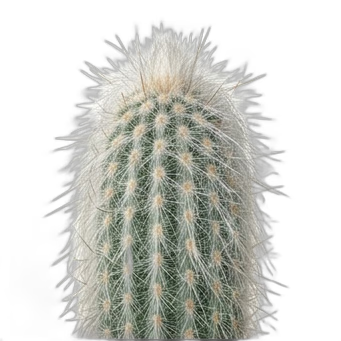
I first encountered Cephalocereus senilis twenty-five years ago while auditing a high-altitude greenhouse installation in Hidalgo, Mexico. Staring up at a towering, shimmering white column that seemed draped in human silver hair, I reached out to touch it, only to discover the surprisingly rigid, defensive spines hidden beneath that deceptive, cashmere-soft fleece. That single tactile contradiction—a fortress of limestone-shattering spines disguised as a gentle old sage—hooked me for life. Since then, I have designed dozens of arid landscapes where this slow-growing Mexican native serves as the sculptural anchor. Here is everything I have learned about cultivating the Old Man Cactus successfully.
1. Botanical Overview & Natural Habitat

The defining morphological characteristic of the Old Man Cactus is its profuse growth of long, white, hair-like trichomes. These specialized modified spines do not exist for mere aesthetic charm; they are masterclasses in evolutionary survival. In the blazing Mexican sun, the dense thatch of hair shades the epidermis, reducing intense solar radiation and mitigating moisture loss via transpiration. Furthermore, these hairs trap a micro-layer of air that insulates the plant against nocturnal chill, protecting the soft growing tips from frost damage down to 25°F (-4°C) for brief durations, provided the substrate is completely bone dry.
Juvenile specimens crawl or grow as unbranched, single-stemmed columns that can eventually reach heights of 40 to 50 feet (12 to 15 meters) in the wild, though cultivated container specimens typically top out at 5 to 8 feet (1.5 to 2.4 meters) over several decades. The epidermis beneath the white fleece is a glaucous blue-green, divided by 11 to 25 shallow ribs. Areoles line these ribs, producing 1 to 5 central spines and 10 to 30 radial spines that are entirely obscured by the luxurious white hair.
Because wild populations face severe habitat loss from agricultural expansion and illegal poaching, the species is protected under international agreements. When sourcing your specimens, always verify they are nursery-propagated. For further reading on the conservation status and anatomical adaptations of desert flora, consult the Royal Botanic Gardens, Kew.
2. Essential Environmental & Care Requirements
Replicating the hostile, well-drained limestone cliffs of Hidalgo in a home or garden environment requires strict adherence to specific parameters.
| Parameter | Optimal Condition | Common Mistake | Why It Matters |
|---|---|---|---|
| Light Exposure | Full sun (6–8+ hours daily) | Placing in deep indoor shade | Causes etiolation, stretching the stem and thinning the protective white hair. |
| Substrate pH | 6.5 to 7.5 (Neutral to slightly alkaline) | Using highly acidic peat-heavy soil | Promotes root rot and locks out essential micronutrients like calcium and magnesium. |
| Watering Frequency | Every 14–21 days in summer; dormant in winter | Frequent, shallow waterings | Triggers basal rot; deep soaking followed by total drying mimics monsoons. |
| Winter Minimum | 45°F to 50°F (7°C to 10°C) | Exposing to freezing, wet conditions | Combines moisture with cold, turning internal cell walls to mush instantly. |
Light is the single most critical factor for maintaining the density and pure white color of the trichomes. Cephalocereus senilis demands maximum illumination. Indoors, place your cactus directly against a south-facing or west-facing window. If growing under artificial setups, utilize high-output full-spectrum LEDs positioned within 12 to 18 inches (30 to 45 cm) of the crown for 12 to 14 hours daily.
Temperature management requires seasonal variation. During the active growing season from April through September, daytime temperatures between 75°F and 90°F (24°C to 32°C) are ideal. In winter, drop ambient temperatures to between 50°F and 55°F (10°C and 13°C) and completely withhold water. This mandatory rest period triggers the biochemical signals necessary for mature specimens to eventually produce their nocturnal, funnel-shaped, reddish-pink flowers, which rarely appear on plants kept in warm, active states year-round.
💡 Pro-Tip: Never water your Old Man Cactus overhead. Splashing water onto the delicate white hair causes dirt particles to adhere permanently to the trichomes, turning your pristine silver specimen into a dull, muddy grey that takes years to grow out. Always water directly into the soil line using a long-spouted watering can.
3. Step-by-Step Cultivation, Feeding & Propagation
Growing Cephalocereus senilis successfully from a cutting or young nursery start is an exercise in restraint. Because this species is famously slow-growing—rarely adding more than 1 to 2 inches (2.5 to 5 cm) of vertical growth per year—patience is your primary tool.
Step 1: Formulate the Substrate
Mix 40% horticultural-grade pumice or perlite, 30% coarse river sand (particle size 0.08 to 0.19 inches / 2 to 5 mm), and 30% low-organic-matter commercial cactus and succulent soil. Avoid rich compost or heavy forest products that retain moisture for prolonged periods.
Step 2: Select the Container
Choose an unglazed terracotta pot that is only 1 to 2 inches (2.5 to 5 cm) wider in diameter than the root ball. Terracotta is porous, allowing excess moisture to evaporate rapidly through the container walls. Ensure the pot features a generous drainage hole.
Step 3: Potting and Anchoring
Place a curved piece of broken pottery over the drainage hole to prevent soil loss. Fill the base with your custom mix, position the cactus at the exact same soil depth it was previously growing at, and backfill. Tamp the mix down firmly around the base to stabilize the heavy column, then top-dress the surface with a 0.5-inch (1.2 cm) layer of crushed limestone or pea gravel to keep the lower stem hairs away from damp soil.
Step 4: Watering Post-Transplant
Wait 14 days after repotting before giving the cactus its first drink. This waiting period allows any microscopic root abrasions incurred during the transplant process to callous over, preventing fungal pathogens from entering the vascular system.
Step 5: Fertilization Protocol
Feed sparingly. Apply a balanced, low-nitrogen, high-potassium liquid cactus fertilizer (such as a 2-7-7 formula) diluted to one-quarter strength once a month strictly during the peak summer months of June and July. Cease all fertilization by August to allow new growth to harden off before winter.
⚠️ Important Caution: Never propagate Cephalocereus senilis from seed unless you have access to a sterile greenhouse environment and constant temperature controls. Germination requires exact bottom heat of 85°F (29°C) and high humidity, making stem cuttings vastly superior for home growers.
To propagate via stem cuttings, select a healthy lateral branch or top section using a sterilized, alcohol-wiped blade in late spring. Dust the cut surface with powdered sulfur or rooting hormone, and place the cutting upright in a dry, shaded location for 21 to 30 days until a thick, hard callus forms over the wound. Insert the callused base 1 inch (2.5 cm) deep into dry perlite, and withhold water entirely until robust roots emerge within 6 to 8 weeks.
For comprehensive botanical cultivation data and regional guidelines, refer to the Lady Bird Johnson Wildflower Center.
4. Common Problems, Pests & Troubleshooting
Even with careful management, environmental stressors can occasionally compromise your Old Man Cactus. Early identification is essential for remediation.
Root Rot (Fusarium and Phytophthora)
- Symptoms: The base of the stem turns soft, yellow, or translucent brown, and the plant wobbles in its pot.
- Cause: Overwatering combined with dense, poorly draining soil and low light levels.
- Remedy: Unpot the cactus immediately. Using a sterile razor blade, slice away all infected tissue until you see clean, unblemished white or pale-green vascular tissue. Dust the cut with sulfur powder and let the plant dry in open air for 14 days until a hard callus forms. Replant in fresh, bone-dry mineral grit.
Etiolation
- Symptoms: The upper portion of the column narrows drastically, turning pale green with sparse, weak hair production.
- Cause: Insufficient sunlight.
- Remedy: Gradually move the plant into a brighter exposure over the course of two weeks to prevent sunburn shock. Note that the stretched, narrow section will not revert to its original thickness; you must either live with the hourglass shape or chop the top off, root the cutting, and let the base produce new pups.
Scale Insects and Mealybugs
- Symptoms: Small, cottony white masses hidden deep within the hair, or hard, brown, dome-shaped bumps along the ribs.
- Cause: Low air circulation and dry indoor conditions.
- Remedy: Because the thick fleece shields pests from standard sprays, use a high-pressure stream of 70% isopropyl alcohol delivered via a spray bottle to dissolve mealybug waxy coatings. Follow up by dabbing individual insects with a cotton swab soaked in rubbing oil. Avoid heavy oil-based horticultural sprays, as they mat the delicate white hair permanently.
Sunburn (Solar Scorch)
- Symptoms: Large, bleached, papery, or jet-black patches appearing on the side of the cactus facing a sudden increase in sun exposure.
- Cause: Moving an indoor-grown plant directly into blazing outdoor mid-summer sun without a hardening-off period.
- Remedy: Sunburned tissue will never heal and will eventually turn corky and brown. While purely cosmetic, it leaves the plant vulnerable to secondary infections. Always transition plants outdoors over a 4-week period, starting with morning sun only.

5. Frequently Asked Questions
Why is my Old Man Cactus turning yellow at the base?
Basal yellowing combined with a soft, spongy texture is the classic presentation of root rot caused by chronic overwatering or compacted soil. Inspect the roots immediately; if they are black, hollow, or sloughing off, you must perform emergency surgery by cutting away all rot back to healthy tissue, callusing the wound, and resetting the plant in fresh, gritty mineral soil.
How do I clean dust out of the white hair on my Old Man Cactus?
Dust and airborne debris inevitably settle into the trichomes over time. To clean them without ruining the aesthetic, use a clean, dry, ultra-soft artist's paintbrush or makeup brush to gently comb downward through the hairs, lifting out trapped particles. Alternatively, use a can of compressed air held at least 12 inches (30 cm) away on the lowest pressure setting to blow debris outward. Never wash the hair with liquid soap or water sprays.
Can I grow an Old Man Cactus outdoors year-round?
You can cultivate Cephalocereus senilis outdoors year-round only if you live within USDA Hardiness Zones 9b through 11. In these regions, winter temperatures rarely dip below 25°F (-4°C), and winter rainfall is low enough to prevent prolonged root saturation. If your region experiences wet, freezing winters or high humidity combined with cold, the plant must be brought indoors or kept under a permanent rain shelter.
How fast does an Old Man Cactus grow?
This species is exceptionally slow-growing. In optimal conditions with abundant sunlight and proper feeding, expect an annual vertical increase of only 0.5 to 1.5 inches (1.2 to 3.8 cm). Cultivated specimens in containers often grow even slower. Do not panic if your plant appears completely static for months at a time; this is entirely normal and indicative of its harsh desert evolutionary history.
📋 Table of Contents ▼ Click to expand
Tags:





