Moonstones
Pachyphytum oviferum
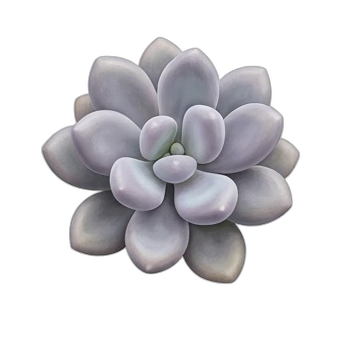
I was kneeling on the concrete of my south-facing nursery patio three years ago, trying to nudge a stubborn nursery pot off a root-bound Pachyphytum oviferum, when my thumb slipped. It grazed the side of a lower plump leaf. To my absolute horror, the pristine, pastel-lavender sphere rolled off the stem and into the gravel below, leaving behind a stark, naked node. But succulents have a way of humbling us: that exact fallen leaf, left forgotten in the partial shade of a watering can, grew a thick cluster of pink roots and a miniature rosette within 30 days. That is the magic of Moonstones—they are as resilient as they are ethereal.
1. Botanical Overview & Natural Habitat

The plant's defining characteristic is its swollen, egg-shaped leaves (derived from the Greek pachys meaning thick, and phyton meaning plant). These leaves measure roughly 0.75 to 2 inches (2 to 5 cm) in length and are coated in a powdery, chalky epicuticular wax known as farina. This delicate farina acts as a natural sunscreen and moisture-barrier, reflecting harsh UV rays and preventing transpirational water loss in the desert sun.
Moonstones form tight, slow-growing rosettes reaching heights of 4 to 6 inches (10 to 15 cm) and spreading up to 12 inches (30 cm) wide over several years. In the late winter to early spring, mature specimens produce arching, succulent scapes bearing bell-shaped, reddish-pink flowers with petals that remain tightly cupped to protect the reproductive organs from desert pollinators until the optimal moment.
2. Essential Environmental & Care Requirements
Cultivating Pachyphytum oviferum successfully requires mimicking the high-light, low-humidity conditions of its native Mexican habitat. When designing succulent landscapes or indoor display arrangements, environmental parameters must be tightly controlled.
| Parameter | Optimal Condition | Common Mistake | Why It Matters |
|---|---|---|---|
| Light | 6+ hours of direct morning sun; bright indirect afternoon light | Placing in deep indoor shade or sudden intense midday sun | Insufficient light causes etiolation (stretching); unacclimated sun causes leaf scorch. |
| Temperature | 65°F to 85°F (18°C to 29°C) active growth | Exposing to sustained freezes below 30°F (-1°C) | Cells rupture when frozen due to high water content in the plump leaves. |
| Soil Mix | 50% inorganic grit (pumice/perlite), 50% low-organic cactus mix | Using heavy, moisture-retentive potting soil | Root rot develops rapidly when water lingers around fine root hairs for over 48 hours. |
| Watering | Soak-and-dry method when leaves feel slightly soft to the touch | Frequent, shallow sips or watering on a rigid calendar schedule | Overwatering dissolves farina and rots the stem base; underwatering shrivels foliage. |
💡 Pro-Tip: Never touch the surface of Moonstones leaves with your bare fingers. The oils from your skin permanently dissolve the farina, leaving fingerprint scars that never grow back. Always handle the stems or use soft nylon horticultural tweezers when repotting.
For deeper reading on general succulent hardiness zones and microclimate management, consult the Royal Horticultural Society Growing Guide.
3. Step-by-Step Cultivation, Feeding & Propagation
Propagating and maintaining Moonstones is a rewarding exercise in patience. Because they are slow-growing, every step must be executed with precision.
- Select the Right Container: Choose a unglazed terracotta pot featuring a central drainage hole. Terracotta is porous, allowing excess moisture in the root zone to evaporate quickly through the clay walls.
- Mix the Substrate: Combine 2 parts coarse pumice, 1 part horticultural perlite, and 1 part standard organic cactus potting mix. Ensure the pH sits between 6.0 and 6.5.
- Potting and Positioning: Fill the container, place the root ball at the same depth it sat previously, and top-dress the surface with 0.5 inches (1.2 cm) of fine aquarium gravel or decomposed granite. This keeps the lower leaves elevated and dry.
- Watering Protocol: Wait 7 days after repotting to allow any broken roots to callus, then water thoroughly until liquid runs freely from the drainage hole. Do not water again until the leaves lose their rigid firmness and show minor wrinkling.
- Fertilization: Feed sparingly during the active spring growing season (April through June) using a balanced, water-soluble cactus fertilizer diluted to 1/4 strength once every 30 days. Cease all feeding entirely from October to March during winter dormancy.
- Leaf Propagation: Gently twist a healthy, undamaged lower leaf from the stem, ensuring the base remains intact (a clean break). Lay the leaf flat on top of dry succulent soil out of direct sun. Mist the soil lightly every 7 days only after roots emerge at 14 to 21 days.
⚠️ Important Caution: Never mist established, mature Moonstones plants. Trapped moisture sitting between the tightly packed leaves or on top of the farina creates an ideal breeding ground for fungal pathogens like botrytis and powdery mildew.
For authoritative guidelines on preventing soil-borne pathogens in container gardening, reference the University of California Agriculture and Natural Resources Extension.
4. Common Problems, Pests & Troubleshooting
Even experienced growers encounter hiccups when managing the delicate moisture balance of Pachyphytum oviferum.
Translucent, Mushy Leaves: This is the hallmark of root rot or overwatering. If the lower leaves turn a watery, translucent yellow and easily detach from the stem, cease watering immediately. Unpot the plant, inspect the root system, use a sterilized razor blade to cut away brown, decaying roots back to firm white tissue, and let the plant dry bare-root for 5 days before repotting into completely dry mix.
Etiolation (Stretching): When a Moonstones plant receives too little light, the compact rosette stretches upward, creating unsightly gaps between the leaves and fading the pastel lavender color to a sickly pale green. Fix this by gradually moving the plant into brighter light over a 14-day period to prevent sunburn, then behead the elongated top rosettes to restart growth.

5. Frequently Asked Questions
Why are my Moonstones leaves turning yellow and falling off?
Yellowing and dropping leaves typically indicate overwatering and poor drainage, which suffocates the root system. If the leaves are soft and mushy, your soil is retaining moisture for too long. Reduce your watering frequency and ensure your potting mix contains at least 50% inorganic grit like pumice or perlite.
How do I get my Moonstones to turn pink or purple?
The distinct pastel pink and purple hues of Pachyphytum oviferum are stress responses triggered by a combination of bright direct sunlight and cool nighttime temperatures (between 45°F and 55°F or 7°C and 13°C). In indoor environments without strong grow lights, plants will naturally remain a dull blue-green.
Can I grow Pachyphytum oviferum outdoors year-round?
Moonstones are only reliably hardy in USDA Hardiness Zones 10 through 12, where temperatures do not drop below 30°F (-1°C). In cooler climates, they must be grown in containers and brought indoors before the first autumn frost to protect their water-staturated tissues from freezing damage.
How often should I water my indoor Moonstones?
There is no set calendar schedule for watering Moonstones. Instead, rely on visual and tactile cues: wait until the soil is 100% dry down to the bottom of the pot, and the plump leaves feel slightly pliable or soft when gently squeezed. This typically translates to every 14 to 21 days in the summer and every 30 to 45 days in the winter.
📋 Table of Contents ▼ Click to expand
Tags: