

Money Tree
Pachira aquatica
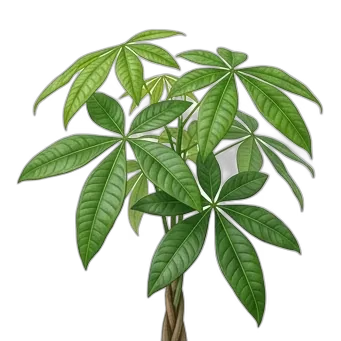
The first time I encountered a mature Pachira aquatica in the wild, I was knee-deep in a Costa Rican wetland, watching how its swollen, bottle-like trunk anchored itself against seasonal flooding while its glossy, palmate leaves caught the filtered canopy light. Years later, when I transitioned from field botany to landscape design, I watched a gardener nearly kill a braided nursery specimen by treating it like a drought-hardy desert succulent, keeping it in a tiny, waterlogged pot beneath a dark staircase. That rescue mission—untangling rotted roots and transitioning the plant into a proper soil mix—cemented my appreciation for this resilient, culturally cherished houseplant. Whether you know it as the Malabar chestnut, Guiana chestnut, or simply the Money Tree, understanding its swamp-dwelling origins is the single best way to keep it thriving in your living room.
1. Botanical Overview & Natural Habitat

Botanically, the plant is distinguished by several unique adaptations:
- Pachicaul Trunk: The swollen base of the stem—often referred to as a caudex—acts as a water-storage organ, allowing the plant to survive periodic dry spells between seasonal floods.
- Palmate Leaves: Each compound leaf typically features 5 to 7 lanceolate leaflets radiating from a single central point, deep green with a leathery texture.
- Braided Stems: Commercial indoor specimens almost exclusively feature multiple young saplings woven together. This practice is entirely artificial; growers braid the flexible, green stems while the plants are young to create the iconic trunk structure seen in garden centers.
- Flowers and Fruit: Mature wild specimens produce striking, large flowers with numerous hair-like red-tipped stamens, followed by woody capsules containing edible seeds (Malabar chestnuts). Indoor specimens rarely flower or fruit due to light and container restrictions.
For further botanical verification on its classification and tropical ecology, you can consult the Missouri Botanical Garden Plant Finder.
2. Essential Environmental & Care Requirements
Recreating a Central American wetland inside a climate-controlled home sounds daunting, but Pachira aquatica is remarkably adaptable if you respect its non-negotiable thresholds for light, water, and substrate composition.
| Parameter | Optimal Condition | Common Mistake | Why It Matters |
|---|---|---|---|
| Light | Bright, indirect light (600–1,000 foot-candles) | Direct, scorching midday sun or deep shade | Direct sun burns the palmate leaves; deep shade causes rapid defoliation and weak, leggy growth. |
| Watering | Soak-and-dry method; water when top 2 to 3 inches (5 to 7.5 cm) are dry | Keeping soil constantly soggy or letting it bone-dry for weeks | Constant moisture rots the water-storing caudex; extreme drought triggers stress-shedding. |
| Temperature | 65°F to 80°F (18°C to 27°C) | Placement near drafty AC vents or heaters below 50°F (10°C) | Cold drafts shock tropical foliage, leading to yellowing leaves and stem dieback. |
| Humidity | 50% to 70% relative humidity | Dry indoor air (below 30% in winter) | Low humidity causes crispy brown tips on the delicate leaf margins. |
| Soil Mix | Fast-draining aroid mix (peat, perlite, orchid bark) | Heavy, compacted garden soil | Dense soil retains excess water, suffocating roots and inviting fungal pathogens. |
Light placement dictates overall vigor. Position your Money Tree within 3 to 5 feet (0.9 to 1.5 meters) of an east-facing window or slightly back from a south- or west-facing window filtered by sheer curtains.
Watering technique requires discipline. Because the swollen base stores water, you must allow the upper soil layer to dry completely before re-watering. Stick your index finger 2 inches (5 cm) deep into the potting medium; if it feels dry and crumbly, it is time to water thoroughly until excess drains from the bottom holes. Discard any standing water in the saucer within 15 minutes to prevent root rot.
💡 Pro-Tip: If your indoor air drops below 40% relative humidity during winter heating seasons, cluster your Money Tree with other tropicals or place its nursery pot atop a wide pebble tray filled with water, ensuring the water line stays well below the bottom of the drainage holes.
3. Step-by-Step Cultivation, Feeding & Propagation
Repotting and maintaining a Money Tree requires a systematic approach to root management and nutrient delivery. Because commercial specimens are often grown with rubber bands or tape binding the roots beneath the soil line, early intervention is critical for long-term health.
Follow this step-by-step protocol for repotting and establishing a healthy specimen:
- Select the Right Vessel: Choose a container that is only 2 inches (5 cm) wider in diameter than the current root ball. Ensure the pot has at least one large drainage hole.
- Inspect and Unbind: Gently slide the plant out of its nursery pot. Tease apart the root mass and inspect the base of the stems. If you find plastic tape, rubber bands, or wire binding the lower stems together beneath the soil line, carefully cut and remove them immediately to prevent long-term girdling and vascular failure.
- Prepare the Substrate: Mix 60% high-quality peat- or coir-based potting soil with 20% coarse perlite and 20% orchid bark to maximize aeration.
- Planting Depth: Place a 1-inch (2.5 cm) layer of the soil mix at the base of the new pot. Position the tree so the root flare sits level with the rim, ensuring you do not bury the swollen caudex deeper than it was previously growing.
- Backfill and Settle: Fill in the gaps with the remaining soil blend, tapping the sides of the pot gently to settle the medium around the roots without compacting it excessively.
- Initial Watering: Water thoroughly until it runs freely from the drainage holes, then let the pot drain completely before placing it in its permanent bright, indirect spot.
Feeding schedule should align with the active growing season. From early spring through late summer, apply a balanced, water-soluble liquid houseplant fertilizer (such as a 10-10-10 or 20-20-20 formulation) diluted to half-strength once every 4 weeks. Cease fertilization entirely from October through February when natural light levels drop and the plant enters a semi-dormant state.
Propagation is most successfully achieved through stem cuttings in late spring. Select a healthy, non-flowering green stem shoot measuring 4 to 6 inches (10 to 15 cm) long, making a clean cut just below a leaf node using sterilized pruning shears. Remove the lower leaves, dip the cut end in rooting hormone powder, and insert it 2 inches (5 cm) deep into a propagation medium of equal parts perlite and peat moss. Maintain a warm environment of 75°F (24°C) with high humidity by enclosing the cutting in a clear plastic bag, and root development typically occurs within 30 to 45 days.
For additional guidance on general container plant management and horticultural standards, reference resources provided by the Royal Horticultural Society.
4. Common Problems, Pests & Troubleshooting
Even with diligent care, environmental shifts can cause your Money Tree to display symptoms of distress. Diagnosing these signs early prevents minor issues from becoming fatal.
- Yellowing Leaves: If lower leaves turn entirely yellow and drop off, you are likely overwatering or letting the plant sit in a stagnant drainage saucer. If the yellowing occurs alongside crispy edges and targets upper leaves, check for low humidity or direct scorch from intense sunlight.
- Mushy Stems or Trunk: A soft, squishy trunk base indicates advanced stem rot or root rot. This is a critical emergency. Unpot the plant, slice away black, rotting roots and mushy trunk tissue with a sterilized blade, dust the wounds with cinnamon or sulfur powder, and repot in fresh, dry soil.
- Spider Mites: Fine webbing across the leaf axils and tiny stippled yellow dots on the foliage indicate a spider mite infestation, which thrives in dry indoor air. Wipe down all leaves with a damp microfiber cloth, then spray thoroughly with insecticidal soap or neem oil every 7 days for a 3-week cycle.
- Scale Insects: Small, immobile brown bumps along the stems and leaf veins are scale. Dab them individually with a cotton swab dipped in 70% isopropyl alcohol to dissolve their protective waxy shell, followed by a horticultural oil spray.
⚠️ Important Caution: Never ignore a softening trunk on a Money Tree. Once the main caudex turns soft and discolored from rot, systemic pathogens have invaded the vascular system, and recovery is nearly impossible. Immediate intervention by cutting away infected tissue is your only window of salvation.

5. Frequently Asked Questions
Why are the leaves on my Money Tree turning yellow and dropping off?
Yellowing and leaf drop are classic symptoms of overwatering, sudden temperature drops, or severe light deprivation. Assess your watering habits first: if the soil stays wet more than a week after watering, back off immediately. Ensure the plant is not sitting in the path of a cold winter draft from a door or window.
Should I remove the rubber band at the base of my braided Money Tree?
Yes, absolutely. Commercial growers often bind the young stems and roots of braided Money Trees with rubber bands, tape, or plastic ties to keep them shaped while young. If left underground, these materials choke the vascular tissue as the trunk thickens, eventually killing the plant. Unearth the top inch of soil during your next repotting session and snip away any synthetic binders.
How do I save a Money Tree with root rot?
Unpot the plant immediately and rinse the root system under lukewarm water to remove soggy, contaminated soil. Use sterilized pruning shears to cut away all black, mushy, or foul-smelling roots. Trim back up to one-third of the canopy to reduce the strain on the remaining root system. Repot the tree into a clean container using a fresh, fast-draining aroid mix, and do not water for 5 to 7 days to let the cut roots callus over.
Can I prune my Money Tree to make it bushier?
Yes. Pruning encourages lateral branching and prevents the plant from becoming too leggy. Use clean, sharp shears to cut back stems just above a leaf node during the active growing season (spring or summer). New shoots will rapidly emerge just below the cut, creating a denser, fuller canopy.
📋 Table of Contents ▼ Click to expand
Tags:





