

Lucky Bamboo
Dracaena sanderiana
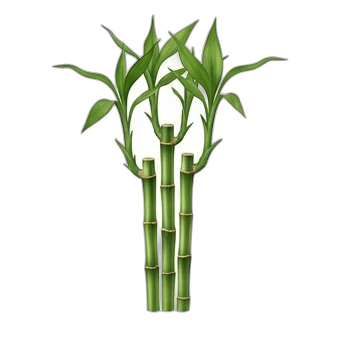
Dracaena sanderiana features thick green stalks that can be braided with the speed of a basket weaver. These plants are frequently killed by drowning them in heavy potting soil and searing their leaves on sunny windowsills, because they are canopy understory survivors rather than desert succulents. Looking at this plant through an ecological lens reveals its true botanical nature. Mastering this resilient architectural plant requires understanding those specific ecological needs.
1. Botanical Overview & Natural Habitat

In its natural habitat, Dracaena sanderiana creeps along the forest floor, rooting at the nodes where stems touch damp leaf litter, or climbing weakly up tree trunks. It features fleshy, jointed green stems with distinct nodes and internodes, punctuated by lanceolate (lance-shaped) leaves that emerge in alternating patterns. Unlike true bamboos (which are grasses in the Poaceae family with hollow culms and fierce root systems), Dracaena stems are solid, succulent-like wood filled with water-storing parenchyma tissue.
Understanding this rainforest understory origin explains why direct, scorching desert sun fries its leaves, and why stagnant, heavy garden soil suffocates its roots. In the wild, it experiences consistent ambient temperatures, high humidity, and filtered, dappled sunlight that rarely exceeds 30% of full tropical glare. Recognizing these evolutionary pressures is the foundational step to keeping your plants thriving for decades rather than months.
2. Essential Environmental & Care Requirements
Recreating a West African understory in a modern home or office requires strict attention to light, water chemistry, temperature, and feeding schedules. Let us break down the exact parameters needed for long-term health.
| Parameter | Optimal Condition | Common Mistake | Why It Matters |
|---|---|---|---|
| Light | Bright, indirect light (75–100 foot-candles); 30% to 50% shade. | Placing in direct, unfiltered midday sun. | Direct rays scorch leaves, causing brown, papery tips and chlorosis. |
| Water | Filtered, spring, or aged tap water (fluoride/chlorine-free); pH 6.5 to 7.0. | Using straight, high-fluoride tap water. | Fluoride and chlorine accumulate in plant tissues, causing irreversible tip necrosis. |
| Temperature | 65°F to 90°F (18°C to 32°C); minimum winter floor of 55°F (13°C). | Exposing to cold drafts below 50°F (10°C) or AC vents. | Cold stress disrupts cellular water transport, leading to mushy, black rot. |
| Humidity | 50% to 70% relative humidity. | Placing near dry heat vents or radiators. | Low humidity causes leaf margins to crisp, curl, and turn brown. |
Water quality is the single most frequent point of failure for indoor growers. Tap water treated with chloramine, chlorine, or naturally high in fluoride will slowly poison Dracaena sanderiana. If you must use tap water, let it sit uncovered in a wide-mouth container for 24 to 48 hours to allow volatile chlorine to dissipate, though this method does nothing to remove fluoride. Rainwater or reverse osmosis water is always superior.
Temperature fluctuations are equally critical. Keep your plants away from exterior doors during winter and drafty air conditioning ducts in summer. If the room is comfortable for you in a light sweater—around 70°F to 75°F (21°C to 24°C)—it is ideal for your Lucky Bamboo.
For further botanical verification on care and taxonomy, consult the Royal Horticultural Society Plant Finder.
3. Step-by-Step Cultivation, Feeding & Propagation
Whether you are starting fresh from a bare-root cutting or shifting an established arrangement from water to soil, precision matters. Dracaena sanderiana can be successfully grown hydroponically in water with pebbles or potted in a rich, fast-draining substrate.
💡 Pro-Tip: When transitioning a Lucky Bamboo from a purely water-based vase to a soil pot, do it gradually over 14 days. Add one tablespoon of damp, chunky perlite-rich potting mix to the water every three days until the roots are surrounded by medium. This prevents transplant shock by letting the aquatic roots adapt to higher oxygen levels in the substrate.
Here is the exact protocol for propagating an overgrown or leggy specimen through stem cuttings:
- Select a Healthy Mother Stem: Choose a mature, vibrant green stem free of blemishes, soft spots, or yellowing leaves. Ensure the cutting instrument is sanitized with isopropyl alcohol to prevent bacterial transmission.
- Make the Cut: Using a sharp, sterilized razor blade or pruning shears, cut the stem horizontally 2 inches (5 cm) below a prominent node. Make a clean, single-stroke cut to avoid crushing the vascular bundles.
- Seal the Wound: Apply unflavored horticultural wax or a dab of melted candle wax to the cut top of the mother plant to seal out pathogens. Leave the freshly severed cutting with its open end exposed to the air for 2 to 4 hours to let the wound callus over naturally.
- Initiate Rooting: Place the cutting vertically into a clean glass vessel filled with 3 to 4 inches (7.5 to 10 cm) of distilled or rainwater. Add washed decorative stones or glass beads to anchor the base securely.
- Manage Water and Light: Position the vessel in bright, indirect light. Change the water entirely every 7 days to maintain high dissolved oxygen levels and prevent algae blooms. Tiny white root primordia should emerge from the nodes within 14 to 21 days.
- Establish Long-Term Culture: Once roots reach at least 1 inch (2.5 cm) in length, maintain the water setup or pot the cutting into a well-aerated soil mix consisting of equal parts peat, perlite, and fine pine bark.
Feeding should be done sparingly. Use a balanced, water-soluble liquid houseplant fertilizer diluted to one-tenth strength (1/10th of the manufacturer's recommended dose) every 4 to 6 weeks during the active growing season (spring through summer). Skip fertilization entirely from late autumn through winter when growth naturally slows down.
4. Common Problems, Pests & Troubleshooting
When Lucky Bamboo starts to decline, it communicates distress through distinct visual symptoms. Acting early can save the plant.
- Yellowing Stems: If a stem turns bright yellow from the bottom up and feels squishy, it is experiencing stem rot. This is usually caused by over-fertilization, standing in untreated tap water for too long, or bacterial infection. Immediately remove the healthy green top using a clean cut well above the yellow zone, discard the rotted base, and re-root the top.
- Brown Leaf Tips: Crisp, brown margins point directly to low ambient humidity or fluoride toxicity in the water. Switch to distilled water and mist the surrounding air daily, or group the plant with other tropicals to elevate local humidity.
- White, Cottony Patches: Mealybugs occasionally infest the tight leaf axils of Dracaena sanderiana. Dip a cotton swab in 70% isopropyl alcohol and dab each insect directly to dissolve their protective waxy coating, followed by a thorough rinse.
- Algae Growth on Roots: Green or brown slime coating the roots and the inside of a glass vase means too much light is hitting the water. Switch to an opaque or tinted glass container, wash the roots gently under lukewarm running water, and refresh the water supply.
⚠️ Important Caution: Never use commercial leaf shine products or heavy oils on the foliage of Dracaena sanderiana. The stomata on these leaves easily clog, suffocating the plant's gas exchange systems and causing rapid leaf drop. Clean dust off leaves gently using a damp microfiber cloth instead.

5. Frequently Asked Questions
Can Lucky Bamboo grow in tap water?
Yes, but only if your municipal tap water is free of added fluoride and heavy chloramines. Most standard municipal tap water contains chemical additives that accumulate in the plant's tissues over 30 to 60 days, leading to necrotic leaf tips and eventual decline. Always use filtered, rain, or distilled water for the best results.
Why is my Lucky Bamboo turning yellow?
Stem yellowing is a sign of root rot, excess fertilizer, or chemical toxicity from tap water. Once a section of the stem turns yellow and soft, it cannot be reversed. You must slice off the firm green top section, discard the rotting bottom portion, let the cut dry for a few hours, and place the healthy top back into fresh water to regenerate roots.
How do I make Lucky Bamboo curl into spirals?
The signature corkscrew shape is achieved commercially by placing the young, flexible green stems inside a custom three-sided open box or under directional light tubes. As the plant naturally grows toward the light source, cultivators rotate the box or light source incrementally every 7 to 10 days, forcing the stem to twist as it tracks the shifting photons.
Does Lucky Bamboo need soil, or can it live in water forever?
Dracaena sanderiana can live indefinitely in pure water provided the water is refreshed weekly and supplemented with a micro-dose of liquid fertilizer every month. However, it will ultimately reach a maximum size dictated by nutrient limitations in water culture. Growing it in well-draining soil generally results in a larger, sturdier, and more resilient plant over a span of several years.
📋 Table of Contents ▼ Click to expand
Tags:





