

Kiwi Aeonium
Aeonium haworthii 'Kiwi'
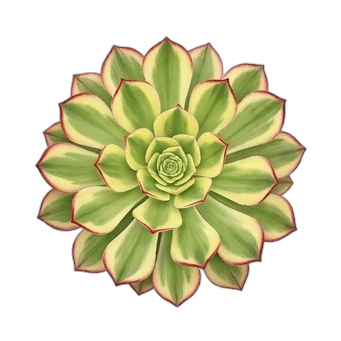
1. Botanical Overview & Natural Habitat

Native primarily to the volcanic, rocky slopes and mild coastal cliffs of the Canary Islands, Aeonium species have evolved an unusual life cycle compared to many standard desert succulents. Unlike cacti that store vast amounts of water in thick stems, Aeoniums feature somewhat fleshy stems that tend to be woody at the base, and their root systems are relatively shallow. They thrive in maritime climates characterized by cool, damp winters and warm, dry summers.
Because of their native habitat's mild maritime influence, 'Kiwi' does not possess high frost tolerance, nor does it enjoy extreme baking heat. When ambient temperatures consistently exceed 85°F (29°C), the plant initiates a natural dormancy period. During this time, the outer leaves of the rosettes curl inward to shade the tender growing points, significantly reducing surface area and minimizing moisture loss through transpiration. Understanding this dormancy is the single most important key to keeping your 'Kiwi' flourishing year after year. For detailed taxonomic classifications and broader plant data, you can consult the Royal Horticultural Society.
2. Essential Environmental & Care Requirements
Translating the Canary Island microclimate into your home or landscape requires paying strict attention to light, soil, temperature, and watering mechanics. Let us break down the exact parameters needed to keep your 'Kiwi' rosettes glowing with pink and gold.
| Parameter | Optimal Condition | Common Mistake | Why It Matters |
|---|---|---|---|
| Light | Bright morning sun with afternoon shade (4–6 hours direct light) | Scorching hot afternoon sun in summer | Intense midday UV rays burn the variegated foliage, causing permanent brown crispy edges. |
| Temperature | 65°F–75°F (18°C–24°C) active; 45°F–55°F (7°C–13°C) winter | Exposing to hard freezes below 30°F (-1°C) | Cell walls burst when frozen, turning the fleshy stems and leaves into a soft, rotting mush. |
| Watering | Soak-and-dry method when top 2 inches (5 cm) are dry | Keeping soil constantly damp during summer dormancy | Constant moisture suffocates shallow roots and triggers lethal Pythium or Phytophthora root rot. |
| Soil Mix | Gritty, fast-draining mix (50% potting soil, 50% pumice/perlite) | Using heavy, compacted garden loam or standard peat | Dense soils retain too much moisture around the delicate root system, starving it of oxygen. |
Watering Aeonium haworthii 'Kiwi' requires a shifting schedule depending on the season. During their active growth phase in autumn, winter, and spring, water deeply until moisture runs out of the container's drainage holes, then allow the top 2 inches (5 cm) of soil to dry out completely before repeating. Once summer arrives and temperatures consistently exceed 85°F (29°C), slash your watering frequency by at least half. Water only enough to keep the stems from shriveling entirely, as the roots are essentially asleep and cannot process heavy moisture.
Feeding should be approached with a light hand. Apply a balanced, water-soluble fertilizer diluted to half-strength just twice a year—once in early autumn and once in early spring as active growth resumes. Avoid high-nitrogen fertilizers, which cause rapid, weak stem elongation and diminish the tight, compact rosette structure that makes 'Kiwi' so desirable. For regional agricultural extension advice on succulent soil management, visit the University of California Division of Agriculture and Natural Resources.
💡 Pro-Tip: If you notice your 'Kiwi' rosettes flattening out or losing their striking pink margins, it is crying out for more light. Slowly transition the plant to a brighter morning exposure over 10 days to supercharge pigment development without shocking the foliage.
3. Step-by-Step Cultivation, Feeding & Propagation
Propagating Aeonium haworthii 'Kiwi' is remarkably straightforward because the plant naturally produces side rosettes and easily develops roots from stem cuttings. Follow this precise protocol to expand your collection or rejuvenate an overgrown specimen.
- Select a Healthy Stem Offset: Choose a firm, disease-free side rosette or stem branch measuring at least 3 to 4 inches (7.5 to 10 cm) long during the active growing season (autumn or spring).
- Make a Clean Cut: Using a sharp pair of pruning shears sterilized in isopropyl alcohol, make a clean cut just below a leaf node, leaving a clean stem shank.
- Cure the Wound: Place the cutting in a warm, dry, shaded location out of direct sunlight for 3 to 7 days. This allows a protective callus to form over the cut surface, preventing pathogens from entering.
- Prepare the Propagation Medium: Fill a small nursery pot with a dry, extremely gritty medium consisting of 40% succulent potting soil, 40% horticultural pumice, and 20% coarse sand.
- Plant the Cutting: Insert the callused stem about 1 to 1.5 inches (2.5 to 3.8 cm) deep into the dry medium, firming the soil gently around the base to provide physical support.
- Withhold Water Initially: Keep the newly potted cutting dry for the first 10 to 14 days. Without roots, it cannot take up moisture, and damp soil will rot the open stem.
- Initiate Rooting: After 14 days, apply a very light misting of water to the soil surface. Increase watering gradually as new root resistance is felt when gently tugging the stem, usually within 21 to 30 days.
4. Common Problems, Pests & Troubleshooting
Even with meticulous care, 'Kiwi' can occasionally encounter environmental stressors or opportunistic pests. Diagnosing them early saves the plant.
- Lower Leaf Yellowing and Drop: This is completely normal if it occurs on the oldest, lowest leaves of the rosette as the plant grows upward. However, if multiple leaves yellow simultaneously and turn translucent, you are overwatering. Allow the soil to dry out completely.
- Mealybugs: These cottony, white pests love hiding deep within the tight crevices of the rosettes and underneath leaves. Treat infestations immediately by dabbing individual insects with a cotton swab soaked in 70% isopropyl alcohol, followed by a thorough spray of horticultural insecticidal soap.
- Stem Rot: Caused by fungal pathogens thriving in cold, waterlogged soil. The stem turns black, soft, and foul-smelling near the soil line. You must take an emergency cutting from the healthy upper rosettes well above the rot zone and re-root it in fresh, dry soil.
- Sunscald: Appears as bleached white or brown, papery patches on the side of the rosettes facing the harshest light. Move the plant to a location with filtered afternoon shade immediately.
⚠️ Important Caution: Never use standard petroleum-based horticultural oils or heavy chemical insecticidal sprays on Aeonium leaves during peak summer heat or in direct sunlight. The delicate waxy cuticle on 'Kiwi' foliage will react with the chemical compounds, resulting in severe leaf burn and defoliation.

5. Frequently Asked Questions
Why is my Kiwi Aeonium losing its variegation and turning all green?
Loss of variegation is almost always a sign of insufficient light. When 'Kiwi' is grown in heavy shade or indoors without adequate natural light, the plant prioritizes chlorophyll production to capture photons, causing the signature yellow and pink tones to fade into plain green. Move the plant to a location where it receives bright morning sun for at least 4 to 6 hours daily.
Do individual Aeonium rosettes really die after flowering?
Yes. Aeonium haworthii is monocarpic, meaning that once a mature rosette produces its conical cluster of bright yellow flowers, that specific rosette will gradually dry up and die. However, do not panic—this is a normal part of the plant's life cycle. Before the main rosette flowers, it typically expends energy sending out numerous side offsets (pups) that will continue to grow and expand the clump for years to come.
Can I grow Kiwi Aeonium indoors as a houseplant?
You can successfully grow 'Kiwi' indoors, but you must place it directly in front of an unobstructed south- or west-facing window. Without intensely bright window light, indoor specimens will quickly stretch, lose their vibrant colors, and become weak and leggy. If natural light is limited, supplement with a full-spectrum LED grow light positioned 6 to 8 inches (15 to 20 cm) above the rosettes for 12 hours a day.
Why are the leaves on my Kiwi Aeonium curling inward tightly?
Inward curling is a protective dormancy response. If this happens during the peak of summer heat, it is completely normal and acts as a defense mechanism to reduce moisture loss. However, if the leaves curl inward during spring or autumn while the soil is bone dry, the plant is signaling severe underwatering and needs a thorough, deep soaking.
📋 Table of Contents ▼ Click to expand
Tags:





