

Hibiscus
Hibiscus rosa-sinensis
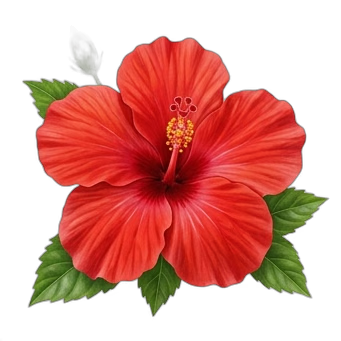
The morning I finally diagnosed why my flagship Hibiscus rosa-sinensis was dropping its pristine, coral-pink buds before they ever unspooled, I was standing in my glasshouse with a pair of polarized loupes in hand, staring at the undersides of the leaves. It wasn't the erratic watering I had suspected; it was an invisible colony of two-spotted spider mites feeding on cell sap during an unexpected 85°F (29°C) dry spell. That humbling moment reminded me that despite their tropical bravado, these plants demand absolute precision. I’ve watched homeowners treat hibiscus like bulletproof boxwoods, only to wonder why their prized specimens turn yellow and defoliate overnight. Let’s bypass the guesswork and treat these dynamic tropical shrubs with the botanical rigor they deserve.
1. Botanical Overview & Natural Habitat

Anatomically, the plant is engineered for maximum visual impact. The leaves are alternate, ovate to lanceolate, measuring 2 to 4 inches (5 to 10 cm) in length, featuring serrated margins and a glossy, cuticularized surface that minimizes transpirational water loss. The defining botanical feature is the magnificent actinomorphic (radially symmetrical) flower, which can span anywhere from 3 to 8 inches (7.5 to 20 cm) across. Each blossom features a prominent staminal column—a fused structure of stamens surrounding the style and stigmas—that extends well beyond the five showy petals.
⚠️ Important Caution: Hibiscus rosa-sinensis is often confused with Hibiscus syriacus (Rose of Sharon) or Hibiscus moscheutos (Hardy Swamp Hibiscus). While the latter two are cold-hardy perennials that die back to the ground in USDA Zones 5 through 8, H. Rosa-sinensis is strictly tropical, surviving outdoors year-round only in USDA Zones 9 through 11. Treating a tropical hibiscus as a hardy perennial guarantees its demise at the first hard frost.
In its natural habitat, Hibiscus rosa-sinensis grows as an open, upright shrub reaching heights of 10 to 15 feet (3 to 4.5 m), though container cultivation and landscape pruning typically keep it at a manageable 4 to 6 feet (1.2 to 1.8 m). Understanding this tropical lineage dictates every aspect of how we must cultivate it in domestic or temperate garden settings.
2. Essential Environmental & Care Requirements
Replicating a tropical rainforest edge or an equatorial garden environment is the secret to keeping Hibiscus rosa-sinensis vigorous, floriferous, and resistant to environmental stress.
| Parameter | Optimal Condition | Common Mistake | Why It Matters |
|---|---|---|---|
| Temperature | 65°F–85°F (18°C–29°C) | Exposing to temperatures below 50°F (10°C) | Cold shock triggers immediate cellular damage, leading to heavy bud drop and leaf chlorosis. |
| Light | 6+ hours of direct sunlight | Placing in deep interior shade | Insufficient photon flux halts flower bud initiation and produces weak, leggy stems. |
| Soil pH | Slightly acidic, 6.5 to 6.8 | Highly alkaline soil (>7.5) | Alkaline substrates lock up essential micronutrients like iron, causing interveinal chlorosis. |
| Watering | Evenly moist, well-draining | Keeping soil perpetually soggy | Saturated media suffocates fine feeder roots, inviting Phytophthora root rot. |
Light and Temperature Dynamics
Hibiscus are absolute sun worshippers. To generate the enormous energetic output required to push out dinner-plate-sized blooms, they require a minimum of 6 hours of direct, unfiltered sunlight daily. Indoors, a south-facing or unobstructed west-facing window is mandatory.
Temperature is equally critical. Growth slows dramatically when temperatures drop below 60°F (15°C), and outright structural damage occurs at 32°F (0°C). If you live in USDA Zones 8 and below, transition your plants indoors or into a greenhouse well before the first autumn predicted frost, targeting an indoor placement where ambient temperatures remain consistently above 55°F (13°C).
Substrate and Hydration Mechanics
The root system of Hibiscus rosa-sinensis is remarkably sensitive to moisture extremes. The ideal potting mix or landscape soil must possess a high cation exchange capacity while maintaining exceptional macro-porosity. A custom blend of 40% high-quality peat or coco coir, 30% aged compost, and 30% perlite or horticultural pumice provides the ideal matrix.
When watering, employ the "drench and dry" methodology. Water thoroughly until liquid runs freely from the container's drainage holes, ensuring the entire root ball is hydrated. Do not water again until the top 1 to 2 inches (2.5 to 5 cm) of soil feel dry to the touch. For deeper scientific insights on tropical plant care and regional adaptability, consult the University of Florida IFAS Extension.
3. Step-by-Step Cultivation, Feeding & Propagation
Mastering hibiscus care requires a structured approach to seasonal pruning, precise nutritional management, and reliable vegetative propagation. Because modern hybrids rarely come true from seed, cloning via cuttings remains the gold standard for preserving specific cultivar traits.
The Complete Propagation & Maintenance Protocol
-
Select and Sanitize Material (Timing: Early Summer) Choose semi-hardwood lateral shoots from the current season's growth that are pencil-thick and approximately 4 to 6 inches (10 to 15 cm) long. Sterilize your pruning shears with a 70% isopropyl alcohol solution between cuts to prevent pathogen transmission.
-
Prepare the Cuttings Make a clean, 45-degree cut just below a leaf node. Strip away the lower two-thirds of the foliage, leaving only two or three upper leaves to minimize transpirational moisture loss while maintaining photosynthetic capability.
-
Apply Rooting Hormone and Plant Dip the lower 1 inch (2.5 cm) of the stem into a 0.3% IBA (Indole-3-butyric acid rooting hormone powder. Insert the cutting 2 inches (5 cm) deep into a pre-dibbled hole in a sterile propagation medium consisting of equal parts perlite and peat moss.
-
Establish High Humidity and Bottom Heat Enclose the container in a clear plastic dome or bag to lock in relative humidity above 80%. Place the setup on a propagation heating mat calibrated to maintain a soil temperature of 75°F to 80°F (24°C to 27°C). Roots typically form within 30 to 45 days.
-
Execute Annual Hard Pruning (Timing: Late Winter/Early Spring) Before spring flush begins, prune established plants back by one-third to one-half. Cut just above an outward-facing bud at a 45-degree angle. This removes winter-weakened wood, stimulates aggressive branching, and guarantees an abundance of new flowering sites along the new growth.
-
Implement a Balanced Feeding Schedule During the active growing season (spring through late summer), feed every 2 weeks with a water-soluble, low-phosphorus fertilizer (such as a 17-5-24 ratio). High phosphorus can build up in the soil and cause iron lock-up in containerized tropicals. Supplement with chelated iron (Fe-EDDHA) monthly if your water source is alkaline.
💡 Pro-Tip: When potting up a container hibiscus, never step up more than 2 pot sizes at once (e.g., moving from a 6-inch pot to an 8-inch pot, not a 12-inch pot). Hibiscus prefer to be slightly root-bound; placing them in an oversized container leaves excess wet soil sitting idle around the root zone, which rapidly invites root rot fungi.
4. Common Problems, Pests & Troubleshooting
Even with pristine environmental controls, troubleshooting is an inevitable part of maintaining tropical specimens. Learning to read your plant's foliar language will save you from making reactive, counterproductive adjustments.
Foliar Diagnostics
- Yellow Leaves with Green Veins (Interveinal Chlorosis): This classic symptom indicates iron or magnesium deficiency, almost always triggered by soil pH that has drifted above 7.0, preventing the roots from absorbing trace minerals. Correction: Flush the soil with acidified water (pH 6.0) and apply a foliar spray of chelated iron.
- Sudden Bud Drop (Abscission): When unopened flower buds turn yellow and fall off, look at your watering consistency and light levels. Rapid shifts in moisture, sudden drafts of cold air, or moving the plant from a bright outdoor patio to a dim indoor living room will shock the plant into aborting its reproductive structures.
- Sticky Residue on Leaves (Honeydew): This points squarely to sap-sucking insects. Inspect the undersides of leaves and leaf axils for aphids, mealybugs, or whiteflies.
Integrated Pest Management (IPM)
- Two-Spotted Spider Mites (Tetranychus urticae): Thriving in hot, dry indoor air, these microscopic pests cause stippling (fine yellow dots) on leaves and delicate webbing. Action: Blast foliage aggressively with cold water to disrupt their breeding cycle, then apply horticultural oil or insecticidal soap, ensuring complete coverage of leaf undersides.
- Hibiscus Mealybugs (Ferrisia virgata): Appearing as cottony white masses along stems and leaf joints, they weaken the plant and foster black sooty mold on the honeydew they secrete. Action: Dab individual colonies with a cotton swab dipped in 90% isopropyl alcohol, followed by a systemic soil drench of imidacloprid if infestations are severe. For comprehensive diagnostic frameworks and disease management guidelines, refer to the Royal Horticultural Society (RHS).

5. Frequently Asked Questions
Why are the leaves on my indoor hibiscus turning yellow and falling off?
Foliar yellowing and leaf drop on an indoor hibiscus are almost always tied to a sudden environmental shift—most commonly a drop in light intensity or erratic watering. When brought indoors for the winter, the plant experiences a drastic reduction in photon availability, forcing it to shed leaves it can no longer support. Ensure it sits directly against your sunniest window, and allow the top 2 inches of soil to dry before watering again.
How do I get my potted hibiscus to bloom during winter?
To encourage winter blooming indoors, you must artificially replicate its native equatorial conditions. This requires supplementing natural light with full-spectrum LED grow lights for 12 to 14 hours a day, maintaining an ambient room temperature between 65°F and 75°F (18°C–24°C), and running a room humidifier to keep ambient humidity above 50%. Reduce fertilizer strength by half during the darkest winter months, as active growth slows naturally.
Can I plant a tropical hibiscus directly in the garden soil?
Yes, but only if you live in USDA Hardiness Zones 9 through 11 where freezing temperatures do not occur. In these zones, plant them in a location receiving full sun and well-draining, organically rich soil. If you live in Zone 8 or colder, planting them directly in the garden ground is risky unless you treat them as annuals or are prepared to dig them up, pot them, and bring them indoors before the first autumn frost.
Why is my hibiscus producing plenty of lush green leaves but zero flowers?
A lush, dark green canopy devoid of blooms is usually the result of excess nitrogen fertilization or insufficient light. If you are using a high-nitrogen lawn fertilizer or a balanced all-purpose fertilizer (like 20-20-20) too frequently, the plant redirects its metabolic energy entirely into vegetative leaf production rather than reproductive bud development. Switch immediately to a bloom-boosting, low-nitrogen, high-potassium fertilizer and move the plant to a location with absolute maximum direct sunlight.
📋 Table of Contents ▼ Click to expand
Tags:





