
Golden Barrel Cactus
Echinocactus grusonii
1. Botanical Overview & Natural Habitat

Taxonomically, the genus name Echinocactus derives from the Greek echinos, meaning hedgehog or sea urchin, combined with cactus. The specific epithet grusonii honors Hermann Gruson, a 19th-century German industrialist and passionate cactus collector.
| Parameter | Optimal Condition | Common Mistake | Why It Matters |
|---|---|---|---|
| Light Exposure | Full sun (6+ hours direct) | Indoor low-light corners | Causes etiolation, stretching the stem from a sphere into an unsightly oval. |
| Soil Drainage | Gritty, inorganic mix (70% mineral) | Standard potting soil or garden loam | Retains moisture too long, directly triggering fatal root rot. |
| Watering Frequency | Deep soak, completely dry out between | Frequent light sips | Encourages shallow, weak root systems instead of deep, robust anchoring. |
| Winter Minimum | 40°F to 50°F (4°C to 10°C) | Extended freezing below 25°F (-4°C) | Freezes cellular water, turning the interior tissues to mush. |
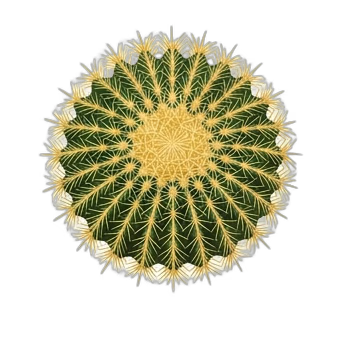
Morphologically, young specimens start as small, bright green spheres. As they mature—often taking 20 to 30 years to reach full size—they elongate into stout, barrel-shaped columns reaching up to 3 feet (90 cm) in diameter and occasionally 4 feet (120 cm) in height. The body features 21 to 37 prominent, straight ribs adorned with closely spaced areoles. From these areoles emerge formidable, curved yellow spines that can grow up to 2 inches (5 cm) long.
Mature plants, typically over 20 years of age and measuring at least 14 inches (35 cm) across, produce small, yellow, funnel-shaped flowers in late spring or early summer. These 2-inch-long blooms ring the crown of the plant, though younger specimens cultivated indoors or in cooler climates will rarely, if ever, flower.
2. Essential Environmental & Care Requirements
Replicating the harsh, unforgiving limestone slopes of central Mexico is the secret to keeping an Echinocactus grusonii thriving for decades.
Light is the single most critical environmental factor. Golden Barrels demand intense, unmitigated sunlight. Outdoors, they require full sun exposure all day long. Indoors, place them directly in front of a south- or west-facing window where they receive uninterrupted direct rays. If transitioning a plant from a dim indoor shelf to outdoor summer sun, do so gradually over 14 days to prevent severe sunburn, which leaves permanent, corky white scars on the golden epidermis.
Temperature tolerances are surprisingly broad, provided the air is dry. During the active growing season of spring and summer, they thrive in temperatures ranging from 75°F to 95°F (24°C to 35°C). In winter, they enter a state of semi-dormancy and prefer cooler ambient temperatures between 40°F and 50°F (4°C to 10°C).
⚠️ Important Caution: Never expose a Golden Barrel Cactus to sustained temperatures below 25°F (-4°C) when the soil is damp. The combination of cold and moisture causes cellular walls to rupture, leading to rapid, irreversible structural collapse.
Watering must follow the natural wet-dry cycle of the Chihuahuan desert. During the peak growing months of May through August, water the soil deeply until liquid runs freely from the drainage holes. Then, do not water again until the soil mix is bone dry down to a depth of 3 inches (7.5 cm). Insert a wooden moisture meter or a plain wooden dowel into the pot; if any moisture or clinging soil particles remain on the wood at the 3-inch mark, wait another 7 days. From November through February, reduce watering to a mere trickle once every 4 to 6 weeks just to keep the feeder roots from completely shriveling.
For comprehensive botanical insights on arid-land flora management, consult the guidelines provided by the University of Arizona Cooperative Extension.
3. Step-by-Step Cultivation, Feeding & Propagation
Growing a specimen from seed or properly repotting a mature, spine-armored plant requires a methodical approach. Here is my proven protocol for handling cultivation and propagation.
- Select the Right Container: Choose an unglazed terra cotta pot that is only 1 to 2 inches (2.5 to 5 cm) wider than the plant's diameter. Terra cotta is porous, allowing excess moisture in the root zone to evaporate quickly. Ensure the pot has a drainage hole at least 1 inch (2.5 cm) wide.
- Mix the Specialized Soil: Combine 40% coarse builder's sand or poultry grit (pumice), 30% organic cactus potting mix, and 30% perlite. This creates a fast-draining, highly porous substrate that mimics rocky mountain soils.
- Repot with Protection: Wrap a folded burlap strip or heavy-duty canvas strap twice around the girth of the cactus to create a safe harness. With two people, gently lift the plant out of its old container, brush away 50% of the old compacted soil from the roots, and inspect for any damaged or rotting brown roots, snipping them away with sterilized shears.
- Position and Backfill: Place a layer of broken terra cotta shards over the drainage hole, add 2 inches (5 cm) of the dry soil mix, and position the cactus so the root flare sits level with the rim of the pot. Slowly trickle the dry soil mix around the root ball, tapping the sides of the container gently to settle the medium.
- Establish the Post-Repotting Rest: Do not water the newly potted cactus for 14 days. This crucial waiting period allows any microscopic root tears sustained during handling to callous over, preventing soil-borne fungi from entering the vascular system.
- Apply Fertilizer Sparingly: Feed only once a year in mid-spring as new growth initiates. Use a balanced, low-nitrogen liquid fertilizer formulated for cacti and succulents (such as a 5-10-10 NPK ratio), diluted to one-quarter strength. Never fertilize during fall or winter dormancy.
For seed propagation, sow fresh seeds in spring across a surface of sterile, pre-moistened cactus soil mix, pressing them lightly into the top 0.125 inches (3 mm) of grit. Seal the container with clear plastic wrap to maintain 90% humidity, place it under bright, indirect light at 75°F (24°C), and expect germination in 14 to 21 days.
To explore international standards for succulent conservation and cultivation best practices, reference the resources available at the Royal Horticultural Society.
💡 Pro-Tip: When handling large specimens, skip the standard leather gloves. Instead, use two heavy-duty foam kneeling pads pressed against opposite sides of the barrel, or construct a custom sling using heavy-duty moving straps. This distributes the pressure evenly, protecting both your hands and the pristine symmetry of the yellow spines.
4. Common Problems, Pests & Troubleshooting
Even tough desert natives run into trouble when grown in human-managed environments. Learning to read the physical signals of your Golden Barrel Cactus saves lives.
Stem Rot and Mushy Base: If the lower portion of the green stem turns yellowish-translucent, brown, and feels squishy to the touch, your plant has advanced stem rot. This is almost exclusively caused by poor soil drainage combined with overwatering during cool weather.
- The Fix: Unpot the plant immediately. Use a sterile, razor-sharp serrated knife to slice away all infected brown tissue until you hit clean, lime-green, unblemished interior flesh. Dust the cut surface heavily with powdered sulfur or rooting hormone. Let the plant sit exposed to dry, circulating air in a shaded room for 14 to 21 days until a thick, dry callus forms. Replant in fresh, completely dry grit.
Mealybugs and Scale: Cottony white masses hiding deep within the dense woolen crown or tucked securely between the ribs indicate an infestation of mealybugs. These sap-sucking insects weaken the plant and excrete honeydew, which attracts black sooty mold.
- The Fix: Spot-treat visible pests using a cotton swab dipped directly in 70% isopropyl alcohol. For heavy infestations, spray the entire plant with horticultural insecticidal soap or neem oil, ensuring you reach deep into the spine areoles. Avoid treating plants in direct midday sun, as oil-based sprays combined with intense UV light will scorch the epidermis.
Sunburn and Corking: Large, papery, white or yellow-brown patches appearing on one side of the plant usually indicate sudden exposure to intense solar radiation or reflected heat from a nearby glass window or stone wall.
- The Fix: While the damaged tissue will never turn green again, the plant will slowly grow around it. Relocate the container to an area with filtered afternoon light or rotate the pot 90 degrees every month to ensure even sun exposure across the entire surface.

5. Frequently Asked Questions
How often should I water my Golden Barrel Cactus?
Water thoroughly every 3 to 4 weeks during the active growing season (spring and summer), making sure the soil dries out entirely between waterings. In autumn and winter, reduce watering to once every 6 to 8 weeks, or omit it entirely if temperatures drop below 50°F (10°C).
Why is my Golden Barrel Cactus turning yellow at the base?
A natural hardening process called "corking" causes older lower tissues to turn a woody, tan-brown color, which is entirely normal. However, if the yellowing area is soft, watery, or smells foul, it indicates fatal basal rot brought on by overwatering or poorly draining soil.
Can a Golden Barrel Cactus survive outdoors in winter?
It depends entirely on your USDA hardiness zone. They can survive outdoors year-round in zones 9 through 11, where winter temperatures rarely drop below 20°F to 25°F (-6°C to -4°C) and rainfall is minimal. In colder zones, they must be moved indoors or kept in a frost-free greenhouse during winter.
How do I make my Golden Barrel Cactus grow faster?
Golden Barrels are naturally slow-growing plants. To maximize their healthy growth rate, provide at least 6 hours of direct daily sunlight, use a gritty, nutrient-rich mineral soil mix, and feed with a diluted, low-nitrogen cactus fertilizer once annually in early spring. Avoid overpotting, as excess soil moisture slows root development.
📋 Table of Contents ▼ Click to expand
Tags: