
Geranium
Pelargonium x hortorum
The scent always takes me back to a scorching July afternoon in my first professional nursery job, when I spent four unbroken hours pinching back leggy zonal geraniums under a polycarbonate roof that turned the workspace into a humid 95°F (35°C) sweatbox. My forearms were coated in that unmistakable, deeply pungent, glandular resin—a sharp, citrus-and-pepper aroma that most people either love instantly or recoil from entirely. Back then, I thought of them simply as utilitarian bedding plants. Thirty years later, I view Pelargonium x hortorum for what they truly are: exceptionally tough, drought-tolerant subtropical succulents disguised as heavy-blooming cottage garden staples.

1. Botanical Overview & Natural Habitat
To grow Pelargonium x hortorum successfully, you must first unlearn almost everything you know about traditional herbaceous perennials. Botanically, these plants are not true geraniums (Geranium species, which are hardy herbaceous plants native to northern temperate zones). Instead, they belong to the genus Pelargonium within the family Geraniaceae, originating primarily from the dry, rocky, nutrient-poor scrublands of South Africa's Western Cape.
This evolutionary background explains their anatomical adaptations:
- Stems: Semi-succulent, thick, and fleshy, designed to store water during extended periods of severe drought.
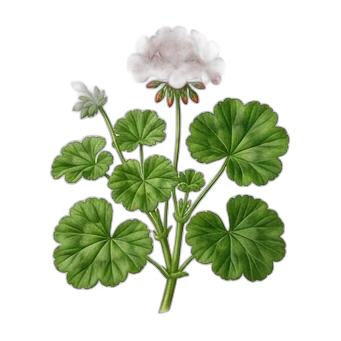
- Foliage: Simple, rounded to kidney-shaped leaves featuring palmate venation, often marked with a distinct dark horseshoe-shaped zoning band (hence the common moniker "zonal geranium"). These leaves are densely covered with glandular trichomes—microscopic hairs that secrete essential oils acting as both a natural sunshade and an insect deterrent.
- Inflorescence: An umbel—a flat-topped or convex cluster of flowers rising on a long, unbranched stalk (peduncle) well above the foliage canopy. Each individual flower features a zygomorphic (bilaterally symmetrical) corolla with five petals, the upper two often differing slightly in size and markings from the lower three.
In professional landscape design, Pelargonium x hortorum function as versatile subshrubs. While typically treated as annuals in temperate zones due to their complete lack of frost tolerance, they are tender perennials (USDA Hardiness Zones 10 through 11). They tolerate intense urban heat islands, wind exposure, and maritime salt spray far better than traditional summer bedding plants like impatiens or begonias, making them invaluable for exposed rooftop gardens and seaside installations.
2. Essential Environmental & Care Requirements
If your geraniums are dropping buds, yellowing at the base, or stretching endlessly toward the light, environmental conditions are almost always the culprit. They are remarkably straightforward to please, provided you respect their Mediterranean-type climate origins.
| Parameter | Optimal Condition | Common Mistake | Why It Matters |
|---|---|---|---|
| Light | 6 to 8 hours of direct, unshaded sunlight daily | Placing them in heavy afternoon shade or dim indoor rooms | Insufficient light halts flower bud initiation and produces weak, elongated stems. |
| Soil | Coarse, gritty, slightly acidic to neutral (pH 6.2–6.8) with superior drainage | Heavy clay or moisture-retaining organic potting mixes | Compacted soil starves roots of oxygen and rapidly induces fatal root rot. |
| Watering | The "soak and dry" method: dry out completely between waterings | Frequent, shallow, daily sips of water | Constant moisture rots the semi-succulent stem base and invites fungal pathogens. |
| Temperature | Daytime 70°F–85°F (21°C–29°C); nighttime 55°F–65°F (13°C–18°C) | Exposing plants to temperatures below 32°F (0°C) | Frost instantly ruptures cell walls, turning foliage and stems to mush. |
Air circulation is an equally critical, frequently overlooked environmental parameter. In tightly packed garden beds or stagnant greenhouse environments, the dense canopy traps humidity, creating a microclimate where fungal spores thrive. Space your plants at least 12 to 18 inches (30 to 45 cm) apart in landscape beds to ensure proper airflow between mature canopies.
💡 Pro-Tip: When designing container displays, avoid putting Pelargonium x hortorum in double-potted setups (a plastic nursery pot nested inside a decorative outer container with no drainage hole). Even a half-inch of standing water at the base will compromise root health within 48 hours. Always use containers with unobstructed drainage holes and elevate pot bases on pot feet.
3. Step-by-Step Cultivation, Feeding & Propagation
Growing exhibition-quality geraniums requires a structured approach to planting, feeding, and asexual propagation. Because modern cultivars are heavily bred hybrids, starting them from seed can yield unpredictable results regarding flower color and growth habit; cuttings are always the professional standard.
Step-by-Step Planting and Propagation Protocol
- Select Stock Material: Choose disease-free, non-flowering shoot tips (known as vegetative cuttings) measuring 3 to 4 inches (7.5 to 10 cm) in length from a healthy, vigorous mother plant.
- Make the Cut: Using a sharp, sterilized razor blade or horticultural knife, make a clean, horizontal cut just below a leaf node. Remove all lower leaves, leaving only two or three tiny leaves at the very top of the cutting.
- Callus the Wound: Allow the freshly cut stem ends to sit exposed in a shaded, well-ventilated area for 12 to 24 hours until a dry, protective callus forms over the cut. This critical step prevents soil-borne bacteria from entering the open stem tissue.
- Prepare the Rooting Medium: Fill a clean propagation flat or small pots with a sterile, porous medium consisting of 50% perlite and 50% coarse peat moss or coir. Avoid heavy composts at this stage.
- Insert Cuttings: Dip the callused stem base 1 inch (2.5 cm) into rooting hormone powder (optional, but accelerates root formation), then insert it into the medium. Firm the mix gently around the stem to ensure good contact.
- Provide Environmental Control: Place the cuttings in bright, indirect light where temperatures remain consistently between 65°F and 72°F (18°C–22°C). Mist sparingly; the medium should be barely moist, never soggy. Roots typically develop in 21 to 28 days.
- Transition to Final Containers: Once roots reach 1 inch (2.5 cm) in length, pot individual plants into 6-inch (15 cm) containers using a professional-grade, soil-less potting mix blended with slow-release granular fertilizer (10-10-10 or similar balanced formula with micronutrients).
- Pinch for Branching: When plants reach approximately 6 inches (15 cm) in height, pinch out the central growing tip. This breaks apical dominance, forcing lateral buds to break and creating a dense, bushy, multi-stemmed plant loaded with future flower umbels.
⚠️ Important Caution: Never incorporate high-nitrogen fertilizers (such as 30-10-10) into your geranium feeding regimen. Excess nitrogen triggers explosive, lush, dark-green foliage growth while entirely shutting down flower bud formation, leaving you with a gorgeous leafy bush that produces zero blooms. Use a bloom-booster formulation with a higher phosphorus ratio (e.g., 10-30-20) once flower development begins.
4. Common Problems, Pests & Troubleshooting
Even with meticulous care, environmental shifts can cause physiological stress in Pelargonium x hortorum. Diagnosing these issues accurately saves plants and prevents wasted treatments.
- Oedema (Edema): Appears as small, water-soaked blisters, corky brown scabs, or corkscrew-like rings on the undersides of leaves. This is a physiological disorder, not a disease, caused by roots taking up water faster than the leaves can transpire it—typically triggered by cool, cloudy weather combined with over-watering and high soil moisture. Solution: Reduce watering frequency immediately, increase air circulation, and ensure the potting medium is coarse and fast-draining.
- Botrytis Blight (Gray Mold): Caused by the fungus Botrytis cinerea, this manifests as soft, brown, water-soaked spots on petals, leaves, and stems, eventually developing a fuzzy grayish-brown fungal powder in humid conditions. Solution: Prune out and destroy infected plant parts instantly. Never overhead water; water early in the day at the base of the plant so any accidental foliar splashes dry quickly under the sun. For deep dives into fungal management on ornamental crops, consult the North Carolina Extension Gardener Plant Toolbox.
- Tobacco Whitefly (Bemisia tabaci) and Aphids: These piercing-sucking insects colonize tender new growth and leaf undersides, excreting sticky honeydew that fosters unsightly black sooty mold. Solution: Blast infestations off with a strong stream of water, or apply insecticidal soap or horticultural oil, ensuring thorough coverage of the lower leaf surfaces.
- Blackleg: A destructive basal stem rot caused by Pythium or Rhizoctonia fungi, turning the lower stem black, slimy, and shrunken, causing rapid collapse of the entire plant. Solution: Unsalvageable; discard infected plants and the surrounding soil immediately. Preventative sterilization of pots and tools is mandatory.

5. Frequently Asked Questions
How do I winterize geraniums so they return next year?
In USDA Hardiness Zones 9 and colder, lift plants from the garden beds before the first forecasted autumn frost (when nighttime temperatures consistently dip below 40°F / 4°C). Trim the top growth back by about one-third to reduce moisture stress. You can either pot them up individually and place them on a sunny indoor windowsill (watering sparingly through winter), or shake the soil from the roots, hang the bare-root plants upside down in paper bags or boxes in a cool, dark, frost-free basement (45°F–50°F / 7°C–10°C) until spring, when you trim away dead growth and replant them outdoors. For comprehensive overwintering strategies tailored to temperate climates, review the guidance provided by the Royal Horticultural Society.
Why are the lower leaves of my geranium turning yellow and dropping off?
Lower leaf yellowing is most commonly caused by natural senescence (older leaves aging out) or mild underwatering followed by sudden over-saturation. When roots experience drought, they sacrifice older foliage to preserve the growing tip. However, if the yellowing is accompanied by a soft, mushy brown stem base, cut back water immediately and inspect for root rot.
How often should I deadhead my geraniums to keep them blooming?
Deadheading—the removal of spent, fading flower umbels—should be performed weekly throughout the active growing season. Do not simply snap off the flower petals; trace the flowering stalk (peduncle) all the way down to its point of origin on the main stem and give it a clean, sharp snap or cut. Leaving old flower stalks intact signals to the plant that it has completed its reproductive cycle, which stalls the production of new buds.
Are geraniums toxic to dogs and cats?
Yes. According to the ASPCA, Pelargonium species contain essential oils (such as geraniol and linalool) and secondary compounds that are toxic to both dogs and cats. Ingestion typically results in mild to moderate clinical signs, including vomiting, anorexia, lethargy, and occasionally contact dermatitis if the plant's sap irritates their skin. Keep hanging baskets and container plantings well out of reach of curious household pets.
📋 Table of Contents ▼ Click to expand
Tags: