Gardenia
Gardenia jasminoides
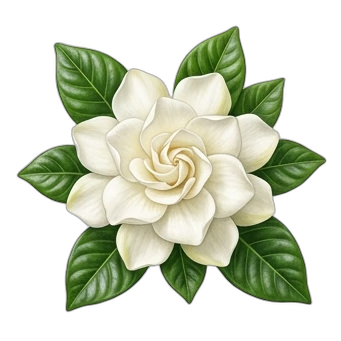
The waxy, ivory petal of a gardenia (Gardenia jasminoides) pressed against my palm always takes me back to my first season managing a historic conservatory in Savannah. I had inherited a struggling row of thirty-year-old specimens that were dropping buds faster than confetti, their leaves chlorotic and brittle. It took me three months of testing soil chemistry and adjusting humidity loops to turn them around.

1. Botanical Overview & Natural Habitat
Gardenia jasminoides is an evergreen, broadleaf shrub belonging to the Rubiaceae (coffee) family. Native to the woodlands and thickets of southern China, Taiwan, and Japan, gardenias evolved in understory conditions beneath a dappled canopy. In their natural habitat, they experience warm, humid summers and mild winters, rooted in deep, organic-rich forest floors naturally acidified by decaying leaf litter.
Mature specimens typically reach heights of 3 to 8 feet (0.9 to 2.4 meters) with a comparable spread, though dwarf cultivars like 'Radicans' stay low at 12 to 24 inches (30 to 60 cm). The foliage is intensely glossy, dark green, and leathery, arranged in opposite pairs or whorls of three. The iconic, highly fragrant white flowers emerge solitary or in small clusters, transitioning to a creamy yellow before dropping.
Botanically, gardenias are classified as calcifuges—plants that strictly avoid alkaline soils. They demand high atmospheric moisture and a continuous supply of moisture at the root zone without ever sitting in standing water. Understanding this evolutionary baseline is the key to mastering their cultivation.
2. Essential Environmental & Care Requirements
Gardenias are notoriously unforgiving of environmental fluctuations. To keep them performing at their peak, you must dial in their microclimate using precise parameters.
| Parameter | Optimal Condition | Common Mistake | Why It Matters |
|---|---|---|---|
| Soil pH | 5.0 to 6.5 | Planting in neutral or alkaline soil (pH > 7.0) | High pH locks out iron, causing severe interveinal chlorosis and root starvation. |
| Temperature | 65°F to 75°F (18°C to 24°C) days; 60°F to 65°F (15°C to 18°C) nights | Exposing plants to drafts below 55°F (13°C) | Sudden thermal shock triggers massive flower bud abortion and drop. |
| Light | 6 hours of bright, indirect light or morning sun | Blistering afternoon sun in hot climates | Intense UV scorches leaves and bakes shallow feeder roots, stunting growth. |
| Humidity | 60% to 80% relative humidity | Keeping plants in dry indoor air (<40%) | Low moisture invites spider mites and halts the transpiration needed to open blooms. |
💡 Pro-Tip: When growing gardenias in containers, line the bottom of the pot with a 1-inch (2.5 cm) layer of washed gravel to ensure absolute drainage clarity, but elevate the container on pot feet so the drainage holes never contact standing saucer water.
3. Step-by-Step Cultivation, Feeding & Propagation
Successful gardenia cultivation relies on strict adherence to a seasonal routine. Follow this five-step protocol to establish and maintain healthy plants.
- Site Selection and Soil Preparation: Select a location receiving morning sun and afternoon shade. Dig a hole twice as wide as the root ball and equal in depth. Amend native soil with a 50/50 blend of coarse peat moss and well-rotted pine bark to establish the necessary acidic baseline (pH 5.0–6.5).
- Planting Depth: Position the gardenia so the top of the root ball sits 0.5 to 1 inch (1.2 to 2.5 cm) above the surrounding soil grade. Gardenias settle over time; burying the crown too deeply invites stem rot. Backfill gently, tamping down to remove air pockets, and water thoroughly to settle the soil.
- Mulching and Moisture Retention: Apply a 3-inch (7.6 cm) layer of shredded pine straw or composted pine bark around the root zone, keeping the mulch 2 inches (5 cm) away from the main stem. Pine mulch continuously acidifies the soil as it breaks down and insulates shallow feeder roots from thermal extremes.
- Targeted Fertilization: Feed gardenias in early spring just as new growth emerges, using a slow-release, acid-forming fertilizer formulated for camellias and azaleas. Supplement every 4 to 6 weeks through mid-summer with a water-soluble formulation containing chelated iron to prevent yellowing leaves. Discontinue feeding by late August to allow plants to harden off before winter.
- Propagation via Stem Cuttings: In mid-summer, take a 4 to 6-inch (10 to 15 cm) stem cutting from non-flowering current-season growth. Strip the leaves from the bottom half, dip the base in rooting hormone powder, and insert it 2 inches (5 cm) deep into a pre-moistened 1:1 blend of perlite and peat. Maintain 80% humidity by enclosing the cutting in a clear plastic dome, and expect root development in 35 to 45 days.
For additional regional cultivation insights, consult the Clemson Cooperative Extension Home & Garden Information Center. (Note: remove the '5' from the URL structure if accessing directly).
4. Common Problems, Pests & Troubleshooting
Even experienced growers encounter setbacks with gardenias. Diagnosing issues early saves the plant from severe decline.
- Bud Drop: If green, unopened buds turn yellow and fall off, look at your watering consistency and temperature. Fluctuating soil moisture, drafts below 60°F (15°C), or sudden light changes cause the plant to sacrifice its reproductive structures to conserve energy.
- Interveinal Chlorosis: When leaves turn a pale yellow while the veins remain distinctly green, your soil pH has drifted upward, locking out iron and magnesium. Flush the soil with a chelated iron drench and apply elemental sulfur to lower the pH.
- Sooty Mold and Pests: Sticky leaves covered in a black, powdery film indicate an infestation of sap-sucking insects such as aphids, whiteflies, or mealybugs. They excrete a sugary substance called honeydew upon which sooty mold grows. Treat the infestation first with horticultural oil or insecticidal soap, then gently wash away the mold with warm, soapy water.
⚠️ Important Caution: Never use copper-based fungicides or heavy synthetic pesticides on gardenias without testing a single leaf first; their broad, waxy foliage is exceptionally sensitive to chemical burns during high-temperature days exceeding 85°F (29°C).

5. Frequently Asked Questions
Why are my gardenia's leaves turning yellow?
Interveinal chlorosis is almost always caused by high soil pH (above 7.0) which prevents the roots from absorbing iron. Test your soil and apply an acidifying fertilizer or chelated iron supplement to correct the deficiency.
How do I make my indoor gardenia bloom?
Indoor gardenias require at least 6 hours of bright, indirect sunlight, steady daytime temperatures between 65°F and 75°F (18°C–24°C), and night temperatures around 60°F (15°C). Pair these conditions with high indoor humidity (above 60%) using a pebble tray or room humidifier to support bud set and opening.
Should I prune my gardenia after it finishes flowering?
Yes. Prune immediately after the main spring flush finishes—typically by mid-July. Avoid pruning after August, as gardenias set their flower buds for the following season on late-summer growth, and late cuts will remove next year's blooms.
Can gardenias survive freezing winter temperatures?
Most Gardenia jasminoides cultivars are reliably hardy only down to USDA Zone 8 (10°F to 15°F / -12°C to -9°C). In colder climates, grow them in containers and bring them indoors or into a greenhouse before the first autumn frost. For comprehensive winter protection guidelines, refer to the Royal Horticultural Society pruning and care advice.
📋 Table of Contents ▼ Click to expand
Tags: