

African Milk Tree
Euphorbia trigona
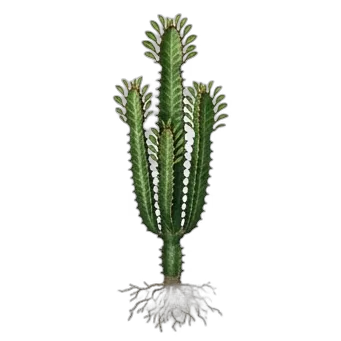
The afternoon sun was casting long, amber shadows across my patio when I first carried home a stressed, three-foot-tall Euphorbia trigona. Its glossy dark-green leaves were dropping like confetti, and a white, viscous sap was weeping from a crack in its architectural stem where it had been jostled in my passenger seat. That sticky latex instantly glued my pruning shears together and left me scrubbing my hands with dish soap for an hour. Yet, within two seasons of bright exposure and strict, infrequent watering, that dramatic specimen transformed into a six-foot candelabra centerpiece that anchors my entire summer container design.

1. Botanical Overview & Natural Habitat
The African Milk Tree (Euphorbia trigona) is native to the semi-arid, rocky regions of Central Africa, specifically along the Congo River basin. In its native habitat, it experiences intense, equatorial sunlight, highly porous and rapidly draining soils, and distinct cycles of torrential seasonal rainfall followed by extended periods of severe drought.
Taxonomically, Euphorbia trigona is a succulent shrub characterized by upright, vertical stems typically divided into three distinct ribs (hence the species name trigona, meaning triangular). Along the undulating ridges of these stems sit small, teardrop-shaped leaves (measuring roughly 0.5 to 1.5 inches or 1.3 to 3.8 cm in length) and paired, sharp brown spines that emerge from small cushion-like structures called stipules. While many indoor growers mistake these leaves for permanent fixtures, they are actually deciduous adaptations; the plant frequently drops its foliage during indoor winter dormancy or periods of drought to conserve moisture, relying entirely on the chlorophyll in its green stems for photosynthesis.
In ideal conditions—or when planted in frost-free Mediterranean climates—this resilient grower can reach mature landscape heights of 6 to 8 feet (1.8 to 2.4 meters) outdoors, though indoor specimens typically top out between 3 and 6 feet (0.9 to 1.8 meters) due to root confinement in containers. Its growth habit is strictly upright and branching, creating a striking, architectural silhouette that makes it an exceptional focal point in modern minimalist or xeriscaped landscape designs. For further taxonomic classification and botanical research, you can explore the Missouri Botanical Garden Plant Finder.
2. Essential Environmental & Care Requirements
Replicating the intense microclimate of Central Africa indoors is the single most important factor in keeping an African Milk Tree thriving. Because this plant evolved under harsh equatorial conditions, it demands specific environmental parameters to prevent stretching, rotting, or dropping its foliage prematurely.
| Parameter | Optimal Condition | Common Mistake | Why It Matters |
|---|---|---|---|
| Light | 6+ hours of bright, direct sunlight daily (south- or west-facing window) | Placing in a dark northern room or dim corner | Insufficient light causes weak, etiolated stems that cannot support the plant's weight |
| Temperature | 65°F to 85°F (18°C to 29°C) during active growth | Exposing to drafts below 50°F (10°C) | Cold stress damages cellular walls, triggering rapid root rot and tissue collapse |
| Soil Mix | 50% high-grade potting soil, 50% coarse perlite or pumice | Using heavy, moisture-retaining organic garden soil | Dense soil suffocates roots and retains moisture too long, inviting fungal pathogens |
| Watering | Soak thoroughly only when the top 3 inches (7.6 cm) of soil are completely dry | Watering on a rigid calendar schedule | Overwatering destroys the root system's ability to take up water and oxygen |
Light is the primary driver of healthy Euphorbia trigona growth. If your plant begins producing pale, pencil-thin stems that lean dramatically toward the nearest light source, it is starving for photons. Conversely, if you are moving an indoor plant outdoors for the summer, acclimate it gradually over 14 days by introducing one hour of direct morning sun per day, increasing the duration daily to prevent severe sunburn that permanently scars the waxy green epidermis.
Temperature management is equally critical. While it tolerates summer heatwaves with ease, it is strictly tropical to subtropical. Temperatures dipping below 50°F (10°C) will shock the root system. For comprehensive guidance on managing indoor microclimates, consult the Royal Horticultural Society.
3. Step-by-Step Cultivation, Feeding & Propagation
Growing a specimen Euphorbia trigona from a cutting or a young starter plant is immensely rewarding if you follow strict hygienic and structural protocols. Because of the plant's toxic latex, preparation is everything.
⚠️ Important Caution: The white, milky sap (latex) exuded by Euphorbia trigona upon any stem or leaf breakage is severely toxic and irritating. It contains diterpene esters that cause intense contact dermatitis, blistering, and temporary or permanent blindness if rubbed into the eyes. Always wear nitrile gloves, protective eyewear, and long sleeves when pruning or propagating, and keep pets and children completely away from the plant.
Step-by-Step Propagation Protocol
- Select a Healthy Stem Cutting: In late spring (around May), select a vigorous branch tip measuring 4 to 6 inches (10 to 15 cm) in length. Using a sharp, disinfected utility knife or pruning shears, make a clean, horizontal cut.
- Stop the Sap Flow: Immediately spray the cut end of the mother plant and the base of the cutting with a gentle stream of cold water to halt the flow of latex. Pat the cutting dry with a paper towel.
- Form a Callus (Crucial Step): Place the cutting upright in a warm, dry, shaded location for 7 to 14 days. Do not plant it immediately; the cut must dry out and form a hard, corky callus to prevent soil pathogens from entering the open vascular tissue.
- Prepare the Propagation Medium: Fill a 4-inch (10 cm) terracotta pot with a sterile, fast-draining propagation mix consisting of equal parts horticultural sand and perlite. Moisten the mix lightly so it is barely damp, not wet.
- Plant the Cutting: Insert the callused end of the stem 1.5 inches (3.8 cm) deep into the medium. Tamp the soil firmly around the base to provide structural support, as top-heavy cuttings will easily topple over.
- Establish Roots: Place the potted cutting in a bright location with warm indirect light (75°F to 80°F or 24°C to 27°C). Mist the surrounding air every 3 to 5 days, but withhold liquid watering until root resistance is felt when gently tugged, typically occurring within 30 to 45 days.
Feeding and Fertilization
During the active growing season (April through August), feed your African Milk Tree once every 4 weeks using a balanced, water-soluble cactus and succulent fertilizer diluted to half-strength (a 5-10-5 N-P-K formulation is ideal). Avoid high-nitrogen fertilizers, which stimulate rapid, weak stem growth that easily snaps under the plant's own weight. Cease fertilization entirely from October through March when the plant enters winter dormancy.
💡 Pro-Tip: If your African Milk Tree grows too top-heavy and threatens to tip its pot over, do not hesitate to prune the main vertical stem back by a third. This pruning cut will trigger two or three new side branches to emerge just below the wound, transforming a single-stem whip into a magnificent, multi-headed specimen within a single growing season.
4. Common Problems, Pests & Troubleshooting
Even with meticulous care, environmental shifts or pest introductions can stress your African Milk Tree. Quick identification and decisive action are your best defenses.
Stem Rot (Root and Collar Rot)
- Symptoms: The lower stem turns translucent yellow, soft, and mushy to the touch. The plant may suddenly lean or collapse entirely.
- Cause: Chronic overwatering, dense non-porous soil, or low temperatures paired with damp roots.
- Remedy: Unpot the plant immediately. Use a sterile blade to carve away all soft, rotting brown tissue until you reach firm, white-green interior flesh. Dust the wound with powdered sulfur or cinnamon as a natural fungicide, allow it to callus for 7 days, and repot into fresh, dry, gritty medium. If rot has reached the root crown entirely, take healthy upper stem cuttings and discard the rest.
Leaf Drop
- Symptoms: Sudden, mass shedding of green leaves without warning.
- Cause: Sudden drafts of cold air, rapid relocation to a dimmer spot, or extreme underwatering followed by heavy soaking.
- Remedy: Stabilize the environment immediately. Ensure ambient temperatures remain above 60°F (15°C) and keep the plant away from drafty doorways or forced-air heating vents. Once adjusted, normal leaf production will resume.
Mealybugs and Scale Insects
- Symptoms: White, cottony masses clustered in the leaf axils and along the ribbed stems (mealybugs), or small, immobile brown bumps that scrape off easily (scale).
- Cause: Dry indoor air circulation and introduction from neighboring plants.
- Remedy: Dip a cotton swab in 70% isopropyl alcohol and dab it directly onto every visible pest to dissolve their protective waxy coatings. For heavy infestations, spray the entire plant thoroughly with insecticidal soap or horticultural neem oil, ensuring you reach deep into the stem ridges.

5. Frequently Asked Questions
Why is my African Milk Tree turning yellow?
Stem or leaf yellowing is nearly always a symptom of water stress—most commonly root rot caused by overwatering and poorly draining soil. Check the base of the stem; if it is firm, the yellowing may be natural seasonal aging of lower leaves. If the base is soft and mushy, immediate emergency repotting or propagation is required.
Is the African Milk Tree toxic to cats and dogs?
Yes, intensely so. All parts of Euphorbia trigona, including its sap, stems, and leaves, are highly toxic to domestic pets and livestock. Ingestion causes severe irritation of the mouth and gastrointestinal tract, excessive drooling, vomiting, and diarrhea. Contact with the skin or eyes can cause severe chemical burns and inflammation. Keep this plant elevated on plant stands well out of reach of curious animals.
How fast does an African Milk Tree grow?
Under ideal conditions with high light, warmth, and regular summer feeding, an established African Milk Tree can grow between 12 and 24 inches (30 to 60 cm) per year. Younger plants often focus their early energy on establishing a robust root network, meaning above-ground growth may appear slow for the first 12 to 18 months before accelerating rapidly.
How often should I water my African Milk Tree?
Water your plant thoroughly only when the growing medium is completely dry down to a depth of 3 inches (7.6 cm). During the peak summer growing season, this typically translates to watering every 10 to 14 days. During the winter dormancy period (November through February), reduce watering frequency drastically to once every 4 to 6 weeks, as the plant's metabolic rate slows down and its water requirement plummets.
📋 Table of Contents ▼ Click to expand
Tags:





