

Orchid Cactus
Epiphyllum
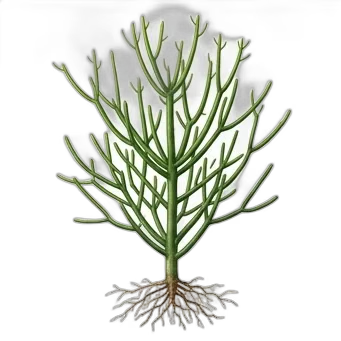
1. Botanical Overview & Natural Habitat

Taxonomically, true Epiphyllum species possess flattened, leaf-like stems (phylloclades) that have taken over the photosynthetic duties normally performed by leaves. These stems are typically scalloped, wavy, or serrated along the margins, where dormant areoles sit quietly waiting to produce either new vegetative growth, aerial roots, or those magnificent, structurally complex flowers that earn the plant its common name.
In the wild, their root systems are modest and non-invasive, designed primarily to anchor the plant to rough tree bark and absorb organic debris, moisture, and nutrients washing down from the canopy above. Understanding this jungle origin is the single most important step in mastering their cultivation. If you grow an Orchid Cactus like a Saguaro, it will struggle; if you grow it like an orchid or a forest bromeliad, it will thrive.
2. Essential Environmental & Care Requirements
Replicating a tropical rainforest canopy in a modern home or landscape requires attention to specific environmental parameters. Because these plants experience distinct seasonal shifts in their native habitats, their care regimen must mimic these rhythms, particularly regarding light and temperature drops to trigger blooming.
| Parameter | Optimal Condition | Common Mistake | Why It Matters |
|---|---|---|---|
| Light | Bright, indirect light (filtered morning sun, 50%–70% shade) | Direct, scorching midday sun | Direct UV rays quickly scorch the delicate phylloclades, turning them yellow or paper-white, eventually causing permanent cellular necrosis. |
| Temperature | 60°F to 80°F (15°C to 27°C) active growth; 50°F to 55°F (10°C to 13°C) winter trigger | Exposing to freezing temperatures below 32°F (0°C) or keeping too warm in winter | Temperatures below 40°F (4°C) cause fatal cell rupture from frost, while a lack of winter cooling prevents the formation of flower buds. |
| Watering | Water thoroughly when the top 2 inches (5 cm) of soil are dry | Keeping soil constantly soggy or bone-dry for months | Soggy soil rots the delicate epiphytic roots, while chronic drought causes shriveled, woody stems and bud drop. |
| Humidity | 50% to 70% relative humidity | Placing directly next to arid HVAC vents or heaters | Low humidity causes the edges of the flattened stems to crisp and stunts the development of new aerial root growth. |
Light is the primary governor of health for Epiphyllum. Aim for an eastern exposure where the plant receives soft, gentle rays for 2 to 3 hours daily, followed by bright, indirect ambient light for the rest of the day.
Watering frequency must adjust dynamically with the seasons. During the active growing and blooming season from spring through late summer, water deeply until moisture runs freely out of the container drainage holes. Allow the top 2 inches (5 cm) of the soil profile to dry out completely before irrigating again. In contrast, during the winter rest period spanning from November through February, cut watering back by roughly 50%. This intentional dryness, coupled with cooler ambient indoor temperatures of 50°F to 55°F (10°C to 13°C) for a duration of 45 to 60 days, sends a physiological signal to the plant that it is time to shift energy from vegetative expansion to floral bud development.
For an in-depth botanical breakdown of epiphytic adaptations, you can consult resources provided by the Royal Botanic Gardens, Kew.
💡 Pro-Tip: If your Orchid Cactus fails to bloom year after year, the culprit is almost always a lack of a distinct winter rest period. You must subject the plant to cooler autumn nights (around 50°F / 10°C) and reduced water for at least six weeks between November and January to force those dormant areoles to produce flower buds instead of stem shoots.
3. Step-by-Step Cultivation, Feeding & Propagation
Growing Epiphyllum successfully means respecting their root biology. Because they naturally anchor to tree bark, they despise dense, heavy, moisture-retentive clay soils. They require an airy, exceptionally well-draining medium that mimics organic forest detritus.
Soil Formulation
Mix a custom substrate using:
- 40% high-quality orchid bark (medium grade, 1/4 inch to 1/2 inch chunks)
- 30% premium peat-free potting soil or coco coir
- 20% perlite or pumice for structural porosity
- 10% horticultural charcoal to maintain freshness and deter fungal pathogens
Step-by-Step Propagation via Stem Cuttings
- Select and Sanitize: Using a pair of razor-sharp, alcohol-sterilized pruning shears, select a firm, mature, healthy stem segment from the current or previous year's growth that measures between 4 inches and 6 inches (10 cm to 15 cm) in length.
- Make the Cut: Cut squarely across the stem just above a joint or areole. Avoid using soft, pale, new tip growth, as it lacks the stored energy reserves necessary for successful rooting.
- Cure the Wound: Place the freshly cut segment in a warm, dry, shaded location out of direct sunlight. Allow the cut basal end to dry and form a callous over a period of 5 to 7 days. This crucial step prevents soil-borne bacteria from entering the moist interior tissues.
- Prepare the Propagation Medium: Fill a small 4-inch (10 cm) nursery pot with a dry, sterile mix consisting of 50% perlite and 50% peat moss.
- Plant the Cutting: Insert the calloused end of the stem approximately 1 inch to 1.5 inches (2.5 cm to 3.8 cm) deep into the medium. Orient the cutting so that it grows vertically; planting it upside down will prevent root initiation.
- Initial Rooting Care: Place the pot in bright, indirect light where temperatures remain consistently around 70°F to 75°F (21°C to 24°C). Withhold all water for the first 14 days to force the plant to search for moisture by pushing out roots.
- Transition to Regular Care: After 14 days, provide a light misting of the soil surface. Gentle tugging after 30 to 45 days will reveal firm resistance, indicating a healthy root system has formed. Repot into a standard Orchid Cactus container once roots fill the starter pot.
Feeding Regimen
Feed your Orchid Cactus bi-weekly during the active growing season (March through August) using a balanced, water-soluble fertilizer formulated for blooming plants, diluted to half-strength (such as a 10-10-10 or 5-10-10 N-P-K ratio). Cease all fertilization completely from September through February to allow the plant to harden off its growth and prepare for the winter resting phase.
⚠️ Important Caution: Never use heavy, standard garden soil or straight topsoil for Epiphyllum. These dense matrices compact rapidly, suffocate the epiphytic root system, and hold standing moisture that inevitably leads to fatal stem and root rot within weeks.
4. Common Problems, Pests & Troubleshooting
Even with meticulous care, indoor and greenhouse environments can present challenges. Diagnosing issues early is the key to preserving your plant's structural integrity.
Environmental Disorders
- Stem Yellowing and Chlorosis: Usually caused by sudden exposure to intense, direct afternoon sun, or a severe nitrogen deficiency. Move the plant to a shadier location and check your fertilization schedule.
- Wrinkled, Limp, or Corky Stems: If the stems feel soft and mushy, you are overwatering and root rot has set in. If the stems feel dry, papery, and shriveled, the plant is severely dehydrated or has lost its root system due to prolonged drought.
- Bud Drop (Blast): The sudden dropping of plump flower buds before they open. This is almost always triggered by environmental stress: sudden drafts, drastic temperature fluctuations, moving the plant while in bud, or letting the soil dry out completely when buds are actively swelling.
Pests and Pathogens
- Mealybugs: These cottony, white, sap-sucking insects love tucking themselves deep into the scalloped crevices of the phylloclades and areoles. Dab individual bugs with a cotton swab dipped in 70% isopropyl alcohol, or treat heavy infestations with horticultural insecticidal soap spray.
- Scale Insects: Appears as small, immobile brown or black bumps along the stems. Scrape them off gently with a soft toothbrush dipped in soapy water, followed by a thorough rinse.
- Fungal Stem Rot (Black Rot): Manifests as dark, water-soaked lesions that spread rapidly across the base of the plant. Cut away all infected tissue well into healthy green flesh using a sterilized blade, dust the wound with powdered sulfur or cinnamon, and keep the plant bone-dry until calloused.

5. Frequently Asked Questions
Why are the stems of my Orchid Cactus turning purple or red?
A reddish-purple coloration on the flattened stems is usually an adaptive response to high light intensity or cooler temperatures. While a mild blush is harmless and simply indicates the production of protective anthocyanin pigments, deep, angry purpling combined with a puckered texture means the light is too intense and the plant is beginning to scorch. Move the plant slightly back from the window or provide filtered shade during peak midday hours.
How do I get my Orchid Cactus to bloom?
To achieve prolific blooming, you must orchestrate a seasonal cycle. Provide high, filtered light and regular moisture with half-strength balanced fertilizer from spring through summer. Then, beginning in November, move the plant to a cooler indoor space where temperatures hover between 50°F and 55°F (10°C and 13°C), reduce watering by half, and eliminate fertilizer entirely for 6 to 8 weeks. Once tiny round flower buds emerge along the stem margins in late winter, resume normal watering and warmth.
Are Orchid Cactus flowers fragrant?
Yes, many species and hybrid cultivars within the Epiphyllum genus are heavily fragrant, though scent profiles vary widely. Classic species like Epiphyllum oxypetalum (Queen of the Night) release a powerful, sweet, vanilla-jasmine aroma designed to attract nocturnal pollinators like moths and bats. Many modern day-blooming hybrids also feature delightful fragrances ranging from citrusy to spicy-sweet.
Can I keep my Orchid Cactus outside during the summer?
Absolutely. Shifting your Orchid Cactus outdoors for the summer months—ideally hanging it under the shaded canopy of a deciduous tree or on a covered patio—works wonders for its vigor. The natural air circulation, ambient humidity, and gentle filtered sunlight encourage robust stem development. Just ensure you bring the plant indoors well before nighttime temperatures drop consistently below 45°F (7°C) in the autumn.
📋 Table of Contents ▼ Click to expand
Tags:





