
Elephant Bush
Portulacaria afra
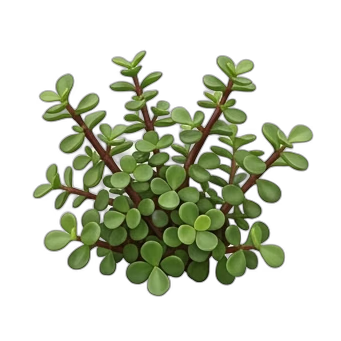
When pruning a neglected Portulacaria afra tumbling down a retaining wall, slicing through the thick, reddish-brown stems releases a sharp, clean, citrusy scent into the warm afternoon air—a sudden reminder that this resilient succulent is not just an architectural marvel, but a living sponge designed to survive punishing droughts.

1. Botanical Overview & Natural Habitat
Portulacaria afra belongs to the Didiereaceae family, a lineage famous for its xerophytic adaptations. Native primarily to the Eastern Cape of South Africa, it thrives in semi-arid thickets, rocky slopes, and dry scrublands where rainfall is erratic and seasonal.
In its native habitat, Portulacaria afra acts as a keystone species. It is a primary food source for large herbivores—most notably the African elephant, which explains its common moniker. Beyond feeding megafauna, it is a powerhouse of carbon sequestration. Research from institutions like the South African National Biodiversity Institute shows that Spekboom thickets are exceptionally efficient at capturing atmospheric carbon, often outperforming many tropical rainforests on a per-hectare basis through its utilization of Crassulacean Acid Metabolism (CAM) photosynthesis.
Morphologically, the plant features succulent, obovate leaves that are arranged oppositely along glossy, reddish-brown stems. These stems harden into woody trunks over time, making the plant an exceptional candidate for bonsai training. While the species plant can reach heights of 6 to 15 feet (1.8 to 4.5 meters) outdoors, cultivated varieties like 'Variegata' (Rainbow Bush) or 'Prostrata' (creeping forms) offer diverse textural options for landscapes and containers.
2. Essential Environmental & Care Requirements
Understanding the natural climate of the Eastern Cape dictates how we must treat Portulacaria afra in cultivation.
| Parameter | Optimal Condition | Common Mistake | Why It Matters |
|---|---|---|---|
| Light | 6+ hours of direct sun or bright grow lights | Keeping it in deep indoor shade | Low light causes etiolation, weak stems, and leaf drop. |
| Temperature | 65°F–85°F (18°C–29°C) | Exposing to hard freezes below 30°F (-1.1°C) | Cellular walls rupture when frozen, turning tissue to mush. |
| Soil pH | 6.0 to 7.5 (slightly acidic to neutral) | Heavy, moisture-retentive clay soil | Poor drainage leads directly to fatal root rot. |
| Watering | Soak-and-dry method when soil is 100% dry | Frequent, shallow waterings | Induces shallow root systems and rots the crown. |
Light is the single most critical environmental factor. Indoors, place your Elephant Bush directly in a south-facing or west-facing window. Outdoors, it appreciates full sun, though in extreme desert climates with afternoon temperatures exceeding 100°F (38°C), a touch of light afternoon shade prevents sun-scorch.
Temperature management is equally straightforward. Portulacaria afra is hardy in USDA Zones 9 through 11. If temperatures dip below 35°F (1.6°C), you must bring container plants indoors or protect in-ground specimens with frost cloth.
⚠️ Important Caution: Never let Portulacaria afra sit in standing water beneath a pot. While it stores water efficiently in its leaves, its root system is exceptionally sensitive to anaerobic conditions caused by waterlogged soil.
3. Step-by-Step Cultivation, Feeding & Propagation
Growing a thriving Elephant Bush is a rewarding exercise in benign neglect, punctuated by intentional pruning. Follow this protocol for establishing and multiplying your collection.
- Select and Prepare the Soil: Mix 50% high-quality potting soil with 50% inorganic grit, such as pumice, perlite, or coarse poultry grit, ensuring an open structure that drains within seconds.
- Potting or Planting: Plant your Portulacaria afra in a container with a drainage hole that is only 1 to 2 inches (2.5 to 5 cm) wider than the current root ball. Press the soil firmly around the base to anchor the woody stem.
- Initial Watering Regime: Withhold water for the first 7 to 10 days after repotting to allow any broken roots to callous over, then apply a thorough drench until water runs out the drainage holes.
- Fertilization Schedule: Feed sparingly during the active growing season (spring through summer). Dilute a balanced, low-nitrogen liquid succulent fertilizer (such as a 2-7-7 formula) to half strength and apply once every 30 days. Cease all feeding in autumn and winter.
- Propagation via Stem Cuttings: Select a healthy, non-flowering stem tip measuring 4 to 6 inches (10 to 15 cm) long. Use sterile shears to make a clean cut just below a node.
💡 Pro-Tip: When propagating Portulacaria afra from cuttings, do not stick them straight into wet soil. Lay your cuttings flat on a shaded, dry tray for 4 to 7 days until the cut ends form a hard, silvery callus. This crucial resting phase prevents fungal pathogens from entering the stem and guarantees a 95%+ rooting success rate when you finally insert them into dry grit.
4. Common Problems, Pests & Troubleshooting
Even resilient plants send distress signals when their environment goes off-balance. Here is how to diagnose and correct them.
- Mass Leaf Drop: If your Elephant Bush is dropping green, plump leaves overnight, it is almost always experiencing a sudden shock—either a drastic drop in temperature, a sudden shift from low indoor light to scorching outdoor sun, or severe overwatering.
- Shriveled, Wrinkled Leaves: This is your plant signaling underwatering. Unlike leaf drop from overwatering, here the leaves will look deflated and lose their glossy turgor pressure. A thorough soaking will plump them back up within 48 hours.
- Mealybugs: These cottony white pests love hiding in the tight crevices where leaves meet the stems. Treat minor infestations by dabbing insects with a cotton swab dipped in 70% isopropyl alcohol. For stubborn outbreaks, apply horticultural soap or neem oil during the evening hours to avoid leaf burn.
- Stem Dieback and Mushy Bark: If the stems turn translucent yellow or brown and feel squishy, root rot has set in. Immediately use a sterilized blade to cut away all infected tissue well into healthy, firm green wood, and propagate the remaining healthy tips.

5. Frequently Asked Questions
Is Elephant Bush toxic to cats and dogs?
No. Portulacaria afra is completely non-toxic to cats, dogs, and horses, making it one of the safest succulent choices for households with curious pets.
Why is my Elephant Bush dropping its leaves?
Leaf drop is typically triggered by environmental stress. The most common culprits are insufficient light, sudden temperature fluctuations, or soggy soil that has caused root hypoxia. Evaluate your watering and light placement to correct the issue.
Can Elephant Bush survive indoors?
Yes, it adapts wonderfully to indoor environments provided it receives direct sunlight from a south- or west-facing window. If natural light is lacking, supplement with a full-spectrum LED grow light positioned 6 to 12 inches (15 to 30 cm) above the canopy for 12 to 14 hours a day.
How often should I water my Elephant Bush?
Allow the soil to dry out completely from top to bottom. In a warm indoor environment with bright light, this usually translates to every 14 to 21 days during spring and summer, and every 4 to 6 weeks during the dormant winter months. Always judge by soil moisture rather than a strict calendar.
📋 Table of Contents ▼ Click to expand
Tags: