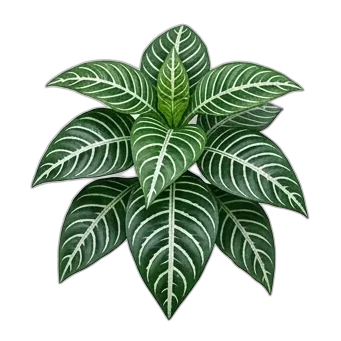
Dumb Cane
Dieffenbachia seguine
My left thumb still twitches when I prune Dieffenbachia seguine. Ten years ago, while trimming a leggy, five-foot specimen in a gardener's sunroom in Savannah, Georgia, I accidentally snapped a succulent cane against my wrist. Within seconds, a milky, viscous sap leaked onto a micro-abrasion on my skin, and the localized burning sensation felt like I had brushed against stinging nettles. Twenty minutes later, when I inadvertently touched my lip, my tongue swelled and burned for two agonizing hours. That botanical baptism taught me why generations of cultivators have called this striking tropical native the "Dumb Cane." Yet, despite its defensive chemistry, it remains one of the most architectural, rewarding foliage plants for indoor spaces if you understand its biology and respect its boundaries.
1. Botanical Overview & Natural Habitat

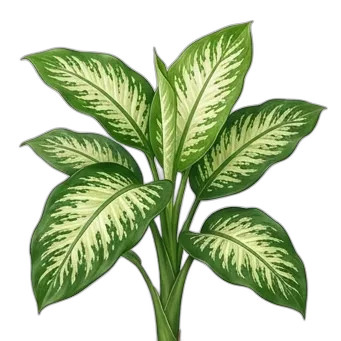
Botanically, Dieffenbachia seguine features thick, succulent stems marked by prominent leaf scars. Its alternate leaves are broad, oblong-lanceolate, and often variegated with striking patterns of cream, yellow, and various shades of green. Mature indoor specimens can reach heights of 5 to 7 feet (1.5 to 2.1 m) with a spread of 3 feet (0.9 m), though they can be aggressively pruned to maintain a bushier, more compact habit.
The plant's defining evolutionary defense mechanism lies within its cellular structure. The leaves and stems contain specialized cells called idioblasts, which harbor needle-like crystals of calcium oxalate known asraphides. When a human, pet, or herbivore chews, snaps, or crushes plant tissue, these microscopic crystals are forcefully ejected, mechanically piercing mucous membranes and skin. Simultaneously, the plant releases proteolytic enzymes (like dumbcain) that trigger immediate, intense pain, localized edema, and temporary loss of speech—hence the common name "Dumb Cane."
2. Essential Environmental & Care Requirements
Replicating a Neotropical understory indoors requires balancing light, moisture, and temperature. While Dieffenbachia seguine is famously forgiving of low-light conditions, it reaches its architectural peak when given proper environmental inputs.
| Parameter | Optimal Condition | Common Mistake | Why It Matters |
|---|---|---|---|
| Light | Bright, indirect light (10,000 to 20,000 lux) | Direct midday sun | Direct sun scorches the variegated leaf tissue, bleaching out creamy variegation and causing necrotic brown patches. |
| Temperature | 65°F to 80°F (18°C to 27°C) | Temperatures dropping below 50°F (10°C) | Cold stress causes lower leaves to yellow rapidly, drop, and invites stem rot due to stalled cellular respiration. |
| Humidity | 50% to 70% relative humidity | Placing near heating/cooling vents | Low humidity leads to crisp, brown leaf margins and makes the foliage highly susceptible to spider mites. |
| Watering | Top 2 inches (5 cm) dry out completely | Keeping soil perpetually soggy | Saturated potting mix starves roots of oxygen, leading to fatal Pythium or Rhizoctonia root rot. |
Soil composition is equally critical. Use a chunky, highly aerated aroid mix composed of 40% high-grade peat or coco coir, 30% perlite or pumice, and 30% orchid bark. This ensures that when you water thoroughly, excess moisture drains instantly, preventing the anaerobic conditions that Dumb Canes detest. For authoritative insights on maintaining indoor tropical plant health, consult the Royal Horticultural Society.
💡 Pro-Tip: If your Dieffenbachia starts leaning dramatically toward a window, do not just rotate the pot. This indicates that the light gradient on one side is too weak. Move the plant 2 feet (60 cm) closer to the light source, and turn the container 90 degrees every time you water to maintain an even, straight vertical trunk.
3. Step-by-Step Cultivation, Feeding & Propagation
Propagation of Dieffenbachia seguine is remarkably straightforward due to the adventigenous nodes lining its sturdy canes. Whether you are dividing an overgrown specimen or rescuing a leggy, bare-bottomed plant, follow this precise sequence.
- Sanitize Your Equipment: Wipe all pruning shears or propagation blades with a 70% isopropyl alcohol solution to prevent transferring opportunistic pathogens into exposed plant tissue.
- Don Personal Protective Equipment: Always wear nitrile or latex gloves and protective eyewear before handling the plant to prevent sap contact with skin or eyes.
- Select and Cut the Cane: Identify a healthy, mature cane. Using a clean, single stroke, cut a section of the stem measuring 4 to 6 inches (10 to 15 cm) long, ensuring each section contains at least two visible, swollen nodes (eyes). Alternatively, you can cut the top leafy crown off a leggy plant to encourage branching.
- Callous the Wounds: Dip the cut ends of the cane sections in powdered horticultural sulfur or rooting hormone to seal the tissue, then leave them in a dry, shaded area for 24 to 48 hours to form a protective callous.
- Prepare the Propagation Medium: Fill a shallow propagation tray or individual 4-inch (10 cm) pots with a sterile, moisture-retentive medium consisting of equal parts perlite and peat moss.
- Plant the Cuttings: For cane sections (often called "log" propagation), lay them horizontally half-submerged in the medium with the nodes facing upward. For top cuttings, plant the base 2 inches (5 cm) deep into the soil.
- Provide Bottom Heat and Moisture: Place the setup in a warm area maintaining 75°F to 80°F (24°C to 27°C). Tent the container with clear plastic to lock in humidity, venting it for 15 minutes daily. Roots and new shoots typically emerge within 21 to 35 days.
When fertilizing actively growing plants from spring through early autumn, apply a balanced, water-soluble liquid houseplant fertilizer (such as a 10-10-10 or 20-20-20 formulation) diluted to half-strength every 4 weeks. Cease all fertilization entirely during the low-light winter months (November through February), as the plant enters a semi-dormant state and cannot process excess mineral salts.
⚠️ Important Caution: Always keep Dieffenbachia seguine completely out of reach of curious cats, dogs, and small children. Ingestion of any plant part causes immediate oral irritation, drooling, vomiting, and potential swelling of the upper airway that can obstruct breathing. If ingestion occurs, immediately offer cool liquids or dairy to soothe the mouth and seek veterinary or medical assistance.
4. Common Problems, Pests & Troubleshooting
Even experienced growers occasionally encounter physiological stress or pest pressures when cultivating Dieffenbachia. Early identification is your best defense.
Yellowing Lower Leaves: When older leaves at the bottom of the plant turn completely yellow and drop off, it is usually a natural part of the plant's aging process as it pushes energy into upward growth. However, if multiple leaves yellow simultaneously alongside soft, mushy stems, you are severely overwatering. Let the soil dry out entirely, and if rot has set in, unpot the plant, slice away decayed roots with a sterilized knife, and repot in fresh, dry medium.
Brown, Crisp Leaf Tips: This classic symptom points directly to insufficient ambient humidity or inconsistent watering schedules. If your indoor humidity drops below 40%, run a cool-mist humidifier nearby or place the pot on a pebble tray filled with water, ensuring the bottom of the pot sits above the waterline.

5. Frequently Asked Questions
Why are the leaves on my Dumb Cane turning translucent and drooping?
Translucent, limp leaves are a definitive sign of chill damage or root rot. If the plant was exposed to drafty windows or temperatures below 50°F (10°C), the cellular walls have ruptured. Move the plant to a warmer location immediately, trim away hopelessly damaged foliage, and withhold water until the soil dries out significantly.
Can I grow Dieffenbachia seguine in water permanently?
While you can root stem cuttings in water, long-term hydroponic growth in plain water is unsustainable for a mature Dieffenbachia. Water lacks the structural support, oxygen exchange balance, and micronutrients found in a proper soil mix or specialized aroid substrate. Transition water-rooted cuttings to soil once root systems reach 2 inches (5 cm) in length.
How do I fix a Dumb Cane that has become too tall and top-heavy?
You can practice "cane-beheading" safely. Cut the main stem back to the desired height (leaving at least 6 to 12 inches of stem above the soil line). The base will quickly activate dormant nodes and push out multiple new shoots, creating a much bushier, multi-stemmed specimen. You can root the top cutting using the propagation steps outlined in Section 3.
Are all parts of the Dumb Cane toxic?
Yes, every single part of Dieffenbachia seguine—from the roots and thick succulent stems to the leaves and sap—contains calcium oxalate crystals and toxic proteolytic enzymes. Handling the plant requires care, and ingestion leads to severe, immediate clinical signs in both humans and animals.
📋 Table of Contents ▼ Click to expand
Tags: