

Cyclamen
Cyclamen persicum
1. Botanical Overview & Natural Habitat

Botanically, the plant is a geophyte, storing its energy reserves in a flattened, tuberous hypocotyl. In its native habitat, the tuber sits just at or slightly above the soil surface, protected from grazing animals by its bitter-tasting sap and anchored by contractile roots that pull it deeper into crevices if soil builds up over it.
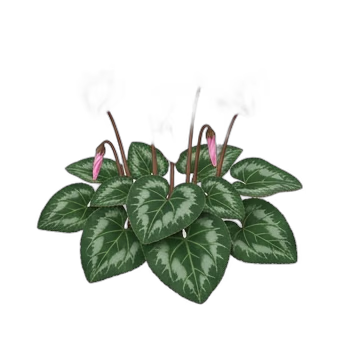
The leaves emerge in autumn after the first rains arrive, forming a dense rosette of heart-shaped (cordate) foliage marked with striking silver, pewter, or pale green marbling. This variegation is not merely ornamental; it acts as camouflage against rocky backdrops in the wild, breaking up the plant's silhouette. The flowers rise on single-flowered pedicels above the foliage. Unlike most flowers that nod or face outward, cyclamen petals reflex completely upward, exposing the prominent, fused stamens like the snout of a dart. Following pollination, the flower stem coils tightly like a corkscrew, pulling the developing seed capsule down toward the dark, safe confines of the soil surface where ants can harvest and disperse the seed.
2. Essential Environmental & Care Requirements
Growing Cyclamen persicum successfully indoors or in protected garden settings requires mimicking its native Mediterranean microclimate. Get these four environmental parameters right, and your plant will thrive.
| Parameter | Optimal Condition | Common Mistake | Why It Matters |
|---|---|---|---|
| Temperature | 55°F to 65°F (13°C to 18°C) day; 50°F to 55°F (10°C to 13°C) night | Placing them near 72°F+ (22°C+) heating vents or radiators | Excessive warmth triggers premature dormancy, leaf yellowing, and flower collapse. |
| Light | Bright, indirect light; 4,000 to 6,000 lux (e.g., an unshaded east-facing window) | Direct, scorching afternoon sun hitting leaves and soil | Intense direct light burns delicate petals and overheats the shallow tuber. |
| Watering | Soak-and-drain method when the top 0.5 inches (1.3 cm) of soil is dry | Pouring water directly over the center of the tuber or leaving it sitting in a saucer | Crown moisture invites Botrytis gray mold and soft rot, which can destroy the plant in 48 hours. |
| Humidity | 50% to 60% ambient humidity via pebble trays | Misting the plant leaves directly indoors | While they love humidity, direct wetting of the foliage and crown promotes fungal pathogens. |
💡 Pro-Tip: When your indoor heating kicks on in November, humidity often plummets below 30%. Never mist your cyclamen to fix this. Instead, set the pot on a wide gravel tray filled with water, ensuring the bottom of the pot stays elevated above the waterline by at least 1 inch (2.5 cm). This raises local humidity safely without inviting crown rot.
3. Step-by-Step Cultivation, Feeding & Propagation
Cultivating cyclamen means working in harmony with its natural dormancy cycle. When temperatures rise above 70°F (21°C) in late spring, the leaves will naturally yellow and die back. This is not a failure; it is the plant entering summer rest.
Step-by-Step Growing and Maintenance Protocol
- Select and Inspect the Tuber: Purchase plants with firm, symmetrical tubers that sit proudly in the pot, with the top one-third exposed above the soil line. Avoid any plant with soft spots or yellowing stems at the base.
- Potting and Soil Composition: Repot store-bought plants in autumn using a fast-draining, soil-less mix composed of 40% peat moss or coco coir, 30% perlite or pumice, and 30% compost. Ensure the pot is only 1 to 2 inches (2.5 to 5 cm) wider than the tuber; cyclamen bloom best when slightly root-bound.
- Initiating Water Delivery: Water the pot thoroughly from the bottom by placing it in a basin of water for 20 minutes until the surface feels damp, then let it drain completely. Never let the pot sit in standing water.
- Feeding Schedule: Feed every 14 days from October through March using a balanced, water-soluble fertilizer diluted to half-strength (e.g., 10-10-10). Avoid high-nitrogen formulas, which produce lush green leaves at the expense of floral buds.
- Managing the Post-Bloom Decline: As spring arrives and flowers fade in April, gradually reduce watering over a 4-week period until the foliage dies back entirely. Store the dry tuber in a cool, dark location (50°F to 60°F / 10°C to 15°C) for the summer months of June and July.
- Waking the Plant: In August or September, repot the tuber into fresh soil, resume light watering, and move it to a cool, bright location to trigger the autumn flush of new growth.
⚠️ Important Caution: Cyclamen tubers contain cyclamin, a toxic triterpenoid saponin that causes severe vomiting, diarrhea, and abdominal pain if ingested by cats, dogs, or horses. Always keep plants out of reach of domestic pets, and wash your hands thoroughly after handling or dividing tubers.
For official guidelines on managing greenhouse-grown ornamental crops and mitigating disease risks, consult the Penn State Extension Plant Pathology Resources.
4. Common Problems, Pests & Troubleshooting
Even with careful management, cyclamen can occasionally signal distress. Diagnosing issues early saves the plant from permanent damage.
- Yellowing Leaves with Firm Stems: If the lower leaves turn yellow while the center remains firm, the plant is usually reacting to a location that is too warm or lacks sufficient light. Move it to a cooler room immediately.
- Sudden Collapse and Mushy Stems: This points to soft rot (Erwinia bacteria) or Botrytis cinerea (gray mold), caused by overwatering or splashing water directly onto the crown. Discard severely affected plants. For minor infections, trim away rotted tissue with a sterilized blade and dust the wound with powdered sulfur or cinnamon.
- Stunted Growth and Sticky Leaves: Inspect the undersides of the leaves for cyclamen mites (Phytonemus pallidus), microscopic pests invisible to the naked eye that cause distorted, curled new growth. Discard heavily infested plants, as these mites are notoriously difficult to eradicate in home environments.
- Bud Blindness (Buds Drying Up Before Opening): This occurs due to erratic watering schedules, sudden temperature drops, or lack of humidity. Maintain consistent moisture and stable cool temperatures between 55°F and 60°F (13°C and 15°C).

5. Frequently Asked Questions
How do I get my cyclamen to bloom again next year?
To secure a second round of blooms, you must respect the plant's natural dormancy cycle. When flowering stops in spring, allow the foliage to die back naturally by tapering off water. Keep the dormant tuber dry and cool through June and July. In August, repot it into fresh potting mix, resume watering, and place it in a bright, cool spot where night temperatures drop below 60°F (15°C) to trigger bud formation.
Should I cut or pull off dead cyclamen flowers?
Always pull dead flowers and yellowed leaves cleanly away from the base of the tuber rather than cutting them. Grab the stem firmly near the soil line and give it a sharp, twisting tug. Leaving a short stub of stem behind can cause the remaining tissue to rot and invite fungal pathogens directly into the tuber.
Can cyclamen be planted outdoors in the garden?
Cyclamen persicum is generally hardy only in USDA Zones 9 through 11 and cannot survive freezing winter ground temperatures. However, in milder climates, they can be planted in well-drained, shaded garden beds under trees or in rock gardens. In colder zones, use them as outdoor patio accents in containers during autumn and spring, bringing them indoors or into a greenhouse before frost threatens.
Why are my cyclamen stems curling and lying flat on the soil?
Stems that suddenly sprawl outward and lay flat are typically reacting to temperatures that are too warm (above 70°F / 21°C) or insufficient light. Cyclamen are cool-weather plants; when indoor environments become too warm and dry, the plant exhausts its water reserves faster than the stems can support their own weight, causing them to collapse.
📋 Table of Contents ▼ Click to expand
Tags:





