

Calathea Orbifolia
Goeppertia orbifolia
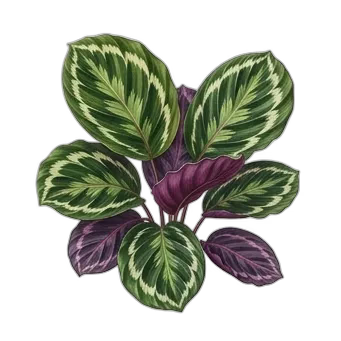
The air in my conservatory dropped to 52°F (11°C) one unusually crisp autumn night three years ago, and by morning, my prize Calathea orbifolia looked as though it had been gently dipped in boiling water. Every single one of its magnificent, dinner-plate-sized leaves—usually striped with iridescent silver and deep emerald—drooped into a pathetic, papery sprawl. It wasn't dead, but it took nearly four months of meticulous humidity management and thermal stabilization to coax out a single unblemished new spear. That heartbreak taught me more about Goeppertia orbifolia than any textbook ever could: this plant does not merely tolerate neglect; it broadcasts its disapproval with surgical precision.
1. Botanical Overview & Natural Habitat

In the wild, this plant occupies the forest floor, where towering canopies filter direct sunlight into dappled, low-intensity beams. The soil beneath is a rich, perpetually damp, and highly aerated matrix of decaying organic matter, leaf litter, and coarse sand. Because it sits low in the understory, it evolved enormous leaf blades—often reaching 12 inches (30 cm) or more in diameter—to maximize surface area for photosynthesis in dim light.
Understanding this natural architecture dictates how we cultivate it indoors. Its root system is relatively shallow, consisting of fleshy rhizomes and fine, sensitive roots that spread horizontally rather than vertically. This horizontal habit means it prefers wider pots over deep ones, mimicking the shallow humus layer of its native habitat.
2. Essential Environmental & Care Requirements
Recreating a Bolivian rainforest inside a modern living room requires paying strict attention to environmental parameters. Deviations from these parameters lead directly to crispy tips, muted leaf patterns, or total plant collapse.
| Parameter | Optimal Condition | Common Mistake | Why It Matters |
|---|---|---|---|
| Light | Bright, indirect light (7,000–10,000 lux) | Placing in direct, unfiltered midday sun | Direct sun scorches the thin, broad leaves, bleaching out the silver stripes and burning holes in the tissue. |
| Humidity | 60% to 80% relative humidity | Relying on decorative pebble trays alone | Low humidity causes the delicate margins to brown, curl, and turn crispy within days. |
| Temperature | 65°F to 80°F (18°C to 27°C) | Exposure to drafts below 60°F (15°C) | Cold drafts trigger shock, causing rapid leaf yellowing and systemic cell collapse. |
| Watering | Keep evenly moist; water when top 1 inch (2.5 cm) dries | Allowing the soil to dry out completely | The fine root system desiccates rapidly, leading to irreversible leaf drop and root necrosis. |
To achieve these conditions, place your Goeppertia orbifolia within 3 to 5 feet (1 to 1.5 meters) of an east-facing window, or shield it behind a sheer curtain in a south- or west-facing room. Avoid low-light corners where the plant will merely survive rather than thrive; stagnant, dark environments invite fungal pathogens.
Water quality is another non-negotiable factor. Calathea orbifolia is exceptionally sensitive to the dissolved salts, fluoride, and chlorine commonly found in municipal tap water. These chemicals accumulate in the leaf tips, causing characteristic brown necrotic halos. Always use rainwater, distilled water, or reverse osmosis (RO) water that has been warmed to room temperature.
💡 Pro-Trust: If you lack an RO system, fill open-top jugs with tap water and let them sit uncovered for 48 hours. While this off-gasses chlorine, it does not remove chloramines or heavy mineral salts. For pristine foliage, invest in a basic countertop distillation unit; your Calathea will reward you with unblemished, velvety leaves.
3. Step-by-Step Cultivation, Feeding & Propagation
When it is time to repot or propagate your Calathea orbifolia, timing and gentleness are everything. Spring, just as daylight hours lengthen and natural hormones trigger active growth, is the ideal window for these interventions.
Step-by-Step Repotting and Division Protocol
- Select the Right Vessel: Choose a pot that is only 1 to 2 inches (2.5 to 5 cm) wider in diameter than the current root ball. Opt for a wide, shallow pot (azalea pot) with generous drainage holes to match its natural horizontal root spread.
- Mix the Ideal Substrate: Create a custom soil blend using 40% high-quality peat or coco coir, 30% perlite or pumice for aeration, 20% orchid bark for structural drainage, and 10% worm castings for gentle, organic nutrition.
- Unpot and Inspect: Gently ease the plant out of its container. Use your fingers to brush away old, compacted soil, and carefully untangle any circling roots. Inspect the rhizomes and trim away any mushy, black, or dead roots with sterile shears.
- Divide (Optional): If the plant has multiple natural growth points (crowns), use a clean, sharp blade to slice cleanly through the rhizome, ensuring each division has at least two healthy shoots and an intact root system.
- Plant at the Correct Depth: Position the plant in the fresh medium so that the base of the stems sits at the exact same soil level it was at previously. Burying the crown too deep invites stem rot, while planting it too high exposes delicate roots.
- Settle and Water: Tamp the soil down lightly to eliminate large air pockets. Water thoroughly with lukewarm, filtered water until it runs freely from the drainage holes, then let it drain completely.
Feeding your Calathea orbifolia requires a delicate touch. Because their roots burn easily, use a balanced, water-soluble foliage fertilizer diluted to one-quarter strength. Apply this only once every 4 weeks during the active growing season (April through September). Cease fertilization entirely from October through March when the plant enters a semi-dormant resting phase due to reduced light levels.
⚠️ Important Caution: Never fertilize a dry Calathea. Applying nutrient salts to parched roots will cause immediate chemical burn, resulting in rapid browning of the leaf edges. Always water the soil thoroughly a day before applying any liquid fertilizer.
For further botanical context on indoor tropical families, consult resources like the Royal Botanic Gardens, Kew, for authoritative insights on tropical understory plant biology.
4. Common Problems, Pests & Troubleshooting
Even with pristine care, Calathea orbifolia occasionally runs into trouble. Learning to read the botanical language of its leaves saves weeks of guesswork.
- Crispy, Brown Leaf Margins: Caused by low relative humidity or tap water buildup. Increase ambient humidity using a dedicated ultrasonic humidifier targeting 65%+, and switch exclusively to distilled water.
- Yellowing Lower Leaves: Usually the result of overwatering or soil that remains soggy for too long. Allow the top 1.5 inches (4 cm) of soil to dry out between waterings, and ensure your potting mix drains freely.
- Stiff, Curling Leaves: A defense mechanism against severe under-watering or intense, hot drafts. Soak the root ball thoroughly via bottom-watering for 30 minutes, then relocate the plant to a draft-free zone.
- Spider Mites (Tetranychidae): These microscopic pests thrive in the warm, dry indoor environments that humans love. They spin fine, dusty webs beneath the leaves and suck plant sap, causing stippled, pale foliage. Combat them by wiping down every leaf surface with insecticidal soap or horticultural oil every 7 days for a 3-week cycle to break the egg-laying phase.

5. Frequently Asked Questions
Why are the leaves on my Calathea orbifolia turning yellow?
Yellowing leaves typically indicate overwatering, poor drainage, or cold temperature stress. If the soil feels heavy and wet several inches down, withhold water, inspect the roots for rot, and improve soil aeration during your next repotting cycle.
How do I increase humidity for my Calathea orbifolia indoors?
Group your Calathea with other tropical plants to create a shared microclimate, or place it directly beside a cool-mist ultrasonic humidifier running 12 hours a day. Avoid relying solely on pebble trays, as their surface evaporation rate is rarely sufficient for broad-leaved Marantaceae.
Can I propagate Calathea orbifolia by leaf cuttings?
No. Calathea orbifolia cannot be propagated from single leaf cuttings because the leaves lack the necessary meristematic tissue to generate roots and shoots. Propagation must be achieved through root division of established multi-stemmed clumps during repotting.
Why is my Calathea orbifolia not moving or praying at night?
A lack of nyctinastic movement usually signals that the plant is severely root-bound, stressed by poor water quality, or suffering from a pest infestation. Check the root system to see if it has exhausted its container, and evaluate your watering and lighting habits to restore its natural circadian rhythm.
📋 Table of Contents ▼ Click to expand
Tags:





