

Calamondin
Citrofortunella microcarpa
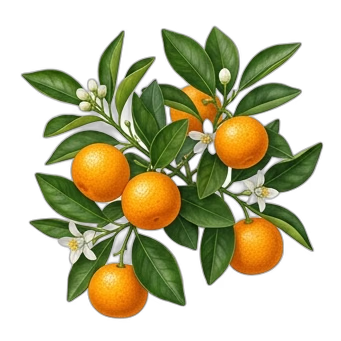
Stepping out onto my back patio on a crisp October morning last year, I caught the unmistakable, heady scent of orange blossoms mixed with sweet jasmine. It wasn’t spring; it was my potted calamondin (Citrofortunella microcarpa), dropping its fourth wave of fragrant white flowers while simultaneously heavy with glossy, golf-ball-sized neon orange fruits. I plucked one, sliced it open with my pocketknife, and squeezed the tart, bright juice straight into my morning tea—a ritual I’ve repeated every autumn since I first brought this resilient little citrus home.

1. Botanical Overview & Natural Habitat
The calamondin has a fascinating taxonomic history. Long classified as Citrus mitis, modern botanical consensus places it as an intergeneric hybrid between the mandarin orange (Citrus reticulata) and the kumquat (Fortunella margarita). This heritage explains its unique traits: the cold tolerance and small, edible-skinned fruit of a kumquat combined with the juicy, segmented interior and aromatic foliage of a mandarin.
Native to Southeast Asia—specifically the Philippines, southern China, and Indonesia—the calamondin thrives in tropical and subtropical regions. In its native habitat, it grows into an upright evergreen shrub or small tree reaching 15 to 20 feet (4.5 to 6 meters) tall. However, when grown in containers or pruned as a landscape accent, it easily maintains a manageable height of 4 to 6 feet (1.2 to 1.8 meters).
Botanically, Citrofortunella microcarpa features dense, glossy, dark green leaves with winged petioles and a uniquely winged margin on the leaf stem. The flowers are small, measuring about 0.75 inches (1.9 cm) across, and appear either singly or in small clusters. The fruit is round, measuring 1 to 1.5 inches (2.5 to 3.8 cm) in diameter, transitioning from deep emerald green to a brilliant, vibrant orange when fully ripe. Unlike true limes, the peel is sweet and edible, while the pulp is intensely sour, acidic, and packed with vitamin C.
For an in-depth look at citrus taxonomy and regional performance, consult the University of Florida IFAS Extension Citrus Guide.
2. Essential Environmental & Care Requirements
Calamondins are remarkably forgiving for citrus, but they still have strict baseline needs if you want them to flower, fruit, and retain their leaves year-round.
Light
Your calamondin demands maximum light intensity. Outdoors, it needs full sun, which means at least 6 to 8 hours of direct sunlight daily. Indoors, place it directly in front of a south-facing or west-facing window. If natural light falls short during winter months, supplement with a full-spectrum LED grow light positioned 12 to 18 inches (30 to 45 cm) above the canopy, running for 12 to 14 hours per day.
Temperature
As a tropical native, this plant despises sudden temperature fluctuations and frost. The ideal ambient temperature range is 65°F to 85°F (18°C to 29°C). While mature trees can tolerate brief dips down to 28°F (-2°C) without dying, fruit drop and severe leaf abscission occur rapidly below 40°F (4°C). If you live in USDA Hardiness Zones 9 through 11, you can plant them directly in the ground. For Zones 8 and colder, grow them in containers so you can move them indoors before the first autumn frost.
Water and Humidity
Overwatering is the number one killer of container-grown calamondins. Allow the top 2 to 3 inches (5 to 7.5 cm) of soil to dry out completely before watering deeply until water runs freely through the drainage holes. Relative humidity should ideally stay between 50% and 60%. Indoor heated homes in winter often drop humidity below 30%, which triggers leaf drop. Mist the foliage daily or place the pot on a pebble tray filled with water to elevate ambient humidity without causing soggy roots.
| Parameter | Optimal Condition | Common Mistake | Why It Matters |
|---|---|---|---|
| Light | 6–8 hours direct sun / daily | Placing in a north-facing window | Low light halts flower bud initiation and fruit development. |
| Soil pH | 6.0 to 6.5 (slightly acidic) | Using heavy garden loam or alkaline mix | Neutral/alkaline soils cause iron and micronutrient lockout. |
| Watering | Top 2–3 inches dry before watering | Keeping soil perpetually damp | Saturated soil suffocates roots, leading to Phytophthora root rot. |
| Feeding | Citrus-specific fertilizer monthly in spring/summer | Using high-nitrogen lawn fertilizer | Excess nitrogen produces lush leaves at the expense of flowers and fruit. |
3. Step-by-Step Cultivation, Feeding & Propagation
Growing a productive calamondin requires attention to soil structure, targeted nutrition, and correct repotting mechanics.
Soil Formulation
Calamondins demand lightning-fast drainage. Never use native garden soil in a container. Mix 40% high-quality organic potting soil, 30% coarse perlite or pumice, and 30% aged pine bark fines. This creates a chunky, aerated matrix that mimics the loose, organic-rich forest floors of their native habitats.
Feeding Regimen
Citrus are heavy feeders, often referred to as "hungry trees." Use a granular, slow-release citrus fertilizer formulated with guaranteed micronutrients—specifically iron, zinc, and manganese—applied every 6 to 8 weeks from early March through late August. Supplement this with a water-soluble organic liquid kelp or fish emulsion every 4 weeks during the active spring growth flush.
💡 Pro-Tip: If you notice your calamondin leaves turning bright yellow between green veins (interveinal chlorosis), do not automatically dump on more all-purpose fertilizer. This is a classic sign of iron or magnesium deficiency caused by a high soil pH locking out nutrients. Drench the root zone with chelated iron and check your watering water’s pH.
Step-by-Step Repotting Protocol
Calamondins prefer to be slightly root-bound, but they will eventually exhaust their potting medium. Repot every 2 to 3 years in early spring just as new growth begins.
- Select the Right Vessel: Choose a container only 2 inches (5 cm) wider in diameter than the current root ball. Ensure it features at least three drainage holes measuring a minimum of 0.5 inches (1.3 cm) across.
- Prepare the Plant: Water the tree thoroughly 24 hours prior to repotting to hydrate the root system and reduce transplant shock.
- Unpot and Inspect: Gently ease the plant from its container. Use a clean, sterilized hori-hori knife or pruning shears to gently tease apart any tightly circled or girdling roots on the outer perimeter of the root ball.
- Layer the Base: Place a 1-inch (2.5 cm) layer of your custom coarse soil mix at the bottom of the new container.
- Position the Tree: Set the tree in the center, ensuring the root flare (where the trunk widens into the root system) sits level with or 0.5 inches (1.3 cm) above the final soil surface. Burying the trunk too deep invites collar rot.
- Fill and Settle: Fill in the sides with the soil mix, tamping down gently with your hands every few inches to eliminate large air pockets.
- Post-Repot Water: Water thoroughly until it runs clear from the bottom. Apply a diluted seaweed extract solution to stimulate rapid fine root regeneration.
Propagation Methods
While calamondins grow readily from seed, seedlings take 5 to 7 years to fruit and do not come true to the parent plant. Instead, propagate via semi-hardwood cuttings. In mid-summer, take a 5-inch (12.7 cm) tip cutting from healthy, non-flowering current-year growth. Strip the lower leaves, dip the base in rooting hormone powder (0.3% IBA), and insert it into a 50/50 mix of perlite and peat moss under high humidity until roots form in 45 to 60 days.
4. Common Problems, Pests & Troubleshooting
Even with pristine care, growing Citrofortunella microcarpa indoors or in protected landscapes presents a few predictable hurdles.
Citrus Leafminer
These microscopic larvae burrow inside the leaves, creating distinct, silvery, winding serpentine trails. While rarely fatal to a mature tree, heavy infestations curl and distort new foliage.
- Solution: Prune out severely damaged leaves immediately. Hang sticky yellow traps near new flushes of growth, and apply cold-pressed neem oil or horticultural oil spray to both sides of the leaves at dusk to avoid scorching foliage.
Scale Insects and Spider Mites
Indoor calamondins lack natural predators, making them prime targets for armored scale (which look like tiny brown bumps on stems) and spider mites (which spin fine webs under leaves).
- Solution: Wipe down stems and leaf undersides with a microfiber cloth dipped in a 1% solution of horticultural insecticidal soap and water. Repeat this process every 7 days for three weeks to break the pest lifecycle.
⚠️ Important Caution: Never use synthetic systemic insecticides containing imidacloprid on calamondins if you intend to consume the fruit or if the tree is currently in bloom. Systemic chemicals travel directly into the nectar, pollen, and fruit pulp, making them unsafe for human consumption and dangerous to visiting pollinators.
Blossom Drop
Finding a carpet of white flower petals beneath your tree can cause panic, but understand that citrus naturally drop up to 80% of their blossoms.
- Solution: If petal drop is followed by wholesale flower stem drop, check for environmental stress. Sudden drafts of cold air, erratic watering schedules (swinging from bone-dry to waterlogged), or acute lack of light are the primary triggers.

5. Frequently Asked Questions
Can you eat calamondin raw?
Yes, but prepare your tastebuds! The outer peel is thin and naturally sweet, while the inner segments contain intensely sour, acidic juice. Eating them whole—popping the entire fruit into your mouth and biting down—provides an instantaneous, refreshing sweet-and-sour flavor explosion. They are also widely used sliced in savory dishes, marinades, marmalades, and cocktails.
Why is my indoor calamondin dropping all its leaves?
Sudden leaf drop is almost always caused by an environmental shock or root stress. The most common culprits are moving the plant from high outdoor light to dim indoor light too quickly, letting the root ball dry out completely followed by heavy watering, or placing the pot directly over a forced-air heating vent. Acclimate the plant slowly in autumn, keep watering consistent, and ensure bright light.
How do I get my potted calamondin to flower and fruit?
To trigger blooming, your calamondin needs two primary signals: a distinct period of high-intensity light (at least 6 hours of direct sun daily) and slight root restriction. If your tree is growing in a pot that is too large, it will direct all its energy into growing roots and shoots rather than flowers. Additionally, ensure you are using a fertilizer formulated for citrus that contains adequate phosphorus and potassium rather than high, leafy-growth nitrogen.
Are calamondin thorns normal?
Yes, many calamondin varieties feature small, sharp thorns along the branches, particularly on vigorous new water sprouts or younger rootstock suckers. These thorns are completely normal defensive structures inherited from wild citrus ancestors. You can safely prune them off with clean bypass pruners if they pose a hazard when harvesting fruit or handling the plant.
📋 Table of Contents ▼ Click to expand
Tags:





