Caladium
Caladium bicolor
1. Botanical Overview & Natural Habitat

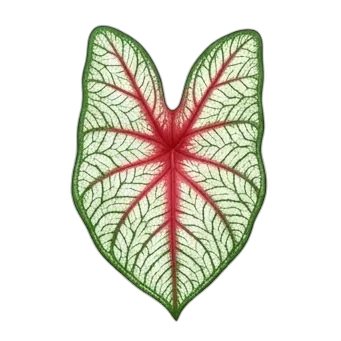
The striking foliage is their defining characteristic. Leaves emerge directly from the tuber on long, succulent petioles, presenting in two primary architectural forms: the traditional "fancy-leaved" types featuring large, heart-shaped blades up to 18 inches (45 cm) long, and the "strap-leaved" types boasting narrower, lance-shaped leaves that naturally produce a denser, more branched mounding habit. The color palette spans ivory, white, rose, crimson, chartreuse, and deep emerald green, often arranged in intricate, veined patterns.
Understanding their native understory habitat dictates how we must treat them in designed landscapes. They are not built for scorching, unshielded afternoon sun or freezing winters. When soil temperatures drop below 60°F (15°C), the plant perceives the onset of the dry season, halting growth and pulling energy back into the tuber.
2. Essential Environmental & Care Requirements
Creating a thriving microclimate for caladiums requires mimicking their native tropical home.
- Light: In USDA Zones 9 through 11, caladiums prefer bright shade or morning sun with protection from harsh afternoon rays (12 PM to 4 PM), which scorches the thin leaf tissues. In cooler northern climates (Zones 4 to 8), many modern cultivars tolerate full sun, provided they receive consistent soil moisture.
- Temperature: These are quintessential warm-weather plants. Optimal daytime air temperatures range between 75°F and 85°F (24°C to 29°C). Nighttime temperatures should not dip below 65°F (18°C). Tubers suffer permanent cellular damage if exposed to prolonged soil temperatures under 55°F (13°C).
- Soil: Caladiums demand an exceptionally rich, highly porous, organically amended soil with a slightly acidic pH between 5.5 and 6.2. Heavy clay causes rapid tuber rot; sandy loam amended with well-rotted leaf mold or compost provides the ideal balance of moisture retention and drainage.
- Watering: During the active growing season, keep the soil uniformly moist—never waterlogged. Allow the top 1 inch (2.5 cm) of soil to dry out between deep, thorough waterings. Reduce irrigation drastically as natural autumn dormancy approaches.
| Parameter | Optimal Condition | Common Mistake | Why It Matters |
|---|---|---|---|
| Soil pH | 5.5 – 6.2 (Slightly Acidic) | Planting in alkaline soils above 7.0 | High pH locks out essential micronutrients like iron and manganese, causing severe chlorosis and stunted leaf expansion. |
| Soil Temperature | 70°F – 85°F (21°C – 29°C) | Planting tubers into cold soil below 60°F (15°C) | Cold, wet soil promotes fungal pathogens like Pythium, causing the unsprouted tuber to rot before emergence. |
| Light Exposure | Dappled shade or 3–4 hours of morning sun | Planting in scorching midday sun without acclimation | Intense UV rays scorch the paper-thin foliar membranes, creating unsightly brown, translucent patches. |
| Moisture Level | Consistently moist, well-draining | Allowing complete drought stress followed by flooding | Irruptive moisture shifts cause petiole snap and leaf margin necrosis, severely weakening the tuber. |
💡 Pro-Tip: When designing container combos with caladiums, pair them with shade-tolerant ferns or trailing Lysimachia (creeping Jenny). This creates a living mulch layer that retains soil humidity at the surface while keeping the root zone consistently cool.
3. Step-by-Step Cultivation, Feeding & Propagation
Successful caladium culture relies on proper timing and gentle handling of the tubers. Whether you are planting them out in spring or forcing them indoors, follow this proven sequential protocol:
- Select and Grade Tubers: Choose firm, heavy tubers free of soft spots or mold. Grade size matters: "Mammoth" (3 inches/7.5 cm and up) and "Jumbo" (2.5 to 3 inches) sizes produce significantly more leaves than smaller #1 grades.
- De-eye (Optional for Maximum Foliage): For fancy varieties, use a sharp, sterilized blade to gently scoop out the dominant central growing bud (the "eye"). This encourages dormant secondary eyes to break, resulting in a much fuller, multi-stemmed plant rather than a few tall, sparse leaves.
- Pre-Sprout for Earlier Color: Start tubers indoors 4 to 6 weeks before your last spring frost. Place them in shallow flats filled with moist peat moss or perlite, keeping them at 75°F–80°F (24°C–27°C) until shoots reach 1 inch (2.5 cm) tall.
- Plant at the Correct Depth: Plant tubers outdoors only after all danger of frost has passed and night temperatures consistently exceed 65°F (18°C). Set the tubers 1.5 to 2 inches (3.5 to 5 cm) deep, ensuring the rounded, bumpy side (with visible eyes) faces upward. Space them 8 to 12 inches (20 to 30 cm) apart depending on the cultivar's mature spread.
- Implement a Balanced Feeding Regimen: Feed actively growing plants every 3 to 4 weeks using a water-soluble, balanced fertilizer formulated with micronutrients (such as a 10-10-10 ratio) at half-strength. Avoid high-nitrogen fertilizers, which trigger excessive green leaf growth at the expense of vibrant pink and white coloration.
- University of Florida IFAS Extension guidance highlights the importance of tapering off all fertilizers and water by late September to allow the foliage to yellow naturally, signaling the transition into dormancy.
- Harvest and Store for Winter: In USDA Zones 8 and colder, dig up tubers after the first light frost turns the foliage down. Cut off the stems 1 inch (2.5 cm) above the tuber. Let them cure in a warm, well-ventilated area at 80°F (27°C) for 7 to 10 days, then store them in dry peat moss, vermiculite, or wood shavings at a stable 55°F to 60°F (13°C to 15°C) over winter.
⚠️ Important Caution: Every part of the caladium plant contains calcium oxalate crystals. Ingestion causes intense irritation of the mouth, tongue, and lips, and can cause severe discomfort to household pets and children. Always wear gloves when handling and dividing tubers.
4. Common Problems, Pests & Troubleshooting
Even with careful management, caladiums can run into environmental and biological stressors. Diagnosing them early saves the crop.
- Tuber Rot (Pythium and Rhizoctonia): Manifests as sudden collapse of the plant with a mushy, foul-smelling base. This is invariably caused by planting too early in cold, poorly draining soil. Discard infected tubers; treat remaining garden beds with bio-fungicides containing Bacillus subtilis.
- Foliar Leaf Spot (Xanthomonas bacteria): Appears as small, water-soaked spots that turn brown with yellow halos. Prevent splashing water directly onto leaves by utilizing drip irrigation or watering strictly at the base of the plant.
- Aphids and Mealybugs: These sap-sucking insects congregate on the tender undersides of leaves and along the petioles, causing puckered, distorted new growth. Treat infestations immediately by wiping leaves with insecticidal soap or horticultural oil.
- Sunscald: Large, bleached, papery white patches directly exposed to harsh afternoon sunlight. Move containers to shadier locations or install 30% shade cloth over garden beds.

5. Frequently Asked Questions
Can I leave caladium tubers in the ground over winter?
Caladium tubers are hardy only in USDA Zones 9 through 11. In Zone 8, they may survive a mild winter if heavily mulched, but rot is common during cold, wet winters. In Zones 4 through 7, they must be dug up before the first frost and stored indoors in a frost-free, temperature-controlled environment.
Why are my caladium leaves turning completely green?
A loss of variegation usually indicates insufficient light exposure. While caladiums love shade, ultra-dark conditions force the plant to produce more chlorophyll to capture scarce light, washing out the white, pink, or red pigments. Move the plant to a brighter location with filtered morning light.
How do I make caladiums bushier instead of tall and sparse?
The most reliable method is "de-eying" the tuber prior to planting by removing the dominant central bud. Additionally, ensure they receive adequate bright, indirect light and pinching back any damaged outer petioles at the base will encourage the plant to direct energy into lateral shoots.
Do caladiums make good indoor houseplants?
Yes, caladiums make stunning indoor statement plants if placed in a bright room near an east- or west-facing window. However, because they require high ambient humidity (above 60%) and a natural winter dormancy period where they lose all their leaves, they can be challenging for beginners to maintain year-round indoors.
📋 Table of Contents ▼ Click to expand
Tags: