

Butterwort
Pinguicula

1. Botanical Overview & Natural Habitat
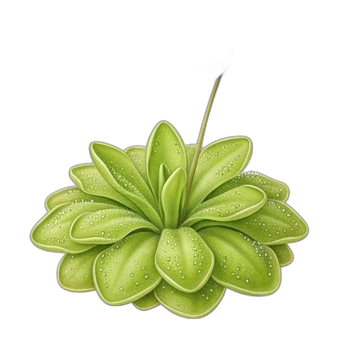
Butterworts belong to the genus Pinguicula, sitting within the family Lentibulariaceae. The generic name derives from the Latin pinguis, meaning "fat" or "greasy," a direct nod to the buttery, unctuous texture of their leaf surfaces. Unlike the snapping traps of Venus flytraps (Dionaea muscipula) or the deep pitchers of Nepenthes, butterworts employ a passive flypaper trap system.
Their leaves are densely covered by two distinct types of microscopic glands, numbering in the tens of thousands per square centimeter:
- Stalked glands: These elevate a droplet of crystal-clear mucilage above the leaf surface. The secretion acts as a visual attractant glittering in the sun, lubricates the leaf, and traps insects upon contact.
- Sessile glands: Flat against the leaf epidermis, these glands secrete digestive enzymes (proteases, esterases, and phosphatases) once prey is secured, absorbing the resulting nitrogen and phosphorus soup directly into the plant tissues.
When an insect—typically a fungus gnat, fruit fly, or small aphid—lands on the leaf, its struggle triggers physical stimulation. The leaf margins often slowly roll inward over a period of 24 to 72 hours, increasing the surface area of contact between the sessile glands and the prey. Furthermore, butterworts are not uniform in their growth habits; they undergo a dramatic seasonal dimorphism. Many species transition from a carnivorous summer rosette of broad, flat, sticky leaves to a non-carnivorous winter rosette composed of tiny, tightly packed, succulent leaves that lack mucilage glands entirely, preparing the plant for a cool, nearly dry dormancy.
In their native habitats, butterworts inhabit some of the most nutrient-deficient environments on Earth. You will find them clinging to vertical, mossy limestone cliffs in Mexico, carpeting acidic sphagnum bogs in boreal North America, or edging cold, running alpine streams in Europe. They grow where soil is virtually nonexistent, meaning their roots serve primarily as anchors rather than foraging organs. To understand more about the ecology of carnivorous flora, you can consult the International Carnivorous Plant Society.
2. Essential Environmental & Care Requirements
Growing Pinguicula successfully requires replicating the exact physical parameters of their native microclimates. Because different species originate from distinct ecological niches—Mexican species versus temperate species versus cold-temperate species—you must tailor your care to your specific cultivar, though general baselines apply broadly.
| Parameter | Optimal Condition | Common Mistake | Why It Matters |
|---|---|---|---|
| Water Quality | TDS under 50 ppm (Distilled, RO, or Rainwater) | Using tap water or mineral-rich spring water | Mineral accumulation destroys sensitive root systems and burns leaf edges |
| Lighting | 10 to 14 hours of bright, indirect to moderate direct light (10,000–25,000 lux) | Scorching in intense afternoon sun or etiolating in deep shade | Correct light triggers the vibrant coloration and dew production essential for hunting |
| Substrate | 1:1 Silica sand and peat, or pure inorganic mixes (perlite, pumice, vermiculite) | Using standard commercial potting soil with added fertilizers | Excess nitrogen and organic matter rot the roots and kill the plant |
| Temperature | Summer: 70°F–85°F (21°C–29°C); Winter: 45°F–55°F (7°C–13°C) | Exposing temperate types to tropical heat or freezing tropicals | Incorrect temperatures prevent the crucial transition into and out of winter dormancy |
Watering technique is the single most common failure point. While American and European temperate butterworts appreciate sitting in 1 inch (2.5 cm) of standing water during the peak growing season, Mexican butterworts require a completely different approach. Mexican species demand the "soak-and-dry" method: water thoroughly from the bottom by placing the pot in a tray until the media is saturated, then allow the top 0.5 inches (1.27 cm) of the substrate to dry out entirely before watering again.
💡 Pro-Tip: When dealing with Mexican butterworts during their winter succulent phase, reduce your watering frequency by at least 75%. If you keep them wet when they are resting, crown rot will sweep through your collection in less than a week.
Lighting dictates whether your butterwort is a pristine, dew-covered predator or a pale, defenseless weed. If your leaves are stretching upward and losing their characteristic pink, yellow, or deep green hues, your light levels are too low. Conversely, harsh midday sun through a clear glass window can literally bake the mucilage off the leaves and scorch the delicate epidermis.
3. Step-by-Step Cultivation, Feeding & Propagation
Propagating butterworts is remarkably rewarding, particularly with Mexican species, which can be multiplied rapidly through leaf pullings. Follow this protocol to expand your collection safely.
- Select a Healthy Mother Plant: Choose a mature, robust butterwort during its active summer growing phase. Avoid plants that are currently flowering or entering winter dormancy.
- Prepare the Propagation Tray: Fill a shallow tray or pot with a pre-moistened, sterile medium consisting of 50% fine silica sand and 50% unfertilized peat moss, or a 1:1 blend of perlite and long-fiber sphagnum moss chopped finely.
- Execute the Pulling: Using clean, sharp forceps or tweezers, grasp a mature, outer leaf as close to the central growing crown as possible. Gently pull downward and give a slight twist.
- Crucial detail: You must ensure the tiny white base of the leaf comes away cleanly. If the leaf snaps off mid-blade without the basal tissue attached, it will simply rot instead of propagating.
- Position the Leaves: Lay the pulled leaves flat, dorsal side down, on top of the moist propagation medium. Do not bury them; burying the leaves invites fungal pathogens.
- Maintain High Humidity: Enclose the tray in a clear plastic dome or bag to maintain 80% to 90% relative humidity. Place the setup under bright, indirect LED or fluorescent shop lights providing a 14-hour photoperiod at temperatures between 75°F and 80°F (24°C–27°C).
- Monitor and Transplant: Within 21 to 42 days, tiny plantlets featuring 2 to 3 microscopic leaves will emerge from the basal end of the pulled leaf. Once these plantlets reach 0.25 inches (0.6 cm) in diameter, gently tease them apart using a toothpick and pot them into individual 2-inch (5 cm) pots.
When it comes to feeding, outdoor butterworts manage their own diet effortlessly. Indoor specimens, however, frequently starve. If your plants are housed inside a tightly sealed terrarium or clean indoor environment devoid of fungus gnats, feed them once every 14 days. Use highly diluted, urea-free liquid orchid fertilizer (balanced 20-20-20 formula) mixed to a concentration of roughly 1/4 strength, and apply a single microscopic droplet directly to the center of the leaves using a fine-tipped artist's paintbrush. Alternatively, you can drop crushed, rehydrated freeze-dried bloodworms directly onto the sticky leaf surfaces. For deeper scientific insights into carnivorous plant cultivation, refer to resources provided by the Royal Botanic Gardens, Kew.
4. Common Problems, Pests & Troubleshooting
Even under optimal conditions, growers encounter physiological hiccups. Here is how to diagnose and correct them.
- Symptom: The central crown turns translucent brown and collapses.
- Cause: Crown rot caused by stagnant water pooling in the center of the rosette, combined with poor airflow and high fungal pressure.
- Solution: Immediately cease overhead watering. Remove any dead or decaying leaves with sterile tweezers. Dust the remaining healthy tissue with sulfur powder or a copper-based fungicide, and increase air circulation using a small, oscillating desk fan set to low.
- Symptom: Complete lack of sticky mucilage on the leaves.
- Cause: Insufficient lighting, low humidity, or root damage preventing proper nutrient uptake.
- Solution: Relocate the plant to a brighter exposure or increase your lighting intensity. Check the root system; if roots are brown and mushy, repot into fresh, sterile, well-draining media.
- Symptom: Aphids clustering in the center of the rosette.
- Cause: Pests introduced by nearby houseplants. While butterworts catch small flying insects, soft-bodied aphids can puncture the leaves and reproduce rapidly.
- Solution: Physically remove heavy infestations with a cotton swab dipped in isopropyl alcohol (70%). For persistent populations, spray the plant thoroughly with insecticidal soap diluted to 1/2 strength, ensuring it does not pool excessively in the crown.
⚠️ Important Caution: Never use systemic insecticides containing neonicotinoids or heavy petroleum-based dormant oils on Pinguicula. These chemical agents will strip away the delicate waxy cuticle of the leaves, causing irreversible chemical burns and killing the plant within hours.

5. Frequently Asked Questions
Why is my butterwort turning into a tiny ball of tiny leaves?
Your plant is undergoing its natural transition into winter dormancy. Many Mexican and temperate butterwort species shed their large, sticky summer leaves and transform into tight, succulent rosettes that resemble miniature cabbages or Hens-and-Chicks (Echeveria). During this period, which typically lasts from late autumn to early spring, the plant stops catching insects and requires significantly less water. Do not panic or attempt to force growth; simply back off on watering and keep the plant in a cool, bright spot until it restarts active growth in the spring.
Can I grow butterworts outdoors year-round?
This depends entirely on your USDA Hardiness Zone and the specific species you own. Temperate butterworts, such as Pinguicula vulgaris, are fully hardy in Zones 3 through 7 and can remain outdoors year-round in bog gardens as long as they experience a proper winter freeze. Conversely, Mexican butterworts are frost-tender tropicals that will die instantly if exposed to temperatures dropping below 35°F (1.5°C). If you live in an area with freezing winters, bring your Mexican cultivars indoors onto a sunny windowsill or under grow lights by mid-October.
Do butterworts need to be fed, or do they catch enough bugs on their own?
If your butterwort lives outdoors or on a bright patio surrounded by vegetation, it will happily sustain itself by catching fungus gnats, mosquitoes, fruit flies, and small midges. However, if you keep your butterworts indoors in a modern, sealed home, they will frequently starve due to a lack of flying prey. While they will not die immediately from starvation, lack of nutrition stunts their growth and prevents them from flowering. Supplementing their diet once every two weeks with a weak foliar feed or a single bloodworm ensures vigorous health.
How do I know if my butterwort is getting enough light?
Look closely at the leaf morphology and color. A healthy, well-lit butterwort will display deep, vibrant coloration—ranging from bright apple green to rich purples and pinks depending on the cultivar—and its leaves will be thick with glistening droplets of mucilage. If your plant is receiving insufficient light, the leaves will stretch upward toward the light source in a process called etiolation, become pale and washed out, and stop producing sticky secretions entirely, rendering the plant defenseless and unable to trap prey.
📋 Table of Contents ▼ Click to expand
Tags:





