Burros Tail
Sedum morganianum
1. Botanical Overview & Natural Habitat

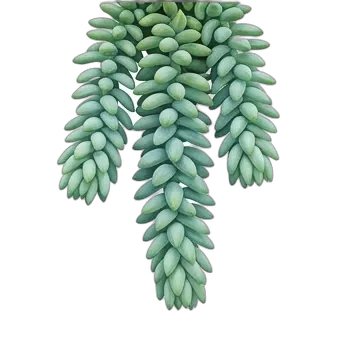
In its native habitat, Sedum morganianum clings to vertical limestone faces where soil is scarce and moisture drains away almost instantaneously. To cope with this, the plant developed thick, fleshy leaves packed with water-storing parenchyma tissue. These leaves are arranged in a dense, overlapping spiral along stems that can eventually reach lengths of 3 to 4 feet (90 to 120 cm).
The leaves themselves are coated in a fine, powdery wax known as epicuticular wax, or farina. This delicate bluish-green or grayish-green coating acts as a natural sunscreen, reflecting intense ultraviolet rays and preventing excessive moisture loss through transpiration. Because this farina is easily rubbed off by human fingers—leaving behind permanent green smudges—handling a mature Burro's Tail requires immense care.
During the late spring or early summer, mature plants grown in optimal light conditions produce terminal, star-shaped flowers that range in color from soft pink to deep red. While flowering indoors is rare, it is a definitive sign that the plant has received enough solar energy and seasonal temperature fluctuation to trigger its reproductive cycle.
2. Essential Environmental & Care Requirements
Replicating a Mexican cliffside on your living room bookshelf requires a clear understanding of environmental parameters. Let's break down the exact conditions your Sedum morganianum needs to thrive.
| Parameter | Optimal Condition | Common Mistake | Why It Matters |
|---|---|---|---|
| Light | 6+ hours of bright, direct-to-filtered sunlight (south- or west-facing) | Keeping it in a dark interior corner | Insufficient light causes etiolation, stretching stems and weakening leaf attachment. |
| Watering | Soak-and-dry method; let soil dry completely 2–3 inches (5–7 cm) down | Frequent, shallow sips of water | Constant moisture rots the shallow root system and causes basal stem rot. |
| Soil Mix | Gritty, fast-draining mix (50% potting soil, 50% perlite/pumice) | Using dense, organic-heavy garden soil | Heavy soils retain moisture too long, suffocating roots and inviting fungal pathogens. |
| Temperature | 65°F to 80°F (18°C to 27°C) active growth | Exposing to drafts below 40°F (4°C) | Temperatures near freezing rupture cell walls, turning the fleshy leaves to mush. |
Light and Placement
Burro's Tail demands high light levels. Indoors, place your plant directly in front of a south-facing or west-facing window where it will receive unobstructed sunlight for at least 6 hours daily. If you notice the space between the leaves expanding (a condition known as stretching or etiolation), the plant is crying out for more photons. If moving it outdoors for the summer, transition it gradually over 14 days to prevent sunburn.
Watering and the Soak-and-Dry Method
Overwatering is the single greatest threat to Sedum morganianum. Because the leaves store copious amounts of water, the plant can easily go weeks without a drink.
💡 Pro-Tip: Never water a Burro's Tail on a rigid calendar schedule. Instead, test the potting medium by inserting your finger 2 inches (5 cm) deep. If it feels even slightly damp, hold off. When you do water, saturate the soil thoroughly until water runs freely out of the container’s drainage holes, then empty the saucer immediately so the pot never sits in standing water.
Soil Composition and Potting
Standard houseplant soil is far too dense for succulents. You need a substrate that mimics the rocky, loose soils of Veracruz. Create a custom blend of 50% high-quality organic potting soil and 50% inorganic grit, such as horticultural pumice, coarse perlite, or poultry grit. For further reading on soil structures and amendments, consult the Royal Horticultural Society soil guidelines.
3. Step-by-Step Cultivation, Feeding & Propagation
Propagating Sedum morganianum is a masterclass in patience. Because the leaves drop so easily, you will often find yourself with accidental cuttings. Here is how to turn those accidents into a thriving colony.
- Harvest Healthy Leaves: Gently twist mature, undamaged leaves from the lower sections of the stem. Ensure the base of the leaf comes away completely intact; if the leaf tears at the stem, it will fail to propagate.
- Callus the Wounds: Place the harvested leaves in a warm, dry, shaded location for 4 to 7 days. This allows the basal wound to form a hard callus, which prevents pathogens from entering the plant tissue when introduced to moisture.
- Prepare the Propagation Bed: Fill a shallow tray or pot with a pre-moistened, fast-draining succulent propagation mix.
- Position the Leaves: Lay the callused leaves flat on top of the soil surface. Do not bury them; doing so will cause them to rot.
- Provide Indirect Light and Humidity: Place the tray in bright, indirect light. Maintain ambient temperatures around 70°F to 75°F (21°C to 24°C).
- Initial Mist and Wait: Once roots begin to emerge from the base of the leaf (typically within 14 to 21 days), use a spray bottle to lightly mist the soil around the roots every 3 days.
- Transplanting: After 60 to 90 days, the mother leaf will shrivel up and drop off, leaving a sturdy micro-rosette with its own root system. Gently pot this baby plant into a 2-inch (5-cm) container filled with standard succulent soil.
Feeding and Fertilization
Sedum morganianum is a light feeder. Over-fertilization leads to weak, rapid growth that snaps easily under its own weight. Apply a balanced, water-soluble succulent fertilizer diluted to quarter-strength just once in early spring and once in mid-summer. Skip feeding entirely during the autumn and winter dormancy periods.
4. Common Problems, Pests & Troubleshooting
Even with meticulous care, physiological issues and opportunistic pests can occur.
Leaf Drop
If your Burro's Tail is shedding leaves at the slightest breeze, look at your watering habits. Both severe underwatering (where the plant sacrifices older leaves to sustain core moisture) and overwatering (which causes cellular collapse and rot) manifest as sudden leaf drop. Check the stems: if they are firm and shriveled, water immediately. If they are mushy, translucent, and black at the base, you are dealing with stem rot.
Stem Rot
Stem rot is a fatal fungal infection triggered by overwatering and poor drainage. Once a stem turns black and mushy, no fungicide will save it. You must act quickly by using sterile pruning shears to cut away all infected tissue well above the rot line. Allow the healthy upper cutting to callus for 7 days, then restart it as a fresh propagation.
Pests
Mealybugs are the primary pest threat to Sedum morganianum. These sap-sucking insects hide deep within the tight rosettes and overlapping leaf axils, looking like small tufts of white cotton.
⚠️ Important Caution: Never use commercial horticultural oils or harsh insecticidal soaps containing petroleum distillates on a Burro's Tail. These chemical agents will instantly dissolve the protective farina wax coating, leaving the plant permanently scarred, chemically burned, and highly susceptible to secondary infections. Instead, dab individual mealybugs with a cotton swab dipped in 70% isopropyl alcohol, or treat severe infestations with a systemic insecticide approved for indoor succulents.

5. Frequently Asked Questions
Why is my Burro's Tail losing leaves every time I touch it?
Sedum morganianum leaves are naturally fragile and attached to the stem by a very narrow abscission zone. This is an evolutionary survival mechanism designed to help the plant propagate in the wild when disturbed by animals. While you cannot change this biological trait, you can minimize damage by placing the plant in a high-traffic-free zone where it will never be brushed against.
How do I make my Burro's Tail grow faster?
Growth rate is largely dictated by light intensity and seasonal cycles. To maximize safe growth, provide at least 6 to 8 hours of bright, direct sunlight daily, maintain indoor temperatures between 65°F and 80°F (18°C and 27°C), and apply a quarter-strength low-nitrogen, high-potassium fertilizer twice during the active spring and summer growing season.
Is Burro's Tail toxic to cats and dogs?
No. According to the ASPCA, Sedum morganianum is non-toxic to cats, dogs, and horses. However, while ingestion will not cause systemic poisoning, the physical act of chewing on the fibrous, mineral-rich stems and leaves may cause mild gastrointestinal upset, vomiting, or diarrhea in curious pets.
Can I grow Burro's Tail outdoors year-round?
Only if you live within USDA Hardiness Zones 10 through 11. In these frost-free climates, it makes an exceptional hanging basket specimen or rock garden addition. In any zone experiencing temperatures dipping below 35°F (1.6°C), it must be brought indoors as a houseplant before the first autumn frost.
📋 Table of Contents ▼ Click to expand
Tags: