
Bougainvillea
Bougainvillea glabra
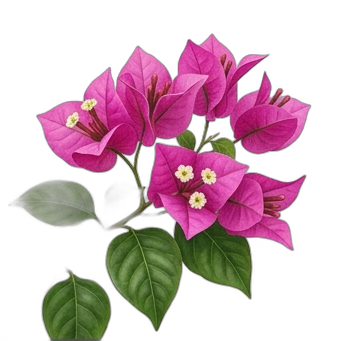
A massive, sulking Bougainvillea glabra failing to produce vibrant magenta bracts should not be doused in a high-nitrogen bloom booster. Instead, cutting its water supply down to a brutal drop-once-every-two-weeks schedule will cause whip-like green branches to explode into a riot of neon color within a month. That is the fundamental paradox of bougainvillea: it is a brilliant botanical survivor that rewards neglect and punishes excessive kindness.
1. Botanical Overview & Natural Habitat

What most casual gardeners mistake for flower petals are actually specialized modified leaves called bracts. These papery, brilliantly colored structures—ranging in hues from magenta and purple to orange, red, and white—surround the true flower, which is an inconspicuous, tubular, creamy-white blossom tucked inside the bracts. Bougainvillea glabra is distinguished from its cousin Bougainvillea spectabilis by its smoother, hairless (glabrous) green leaves and its slightly more restrained, arching habit, making it exceptionally well-suited for container culture, topiary, and architectural training.
In its natural habitat, the plant anchors itself into rocky terrain using stout, recurved thorns that act as scrambling hooks rather than true botanical thorns. Understanding this origin story is the key to unlocking its success in cultivation. It does not want to be pampered in rich, wet garden loam; it craves the structural stress of lean soil, blazing heat, and deliberate dry-down cycles to trigger its dazzling reproductive display.
2. Essential Environmental & Care Requirements
To cultivate Bougainvillea glabra successfully, you must replicate its native semi-arid environment. Whether you are growing this specimen in a Mediterranean landscape or keeping it as a patio container plant in a cooler climate, getting these foundational metrics right is non-negotiable.
| Parameter | Optimal Condition | Common Mistake | Why It Matters |
|---|---|---|---|
| Sunlight | Full sun, minimum 6 to 8 hours of direct, unfiltered light daily. | Growing in partial shade or northern exposures. | Insufficient light halts bract production, resulting in lush green vines with zero color. |
| Soil Composition | Sandy, rocky, highly porous soil mix with a pH of 5.5 to 6.5. | Using heavy clay or moisture-retaining organic potting compost. | Heavy soils hold excess moisture, suffocating the fine feeder roots and inducing fatal root rot. |
| Watering Regimen | Deep, infrequent watering; allow the top 3 inches (7.6 cm) to dry completely between sessions. | Frequent, shallow watering or keeping the soil continuously moist. | Constant moisture encourages vegetative shoot growth at the expense of floral bract development. |
| Temperature Range | 65°F to 95°F (18°C to 35°C); frost-free environments. | Exposing plants to temperatures below 30°F (-1°C) unprotected. | Freezing temperatures destroy cellular walls, causing catastrophic dieback and root death. |
💡 Pro-Tip: If your container-grown bougainvillea refuses to color up despite getting full sun, move it closer to a south-facing, heat-radiating brick or stone wall. The reflected ambient heat mimics the baking thermal conditions of its native Brazilian hillsides.
3. Step-by-Step Cultivation, Feeding & Propagation
Growing Bougainvillea glabra requires a disciplined approach to structural training and nutrient management. Because the plant blooms exclusively on new growth, precise pruning and feeding schedules directly dictate your floral display. For comprehensive regional guidelines, consult the University of Florida IFAS Extension.
- Select and Prepare the Planting Site: Choose a location receiving at least 6 hours of direct sun. Dig a hole twice as wide as the root ball but at the exact same depth—typically 10 to 12 inches (25 to 30 cm) deep. Amend native heavy soils with 30% coarse horticultural sand or perlite to guarantee rapid drainage.
- Planting and Initial Settling: Gently slide the bougainvillea out of its nursery container, teasing apart any circling root masses with your fingers to prevent girdling. Place the root ball in the hole, backfill with the native-sand mixture, and tamp down firmly to remove large air pockets. Water thoroughly once with 1 inch (2.5 cm) of water to settle the soil.
- Establish a Pruning and Training Routine: Immediately tie structural main branches to a trellis, arbor, or masonry anchor using soft plant tape. Prune back long, unbranched whips by one-third immediately after a heavy flush of blooms fades. This forces lateral branching, which doubles your future flowering sites.
- Fertilization Management: Apply a slow-release, low-nitrogen, high-phosphorus and potassium fertilizer (such as a 5-10-10 or 4-12-12 formulation) once every 6 weeks during the active spring and summer growing seasons. For advanced care insights, refer to the Royal Horticultural Society.
- Overwintering Protocol: In USDA Hardiness Zones 9 through 11, leave plants outdoors year-round. In Zones 4 through 8, bring container-grown specimens indoors before nighttime temperatures dip consistently below 40°F (4°C). Place them in a bright, cool room (50°F to 60°F / 10°C to 15°C) and reduce watering to a bare minimum until spring returns.
⚠️ Important Caution: Always wear heavy leather gardening gloves and protective eyewear when pruning or handling bougainvillea. The sharp, woody thorns contain plant sap that can cause contact dermatitis or painful secondary punctures if they break off beneath the skin.
4. Common Problems, Pests & Troubleshooting
Even though Bougainvillea glabra is a remarkably tough specimen, specific environmental imbalances and opportunistic pests will occasionally threaten its health. Diagnosing these symptoms early saves the plant from severe decline.
- Massive Leaf Drop and Bract Shedding: This is almost always triggered by sudden environmental shock, such as moving an indoor plant outdoors too quickly, or a radical shift in watering frequency. Ensure transitions are gradual over a 7-day hardening-off period, and maintain a consistent drying cycle.
- Lush Green Foliage with Zero Blooms: If your plant looks like a healthy green wall but lacks color, you are loving it to death. Excess nitrogen fertilizer combined with frequent watering signals the plant to invest all its energy into vegetative vines rather than reproductive bracts. Withhold fertilizer entirely and stretch your watering intervals until the leaves show slight afternoon wilting.
- Bougainvillea Loopers (Caterpillars): These green, inchworm-like pests chew ragged holes through tender leaves and completely devour developing flower bracts overnight. Handpick them at dusk using a flashlight, or apply a targeted biological spray containing Bacillus thuringiensis (Bt) directly to the foliage.
- Root Rot (Phytophthora species): Exhibited by sudden wilting despite damp soil, followed by yellowing leaves and black, mushy stem bases at the soil line. This occurs exclusively in poorly draining media. Unpot the plant immediately, sterilize clean shears to cut away infected root tissue, and repot into fresh, dry, sandy soil.

5. Frequently Asked Questions
Can bougainvillea be grown successfully indoors in a house?
Yes, but only if you can provide a southern-facing window that delivers at least 6 to 8 hours of direct sunlight every single day. Without this intense light intensity, indoor bougainvilleas will quickly drop their leaves, fail to bloom, and leggy vines will stretch out seeking light. Supplementing with high-output horticultural LED grow lights for 12 hours daily is usually mandatory for indoor success.
How often should I water a potted bougainvillea?
Allow the potting mix to dry out completely down to a depth of 3 inches (7.6 cm) before applying water. In the peak heat of summer, this may mean deep watering once every 7 to 10 days. During the winter dormancy period, reduce this to once every 3 to 4 weeks, providing just enough moisture to prevent the root ball from drying out entirely.
Why are my bougainvillea leaves turning yellow?
Yellowing leaves typically point to one of two contrasting issues: overwatering leading to root asphyxiation, or a severe iron/magnesium deficiency in the soil. Check your soil moisture first; if the mix is wet, reduce watering immediately. If the soil is dry and well-draining, apply a chelated micronutrient foliar spray containing iron and magnesium to correct the nutritional gap.
When is the absolute best time to prune bougainvillea?
The optimal time for heavy structural pruning is late winter or early spring, just before the plant breaks its winter dormancy and pushes out new spring growth. You can also perform light tip-pruning and maintenance shaping immediately after any heavy seasonal flowering cycle finishes to encourage secondary branching and the next wave of vibrant bracts.
📋 Table of Contents ▼ Click to expand
Tags: