Bear's Paw
Cotyledon tomentosa
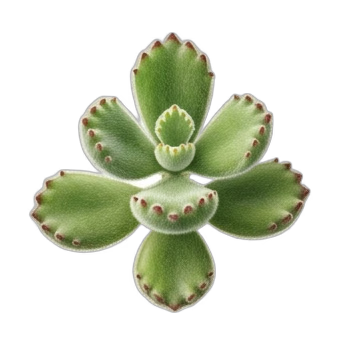
The soil beneath my fingernails was completely dry, yet I spent ten minutes gently brushing away loose perlite from a single, velvety leaf that looked suspiciously like a miniature grizzly bear's foot. That was six years ago in my conservatory, when I first brought home a leggy, sun-starved Cotyledon tomentosa in a tiny 2-inch plastic pot. Today, that single cutting sprawls across a 12-inch terracotta bowl, its plump, fuzzy leaves tipped with amber "claws" that never fail to stop visiting gardeners in their tracks. I find that few succulents bridge the gap between architectural novelty and tactile charm quite like the Bear's Paw. Let us dive into the specifics of cultivating this South African native so yours thrives for decades.
1. Botanical Overview & Natural Habitat

The plant’s defining characteristic is its thick, fleshy, succulent leaves covered in a fine layer of fine hairs, known botanically as trichomes. These hairs serve a dual evolutionary purpose: they reflect harsh solar radiation to prevent scorching and trap a micro-layer of moisture against the leaf surface to reduce transpiration in dry winds. Along the flat apex of each leaf sit distinct, dark reddish-brown teeth—the "claws"—which become more pronounced when the plant is subjected to high light levels and mild drought stress.
Growth habit is decidedly bushy and branching, eventually reaching heights and spreads of 12 to 20 inches (30 to 50 cm) over several years. The stems start out herbaceous and green, eventually woodying up into a gnarled, trunk-like structure that gives mature specimens a charming, bonsai-like appearance. In the late spring, established plants produce bell-shaped, pendulous flowers colored in shades of orange, salmon, or yellow, measuring about 1 inch (2.5 cm) in length. For further taxonomic validation, you can consult the Royal Horticultural Society Plant Finder.
2. Essential Environmental & Care Requirements
Growing Cotyledon tomentosa successfully requires mimicking its native semi-arid, rocky environment. Deviate too far from these parameters, and you will quickly see leaf drop or root rot.
Light is the primary driver of compact growth and dark claw coloration. Provide a minimum of 4 to 6 hours of direct, unfiltered sunlight daily. South- or west-facing windows indoors are ideal. If growing under LEDs, position the canopy 6 to 12 inches (15 to 30 cm) away from a full-spectrum grow light running for 12 to 14 hours a day.
Temperature tolerance is moderate. Bear's Paw thrives in ambient temperatures between 65°F and 80°F (18°C to 27°C). It can tolerate brief dips down to 30°F (-1°C) if the soil is completely dry, but prolonged freezing temperatures will turn the cellular structure to mush.
| Parameter | Optimal Condition | Common Mistake | Why It Matters |
|---|---|---|---|
| Soil Mix | 50% inorganic grit (perlite/pumice), 50% organic cactus mix | Using standard dense potting soil | Retains too much moisture around delicate roots, causing fungal rot. |
| Watering | Soak-and-dry method (every 14–21 days in summer) | Frequent, shallow sips | Prevents deep root development and causes lower leaves to swell and drop. |
| Container | Unglazed terracotta with a drainage hole | Plastic or glazed pots without drainage | Terracotta breathes, allowing excess root-zone moisture to evaporate quickly. |
| Humidity | 30% to 40% ambient relative humidity | Mist-spraying the foliage | Traps water in the trichomes, inviting fungal leaf spot and powdery mildew. |
💡 Pro-Tip: Never water your Bear's Paw from the top if your indoor humidity is high. The dense velvet trichomes hold onto water droplets like a sponge, which can lead to unsightly gray mold (Botrytis). Instead, bottom-water your pot by setting it in a basin of water for 15 minutes until the topsoil feels damp.
3. Step-by-Step Cultivation, Feeding & Propagation
Propagating and maintaining Cotyledon tomentosa is remarkably straightforward if you respect its biological timeline. Because the leaves are exceptionally plump and heavy at the base, leaf cuttings have a notoriously low success rate compared to stem cuttings. Therefore, stem propagation is the gold standard.
Step-by-Step Stem Propagation Protocol
- Select a healthy stem: Choose a firm, non-woody branch tip measuring at least 3 to 4 inches (7.5 to 10 cm) in length with at least 4 to 6 active leaves.
- Make a clean cut: Using sterilized pruning shears or a razor blade wiped in isopropyl alcohol, cut cleanly just below a leaf node.
- Cure the wound: Place the cutting in a shaded, warm, dry location for 5 to 7 days to allow the cut end to form a hard, protective callus. This prevents soil pathogens from entering the raw tissue.
- Prepare the propagation medium: Fill a small container with a dry, sterile mix of 70% perlite and 30% cactus soil.
- Plant the cutting: Insert the callused end 1 inch (2.5 cm) deep into the dry medium. Do not water immediately.
- Initiate rooting: Place the pot in bright, indirect light. Wait 14 days before applying a few drops of water to the base of the stem to encourage root emergence.
- Transplant: Once tug-testing reveals strong root resistance—usually after 30 to 45 days—repot the new plant into its permanent container using standard succulent mix.
Feeding should be approached with a light touch. Cotyledon tomentosa is a light feeder. Dilute a balanced, low-nitrogen succulent fertilizer (such as a 2-7-4 formula) to one-quarter strength and apply it once a month during the active growing season from mid-spring through late summer. Cease all fertilization completely during the autumn and winter dormancy periods. For additional cultivation research, reference the guidelines provided by the University of California Agriculture and Natural Resources.
4. Common Problems, Pests & Troubleshooting
Even experienced growers occasionally run into issues with this fuzzy succulent. Because of its trichome-covered leaves, diagnosing problems early requires looking past the surface velvet.
- Leaf drop: If your Bear's Paw is shedding lower leaves at an alarming rate, look at your watering frequency. Overwatering causes the stem cells to burst, while severe underwatering forces the plant to cannibalize its oldest leaves for moisture. Check the stem firmness; if it is mushy, you are overwatering.
- Etoliation (Stretching): When the stems grow long, pale, and spindly with wide spaces between the leaves, the plant is starving for light. Move it progressively closer to a bright, direct light source over the course of 7 days to prevent sunburn shock.
- Mealybugs: These cottony white pests love to hide in the tight crevices where the leaves meet the stem. Because standard insecticidal soaps can stain or mat the velvety trichomes, dab pests individually with a cotton swab soaked in 70% isopropyl alcohol instead of drenching the foliage.
⚠️ Important Caution: All parts of the Cotyledon genus contain bufadienolide cardiac glycosides. These are toxic compounds that can cause severe cardiac arrhythmias, vomiting, and lethargy if ingested by cats, dogs, or horses. Keep your Bear's Paw safely elevated on plant stands or shelves out of reach of curious household pets.

5. Frequently Asked Questions
Why are the tips of my Bear's Paw leaves not turning red?
The characteristic reddish-brown "claws" on Cotyledon tomentosa are a stress response triggered by intense light and mild drought. If your plant is sitting in a shady room or receiving frequent, heavy watering, the leaves will remain entirely green. Gradually transition the plant to a spot where it receives several hours of direct morning sun, and allow the soil to dry out completely between waterings to encourage the pigmentation to return.
Can you propagate Bear's Paw from fallen leaves?
It is extremely difficult. While many common succulents like Echeveria or Sedum readily sprout new plants from a single fallen leaf, Cotyledon leaves rarely form roots and shoots from the petiole base. They tend to shrivel and rot instead. For reliable propagation, always use healthy 3-to-4-inch stem cuttings with a properly callused end.
How often should I water my indoor Bear's Paw in the winter?
In the winter, lower light levels and cooler temperatures cause the plant to enter a semi-dormant resting phase. You should reduce your watering frequency significantly—down to once every 4 to 6 weeks, or only when the lower leaves show the slightest sign of puckering or wrinkling. Always check that the soil is bone-dry several inches down before introducing moisture.
Why is my Bear's Paw turning yellow and mushy at the base?
Yellow, translucent, and mushy stems are the definitive calling card of root rot caused by chronic overwatering and heavy, poorly draining soil. To save the plant, unpot it immediately, wash away the rotting soil, and use a sterile blade to slice away all brown, mushy roots and lower stem tissue until you hit clean, white, disease-free interior wood. Let the remaining healthy top cuttings callus for a week, and restart them in fresh, dry, gritty soil.
📋 Table of Contents ▼ Click to expand
Tags: