

Amaryllis
Hippeastrum
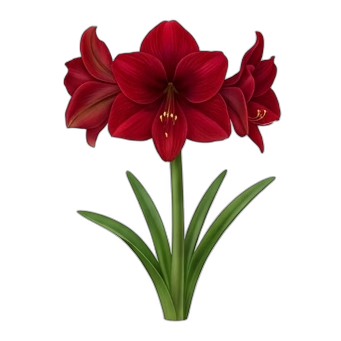
When handling a Hippeastrum bulb the size of a grapefruit with a papery, mahogany-brown tunic, the plant commands absolute devotion in the horticultural world. Planting 'Red Lion' bulbs in custom zinc troughs results—by Christmas Eve—in thick, succulent scapes erupting into architectural clusters of crimson trumpets measuring fully 8 inches (20 cm) across, demonstrating botanical resilience.

1. Botanical Overview & Natural Habitat
To grow Hippeastrum successfully, you must first unlearn a common botanical misnomer. True Amaryllis species are native exclusively to South Africa (specifically Amaryllis belladonna), whereas the magnificent holiday giants we force indoors belong to the genus Hippeastrum, native to the tropical and subtropical regions of Central and South America, particularly the river basins of Brazil, Peru, and Bolivia. Both belong to the family Amaryllidaceae, sharing structural similarities, but our modern cultivated hybrids are descendants of neotropical woodland and scrubland species.
In their native habitats, these geophytes experience a distinct bimodal climate featuring a warm, wet growing season followed by a cool, dry dormant period. The bulb itself is a modified underground shoot composed of tightly overlapping, fleshy leaf bases (scales) that store water and carbohydrates.
Botanically, Hippeastrum possesses the following defining characteristics:
- Roots: Thick, fleshy, contractile roots emerge from a basal plate and rarely branch; they pull the bulb to an optimal depth in the soil and act as secondary storage organs.
- Scapes: Hollow, herbaceous, tubular flower stalks (scapes) that emerge rapidly—often growing 1 to 3 inches (2.5 to 7.5 cm) per day under ideal conditions.
- Inflorescence: An umbel containing 2 to 6 funnel-shaped flowers, featuring petaloid tepals (three sepals and three petals of identical color).
- Foliage: Linear, strap-shaped, deep green leaves that typically emerge concurrently with or immediately following the flowers to manufacture photosynthates for the subsequent season.
Understanding this natural evolutionary strategy dictates how we mimic their native South American riverbank conditions on our windowsills and in our landscape designs.
2. Essential Environmental & Care Requirements
Creating an environment where Hippeastrum thrives requires balancing light, temperature, moisture, and soil microbiology. Because these plants are native to dappled tropical woodlands and forest margins, they despise both bone-dry desert heat and waterlogged, stagnant muck.
| Parameter | Optimal Condition | Common Mistake | Why It Matters |
|---|---|---|---|
| Light | Bright, indirect light (4–6 hours daily); direct sun once leaves emerge | Keeping bulbs in dark cupboards after planting or deep shade | Light drives photosynthesis in the strappy leaves, rebuilding the exhausted bulb for next year's bloom. |
| Temperature | 65°F to 72°F (18°C to 22°C) during growth | Placing pots near drafty windows or scorching heat vents | Extreme temperature fluctuations shock the vascular system, stunting scape elongation and flower development. |
| Soil/Media | Fast-draining, soil-less mix (peat, perlite, and composted bark; pH 6.0–6.8) | Using dense garden clay or heavy topsoil | Heavy soils retain water, suffocating the fleshy, unbranched roots and inviting basal rot (Fusarium). |
| Watering | Moisten thoroughly, then allow the top 2 inches (5 cm) to dry completely | Keeping the bulb sitting in a saucer of standing water | Excess moisture destroys the basal plate, cutting off nutrient transport and killing the bulb entirely. |
For authoritative guidance on indoor bulb forcing and horticultural classifications, consult the Royal Horticultural Society.
💡 Pro-Tip: When potting your bulb, leave the top one-third to one-half exposed above the soil line. Burying the entire bulb invites moisture accumulation around the neck, which is the primary vector for fungal pathogens and bulb rot.
3. Step-by-Step Cultivation, Feeding & Propagation
Forcing and maintaining amaryllis year-round is an exact science. Follow this sequential protocol to move your plants seamlessly from dormant packages to blooming centerpieces and back to vigorous garden specimens.
- Selection and Inspection: Choose firm, heavy bulbs that show no signs of soft spots, mold, or mechanical bruising. A larger bulb (measuring 28 to 32 cm or more in circumference) will reliably produce two to three flowering scapes.
- Potting Up: Select a container that is only 1 to 2 inches (2.5 to 5 cm) wider than the bulb’s diameter. Fill the bottom with a coarse layer of gravel or expanded clay for drainage, then add a high-quality, peat-perlite soil-less mix. Center the bulb, ensuring the upper third remains exposed, and firm the soil gently around the roots.
- Initial Hydration: Water the potting medium thoroughly once to settle the soil around the roots. Do not water again until green growth or the flower tip breaks through the tunic, unless the soil feels completely bone dry 2 inches (5 cm) down.
- Lighting Adjustment: Place the pot in a bright, warm location (around 65°F to 70°F / 18°C to 21°C). Rotate the pot every 48 hours to prevent the rapidly growing scapes from leaning toward the light source.
- Post-Bloom Transition: Once the flowers fade, snip the scape off cleanly 2 inches (5 cm) above the bulb neck using sterilized pruners. Never cut the green leaves; they are the energy factories. Move the plant to a sunny southern or western exposure and feed monthly with a balanced, water-soluble fertilizer (such as a 10-10-10 or 20-20-20 formula) diluted to half strength.
- Summering Outdoors: After all danger of frost has passed in spring, sink the pot into a partially shaded garden bed. Continue watering and fertilizing regularly throughout the summer months to maximize carbohydrate storage.
- Induced Dormancy: By late August or early September, withhold water entirely and stop fertilizing. Move the container to a cool, dark, dry location (50°F to 55°F / 10°C to 13°C) for a mandatory 8-to-10-week rest period. The foliage will yellow and wither; trim it off once completely dry. Bring the bulb back into the light and warmth in November to restart the cycle.
⚠️ Important Caution: All parts of the Hippeastrum plant—especially the bulb—contain toxic lycorine and other alkaloid compounds. Ingestion causes severe gastrointestinal distress, vomiting, and tremors in cats, dogs, and horses. Keep all potted specimens safely out of reach of curious household pets.
For regional outdoor cultivation zones and landscape placement ideas, review the resources provided by the Clemson Cooperative Extension.
4. Common Problems, Pests & Troubleshooting
Even with meticulous care, environmental stressors and pathogens can occasionally compromise your plants. Diagnosing issues early saves the bulb from permanent structural failure.
- Red Blotch (Stagonospora curtisii): This is the most common fungal affliction, characterized by striking red streaks and spots on the leaves, scapes, and bulb scales. While cosmetic spotting is normal, severe infections cause sunken, distorted tissue. Solution: Cut away infected tissue with a sterilized blade, apply a copper-based fungicide, and ensure significantly better air circulation and lower humidity.
- Mealybugs and Aphids: These sap-sucking insects congregate in the tight crevices of the bulb neck and the underside of strap leaves, secreting sticky honeydew that fosters sooty mold. Solution: Wipe affected areas with a cotton swab dipped in 70% isopropyl alcohol, or treat stubborn infestations with insecticidal soap.
- Blind Bulbs (Failure to Bloom): If your plant produces lush, voluminous foliage year after year but refuses to throw a flowering scape, the bulb is starved of energy or lacked a proper resting phase. Solution: Ensure the plant receives maximum direct sunlight all summer, feeds consistently on high-phosphorus fertilizer, and undergoes the crucial 8-week dark, cool dormancy period in autumn.
- Rotting Basal Plate: Caused by overwatering and dense soil, the base of the bulb turns brown, mushy, and foul-smelling. Solution: Unpot immediately, carve away all rotted tissue with a sterile knife until only healthy, white-to-cream tissue remains, dust the wound with sulfur powder, and repot into fresh, sterile, fast-draining media.

5. Frequently Asked Questions
Can I plant my indoor amaryllis outside in the garden?
Yes, if you live in USDA Hardiness Zones 8 through 10, you can plant Hippeastrum directly into a well-drained garden bed permanently, setting the bulb with its neck just above the soil line. In colder zones, you can sink the potted bulb outdoors for the summer growing season, but you must lift and bring the containers indoors before the first autumn frost.
Why are my amaryllis stems growing so tall and flopping over?
Rapid, leggy growth is almost always caused by insufficient light combined with excessive warmth and water. As the hollow scapes shoot upward, they lack the structural reinforcement that strong, direct sunlight provides. Stake heavy flower stalks discreetly with green bamboo canes and floral wire, and move the plant to a brighter location.
How do I get my amaryllis to bloom again next Christmas?
To achieve holiday blooms, you must strictly manage the plant's calendar. Allow the plant to grow leaves all spring and summer with regular fertilizer, induce an 8-to-10-week dry dormancy in a dark, cool space starting in September, and bring the bulb back into warmth and light by early November.
Should I cut off the roots when repotting my amaryllis?
Never trim healthy, fleshy amaryllis roots unless they show active signs of rot or fungal decay. Unlike fibrous-rooted houseplants that benefit from root pruning, Hippeastrum relies on its unbranched, contractile root system to anchor the plant and absorb moisture immediately upon re-potting. Cut only dead, shriveled, or rotting roots away with a sterile blade.
📋 Table of Contents ▼ Click to expand
Tags:





