Alocasia Zebrina
Alocasia zebrina
1. Botanical Overview & Natural Habitat
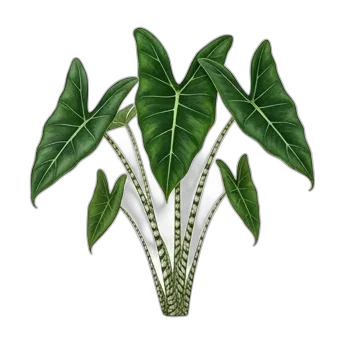
Encountering an Alocasia zebrina stretching over four feet tall in a stifling, mist-shrouded ravine, with stems marked by deep olive and chocolate zebra-striping that look hand-painted, reveals how these plants behave in interior landscapes. These are not polite, domesticated house ferns; they are understory rainforest aristocrats adapted to dappled, high-humidity environments.

The leaves are glossy, sagittate (arrowhead-shaped), and can reach lengths of 18 to 24 inches (45 to 60 cm) under ideal cultivation. Unlike terrestrial plants with woody trunks, Alocasia zebrina grows from an underground rhizome or corm, storing vital starches and water to survive occasional dry spells in its native canopy habitat. In an indoor setting, mature specimens typically reach a height and spread of 3 feet (90 cm) to 3.5 feet (105 cm). Because they evolved on the forest floor beneath dense multi-layered trees, they receive bright, filtered sunlight rather than scorching, direct rays. Understanding this ecological niche is the single most important step in keeping your Alocasia zebrina alive and thriving for years.
2. Essential Environmental & Care Requirements
Recreating a Philippine rainforest microclimate inside a modern living room requires precision. Let us break down the exact parameters that separate a struggling plant dropping leaves from a thriving specimen pushing out a new glossy spear every three weeks.
| Parameter | Optimal Condition | Common Mistake | Why It Matters |
|---|---|---|---|
| Light | Bright, indirect light (10,000–20,000 lux) | Direct afternoon sun or deep dim corners | Direct sun scorches thin leaves; low light halts growth and causes root rot. |
| Temperature | 65°F–85°F (18°C–29°C) | Exposure below 60°F (15°C) or cold drafts | Cold triggers dormancy, leaf drop, and cellular collapse in tropical tissues. |
| Humidity | 60%–80% relative humidity | Dry indoor air (<40%) | Low humidity causes crisp leaf tips, curling, and invites spider mites. |
| Soil pH | 5.5 to 6.5 (slightly acidic) | Heavy, dense garden soil or high alkalinity | Acidic, airy substrates prevent nutrient lockout and allow oxygen to reach the rhizome. |
| Watering | Top 2 inches (5 cm) dry out | Keeping soil soggy or letting it bone-dry | Sogginess rots the corm; drought triggers winter dormancy and leaf death. |
Light
Provide your Alocasia zebrina with abundant indirect light. An unobstructed east-facing window or a spot a few feet back from a west- or south-facing window shaded by a sheer curtain is ideal. If you rely on artificial lighting, supplement with full-spectrum LED grow lights delivering roughly 150 to 200 micromoles per square meter per second ($µmol/m^2/s$) for 12 hours a day.
Temperature and Air Circulation
Keep ambient temperatures consistently between 65°F and 85°F (18°C–29°C). Never expose this plant to temperatures dropping below 60°F (15°C), as prolonged cool periods signal the corm to enter dormancy, shedding all foliage. Gentle air movement from an oscillating fan on a low setting prevents fungal leaf spot without chilling the plant.
Humidity and Watering
High humidity is non-negotiable. Aim for 60% to 80% relative humidity using a dedicated ultrasonic humidifier. When watering, use room-temperature, filtered, or rainwater to avoid mineral buildup from heavy tap water. Water thoroughly until liquid runs freely through the drainage holes, then empty the saucer. Let the top 2 inches (5 cm) of the potting medium dry out before watering again. For comprehensive insights on caring for tropical Aroids, consult the Royal Botanic Gardens, Kew.
3. Step-by-Step Cultivation, Feeding & Propagation
Repotting and propagating Alocasia zebrina should be approached with care. Because their root systems are somewhat delicate and prone to mechanical damage, I recommend handling them during active spring growth when recovery is fastest.
Potting and Soil Formulation
Never plant an Alocasia zebrina in standard potting soil straight from the bag; it holds too much water and suffocates the corm. Mix your own custom, chunky substrate using the following formula:
- 40% high-quality, peat-free tropical potting compost
- 30% coarse perlite or pumice (for drainage and aeration)
- 20% orchid bark (to create internal air pockets)
- 10% horticultural charcoal (to keep the root zone sweet and free of anaerobic bacteria)
Step-by-Step Repotting Sequence
- Select the container: Choose a pot that is only 1 to 2 inches (2.5 to 5 cm) wider in diameter than the current root ball. Oversized pots hold excess moisture and invite root rot. Ensure the pot has generous drainage holes.
- Unpot the specimen: Gently tip the plant on its side, squeeze the nursery pot to loosen the sides, and slide the root ball out. Support the base of the stems with your hand.
- Inspect and clean roots: Tease apart the root mass slightly. Carefully brush away old soil and inspect the rhizome and roots. Use sterilized shears to snip away any brown, mushy, or hollow roots.
- Layer the base: Add a 1-inch (2.5 cm) layer of your chunky soil mix to the bottom of the new container.
- Position the plant: Set the plant in the center, ensuring the top of the rhizome sits level with or slightly above the soil surface. Burying the stem too deeply invites stem rot.
- Fill and settle: Fill in the sides with the remaining soil mix, tapping the pot gently on your workbench to settle the substrate around the roots. Do not pack the soil down too tightly.
- Water in: Water thoroughly to settle the mix, then let it drain completely. Place the plant back in its bright, humid spot.
💡 Pro-Tip: When handling mature Alocasias during repotting, wear gloves. The sap contains calcium oxalate crystals that can cause mild skin irritation or contact dermatitis if you have sensitive skin.
Feeding Protocol
Alocasia zebrina are heavy feeders during their spring and summer growing season. Feed every two weeks with a balanced, water-soluble liquid fertilizer diluted to half-strength (e.g., a 10-10-10 or 20-20-20 formula enriched with micronutrients like iron and magnesium). Cease fertilization entirely from late autumn through winter when growth slows or stops naturally.
4. Common Problems, Pests & Troubleshooting
Even experienced indoor gardeners run into trouble with Alocasia zebrina if environmental conditions fluctuate. Because of their thin, tropical leaves, they act as living barometers for stress.
Yellowing Lower Leaves
If the lowest, oldest leaf on your plant turns entirely yellow and eventually fades to crisp brown, do not panic. This is normal cellular senescence; the plant is reabsorbing nutrients from older foliage to fuel a new leaf spear. However, if multiple leaves yellow simultaneously, you are likely dealing with overwatering or root rot. Check the root system immediately.
Drooping Stems and Leaf Loss
If your plant suddenly drops its leaves or the striking zebra petioles go limp, review your recent watering and temperature history. Cold drafts from an air conditioner or open window in autumn will cause instant shock and defoliation. Conversely, letting the root ball dry out completely causes the plant to sacrifice its leaves to conserve moisture in the corm.
Pests
Spider mites love the dry undersides of Alocasia zebrina leaves. They manifest as fine stippling, webbing, or a dull, dusty look on the foliage. Mealybugs can also hide in the tight leaf axils where the petioles emerge from the main stem.
⚠️ Important Caution: Never use heavy horticultural oils or harsh synthetic insecticidal soaps on Alocasia zebrina leaves without testing a small area first. Their thin epidermal layers are easily burned by oil-based treatments under indoor light conditions. Instead, wash leaves down with a mild solution of warm water and insecticidal soap, wiping each leaf by hand.

5. Frequently Asked Questions
Why are the stems on my Alocasia zebrina turning mushy and falling over?
Stem mushiness is almost always caused by stem or crown rot, triggered by overwatering, poor soil aeration, or water sitting directly in the leaf sheaths during cool conditions. Cut away all decayed tissue with a sterile blade, dust the remaining healthy corm with cinnamon or sulfur powder as a natural fungicide, and repot into fresh, dry, fast-draining substrate. Reduce your watering frequency immediately.
How do I propagate Alocasia zebrina?
Alocasia zebrina cannot be propagated by cutting a stem leaf; it lacks the necessary node material to form roots. Instead, propagation is achieved by dividing the root clump during repotting. Separate smaller offshoots (pups) or bulbils that have developed their own independent root systems and at least one small leaf, then pot them individually into small pots with airy soil.
Why is my Alocasia zebrina crying water drops from the leaf tips?
This process is called guttation. It occurs when the plant takes up more water than it needs, and root pressure forces excess moisture out through special pore structures called hydathodes at the leaf tips. It is usually a sign that your soil is retaining moisture for too long or that your indoor humidity is very high. Simply reduce watering slightly.
Should I cut off dying leaves on my Alocasia zebrina?
Wait until the leaf is completely yellow, brown, and withered before removing it. Even as a leaf yellows, the plant is actively breaking down and reclaiming chlorophyll, nitrogen, and carbohydrates from that tissue. Once it is completely dry and crispy, use sterile shears to snip the petiole about 1 inch (2.5 cm) away from the main stem, allowing the remaining stub to dry and fall off naturally.
📋 Table of Contents ▼ Click to expand
Tags: