Alocasia Polly
Alocasia amazonica
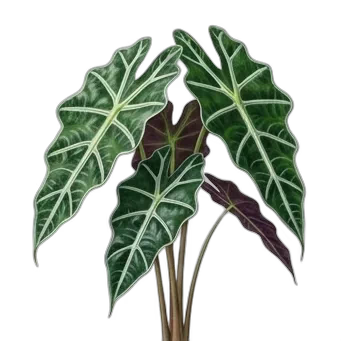
Three winters ago, a magnificent Alocasia 'Polly' arrived in a greenhouse with four pristine, arrow-shaped leaves and a root system strangling itself inside a plastic four-inch pot. Within a week of placing her in a standard household corner, two lower leaves yellowed, drooped, and turned to mush. That dramatic sulk is the defining experience of every grower who falls for this hybrid's electric-green veins and high-gloss foliage. I quickly learned that Alocasia 'Polly'—often called the African Mask Plant—does not forgive ambient neglect. She demands tropical precision, and once you master her specific ecological script, she rewards you with architectural majesty that few houseplants can rival.
1. Botanical Overview & Natural Habitat

Taxonomically, Alocasia 'Polly' belongs to the Araceae family, making her a true aroid. She possesses striking dark green, almost metallic leaves with deeply sinuate margins and bold, contrasting white-to-silvery-green veins. Mature leaves reach lengths of 12 to 18 inches (30 to 45 cm) on fleshy petioles, bringing the plant's overall indoor height to roughly 16 to 24 inches (40 to 60 cm). Unlike climbing aroids such as Monstera, Alocasia 'Polly' grows from a subterranean tuber or corm, pushing out new growth from a central apical meristem while older outer leaves naturally senescence and die back.
In her artificial evolutionary ecosystem, she evolved as a forest-floor dweller, meaning her root system is adapted to rapid drainage beneath a thick layer of decomposing leaf litter. Understanding this subterranean architecture is the first step toward moving past the beginner phase of leaf drop and root rot.
2. Essential Environmental & Care Requirements
Replicating a Southeast Asian rainforest inside a modern living room requires paying strict attention to environmental parameters. Deviations of just a few degrees or percentage points will immediately trigger a stress response.
| Parameter | Optimal Condition | Common Mistake | Why It Matters |
|---|---|---|---|
| Temperature | 65°F to 80°F (18°C to 27°C) | Placing near drafty AC vents or uninsulated windows below 60°F (15°C) | Cold drafts trigger premature dormancy or metabolic shutdown. |
| Light | Bright, indirect light (minimum 2,000 to 3,000 foot-candles) | Direct afternoon sun or deep, dark corners | Intense sun scorches glossy leaves; low light halts photosynthesis and weakens stems. |
| Humidity | 60% to 80% relative humidity | Standard indoor air (30% to 40%) | Low humidity causes crispy brown tips and invites spider mites. |
| Watering | Water when top 1 to 2 inches (2.5 to 5 cm) dry out | Keeping soil soggy or letting it dry out completely | Soggy soil rots the corm; bone-dry soil causes sudden leaf collapse. |
Light quality dictates leaf size. Position your plant within 3 to 5 feet (0.9 to 1.5 m) of an east-facing window, or directly in front of a unobstructed north-facing window. If natural light is lacking, supplement with a full-spectrum LED grow light positioned 12 inches (30 cm) above the canopy for 12 to 14 hours daily.
Water quality is equally critical. Alocasia 'Polly' is notoriously sensitive to the fluoride, chlorine, and heavy mineral salts found in municipal tap water. These chemicals accumulate in the leaf tips, causing unsightly brown necrotic margins. Whenever possible, use rainwater, distilled water, or reverse-osmosis water filtered through systems monitored by organizations like the National Gardening Association.
💡 Pro-Tip: If you cannot maintain a permanent 65% humidity level in your room, place your Alocasia 'Polly' on a wide pebble tray filled with water, ensuring the bottom of the pot sits strictly above the water line, or group her tightly with other tropicals to create a localized micro-climate.
3. Step-by-Step Cultivation, Feeding & Propagation
Repotting and propagating Alocasia 'Polly' requires a gentle hand and precise timing. The best time to intervene is early spring as day lengths increase and the plant breaks its natural winter slowdown.
The Ultimate Aroid Soil Mix
Standard potting soil retains too much moisture and suffocates the tuber. You need a chunky, aerated medium. Combine 40% high-quality coco coir or peat-based potting soil, 30% chunky perlite (number 3 grade), 20% horticultural orchid bark (1/4 inch / 0.6 cm size), and 10% activated horticultural charcoal. This blend mimics the leaf-litter forest floor.
Step-by-Step Repotting & Corm Harvesting Sequence
- Assess the Root System: Carefully slide the plant out of its current container. Gently brush away old soil from the roots and inspect the subterranean corm for any mushy, brown, or foul-smelling sections. Use sterilized shears to clip away compromised tissue.
- Select the Right Container: Choose a pot that is only 1 to 2 inches (2.5 to 5 cm) wider in diameter than the root ball. Terracotta allows for faster soil evaporation, while plastic retains moisture longer; choose based on your indoor watering habits.
- Layer the Base: Fill the bottom of the pot with 1 to 2 inches (2.5 to 5 cm) of your chunky aroid mix, ensuring the root crown will sit roughly 1 inch (2.5 cm) below the rim of the pot to prevent overflow during watering.
- Harvest Hidden Corms: As you clean the root ball, look for marble-sized or pea-sized hard bulbils (corms) nestled tightly against the main stem. Gently twist these free with your fingers if you wish to propagate new plants.
- Position and Fill: Center the main plant, spreading the remaining roots outward. Backfill with the aroid mix, tapping the pot gently to settle the soil around the roots without overly compressing the medium.
- Initial Watering: Water thoroughly until it streams freely from the drainage holes, using a balanced, water-soluble fertilizer diluted to quarter-strength. For deeper botanical insights into aroid physiology, consult the Royal Botanic Gardens, Kew.
Feed your actively growing plant every 3 to 4 weeks from May through September using a liquid foliage fertilizer formulated with a balanced N-P-K ratio (such as 10-10-10), supplemented with micronutrients like iron and magnesium to keep those dark veins striking. Stop fertilizing completely between November and February.
⚠️ Important Caution: All parts of Alocasia 'Polly' contain needle-like calcium oxalate crystals (raphides). If ingested by pets or humans, these crystals cause intense oral irritation, swelling, and difficulty swallowing. Keep this plant well out of reach of curious cats, dogs, and toddlers.
4. Common Problems, Pests & Troubleshooting
Even experienced growers occasionally battle issues with this temperamental hybrid. Learning to read the symptoms your plant displays is half the battle.
- Lower Leaves Turning Yellow and Dying: This is normal if it happens to the oldest, lowest leaf every few weeks as the plant grows upward. However, if multiple leaves yellow simultaneously, you are likely overwatering or letting the root ball sit in standing water.
- Crispy Brown Leaf Tips and Edges: Caused by low humidity combined with salt buildup from tap water. Flush the soil monthly with pure distilled water and elevate ambient humidity above 55%.
- Spider Mites (Tetranychidae): These microscopic pests thrive in the warm, dry indoor air that humans prefer. Look for fine webbing along the underside of the leaves and tiny stippled yellow dots on the surface. Wipe every leaf meticulously with horticultural insecticidal soap or neem oil diluted in warm water every 7 days for a 21-day cycle to break the egg-laying loop.
- Stems Dropping or "Collapsing": Usually triggered by sudden environmental shock, such as moving the plant from a humid nursery to a bone-dry living room, or letting the root ball dry out completely until the corm shrivels.

5. Frequently Asked Questions
Why is my Alocasia Polly dropping all its leaves?
When an Alocasia 'Polly' loses all its foliage, it is usually entering a defensive dormancy triggered by severe environmental stress, overwatering, or sudden cold exposure. Do not throw the pot away! Check the subterranean corm; as long as the main tuber remains firm, plump, and white on the inside, keep the soil barely damp in a warm spot, and new shoots will emerge from the nodes within 30 to 60 days.
How often should I water my Alocasia Polly?
Water your plant only when the top 1 to 2 inches (2.5 to 5 cm) of the soil mix feel completely dry to the touch. Depending on your home's indoor heating and humidity levels, this typically translates to every 7 to 10 days in the spring and summer, and every 14 to 21 days during the winter dormancy period.
Can I propagate Alocasia Polly from leaf cuttings?
No. Unlike some tropical houseplants (such as Peperomia or certain begonias), Alocasia leaves and petioles cannot generate roots or a new plant body when severed. Propagation must occur either by dividing the root clump into multiple distinct stems (each with its own established roots) or by harvesting and sprouting the small corms found nestled in the soil.
Does Alocasia Polly need direct sunlight?
No, direct sun is harmful to this understory plant. Intense, direct rays will quickly scorch the glossy leaf surfaces, turning them bleached, papery, and brown. Provide bright, indirect light filtering through a sheer curtain or positioned near an unobstructed east-facing window to keep the foliage deep green and healthy.
📋 Table of Contents ▼ Click to expand
Tags: