Gollum Jade
Crassula ovata Gollum
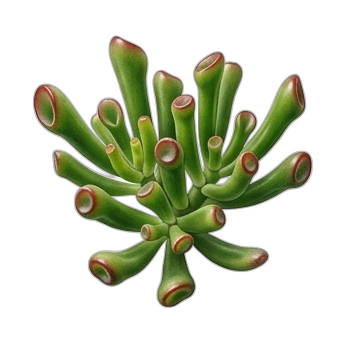
I was kneeling on the cedar planks of a greenhouse floor last autumn, holding a five-year-old Crassula ovata 'Gollum' that looked like a hyper-detailed forest of tiny, coral-like fingers, when I realized just how drastically this cultivar differs in temperament from its standard jade plant ancestor. While a regular jade tolerates a bit of neglect and dim light with stoic indifference, the 'Gollum' jade—with its tubular, suction-cup-tipped leaves—will quickly signal its distress if you miss its precise nutritional and watering rhythms. Over many seasons I have rescued countless specimens of this whimsical succulent from well-meaning owners who treat it like an ordinary houseplant. Let us dive deep into the science, cultivation, and care required to keep your Crassula ovata 'Gollum' thriving for decades.
1. Botanical Overview & Natural Habitat

In its native South African and Mozambican habitats, the parent species grows in rocky, arid, and semi-arid scrublands where rainfall is sparse and erratic. To survive these punishing conditions, Crassula species evolved crassulacean acid metabolism (CAM) photosynthesis. This specialized metabolic pathway allows the plant to keep its stomata closed during scorching daylight hours, opening them only at night to capture carbon dioxide. This minimizes water loss through transpiration and explains why overwatering is the single most common cause of decline in indoor cultivation.
Morphologically, 'Gollum' grows as a densely branched, semi-woody evergreen shrub reaching heights of 24 to 36 inches (60 to 90 cm) indoors, and up to 36 to 48 inches (90 to 120 cm) in optimal Mediterranean outdoor climates. The stems are thick, fleshy, and greenish-brown, eventually turning into a robust, gnarled trunk with a bonsai-like appearance as the plant matures. According to the Royal Horticultural Society, this structural resilience makes it a favored subject for container gardening and interior architectural planting.
2. Essential Environmental & Care Requirements
Creating an environment that mimics the rocky, sun-drenched outcrops of southern Africa is the secret to unlocking the true ornamental potential of your Gollum Jade.
| Parameter | Optimal Condition | Common Mistake | Why It Matters |
|---|---|---|---|
| Light | 6+ hours of direct sunlight daily; bright south- or west-facing exposure. | Placing deep indoors or in a north-facing window. | Insufficient light causes weak, etiolated stems and loss of the characteristic tubular leaf shape. |
| Temperature | 65°F to 80°F (18°C to 27°C) active growth; 50°F to 60°F (10°C to 15°C) winter dormancy. | Exposing to temperatures below 35°F (1.7°C). | Freezing temperatures rupture cell walls filled with water, causing rapid mushy collapse. |
| Soil Moisture | Soak-and-dry method; allow soil to dry completely down to 3.0 inches (7.6 cm). | Watering on a strict calendar schedule. | Constant moisture rots the shallow root system and invites fungal pathogens. |
| Soil pH & Mix | pH 6.0 to 7.5; gritty, highly porous cactus-succulent blend. | Using heavy organic potting soil or garden dirt. | Dense soils hold moisture too long and lack the oxygen required for healthy succulent roots. |
Light intensity dictates color and form. Without intense light, the trumpet-shaped leaves flatten out, lose their suction-cup tips, and stretch into pale, unsightly green strands. If you cannot provide a south-facing windowsill, supplement with a full-spectrum LED grow light positioned 8.0 to 12.0 inches (20 to 30 cm) above the canopy for 12 to 14 hours daily.
Temperature management is equally critical. During the spring and summer growing season, standard room temperatures between 65°F and 80°F (18°C to 27°C) are ideal. In late autumn and winter, lowering the ambient temperature to a cool 50°F to 60°F (10°C to 15°C) and reducing water intake triggers a natural resting period. This seasonal cue is mandatory if you want your Gollum Jade to produce its delicate, star-shaped pinkish-white flowers in late winter or early spring.
💡 Pro-Tip: Never rely on the look of the surface soil to decide when to water. Instead, use a wooden dowel inserted 3.0 inches (7.6 cm) deep into the pot. If any damp soil or moisture clings to the wood when pulled out, wait another 5 to 7 days before testing again.
3. Step-by-Step Cultivation, Feeding & Propagation
Repotting and propagating Crassula ovata 'Gollum' is an immensely satisfying process. Because these plants have relatively shallow, compact root systems, they do not need oversized containers. In fact, a slightly snug pot prevents excess soil from holding moisture for too long after a deep watering.
Step-by-Step Repotting Sequence
- Select the container: Choose a pot made of unglazed terracotta or ceramic with at least one generous drainage hole. The diameter should be only 1.0 to 2.0 inches (2.5 to 5.0 cm) wider than the current root ball.
- Mix the substrate: Combine 50% high-quality organic cactus mix with 50% inorganic grit, such as pumice, coarse perlite, or poultry grit, to ensure rapid, unimpeded drainage.
- Unpot the specimen: Gently ease the Gollum Jade out of its old container. Massage the root mass to loosen tightly bound roots and carefully brush away old, exhausted soil.
- Inspect and prune: Using sterilized pruning shears, snip away any dead, brown, or mushy roots. If the top canopy is top-heavy, lightly tip-prune the branches to encourage lateral branching.
- Plant at the correct depth: Position the plant in the new container at the exact same soil depth it was previously growing. Fill in with your custom gritty mix, tamping down gently around the base for stability.
- Wait before watering: Leave the newly repotted plant dry for 7 to 10 days. This crucial resting period allows any microscopic root tears sustained during the transfer to callus over, preventing fatal stem or root rot.
Feeding your Gollum Jade should be done sparingly. During the active growing months of spring and summer, dilute a balanced, low-nitrogen liquid succulent fertilizer (such as a 2-7-7 formulation) to one-quarter strength and apply it once every 4 weeks. Cease all fertilization completely from October through February when the plant enters its winter dormancy phase.
Propagation is remarkably simple using stem or leaf cuttings. Take a 3.0- to 4.0-inch (7.6 to 10.1 cm) tip cutting using a sterile blade. Allow the cut end to dry in a shaded, well-ventilated area for 4 to 7 days until a thick, protective callus forms. Press the callused end upright into a dry, gritty propagation mix. Mist the surrounding soil lightly every 3 to 4 days once roots begin to emerge after approximately 14 to 21 days.
4. Common Problems, Pests & Troubleshooting
Even with meticulous care, indoor environments can present challenges. Recognizing the early warning signs of stress ensures quick remediation before a minor issue becomes a plant-threatening crisis.
- Stem and Root Rot: Caused by overwatering or dense, poorly draining soil. The base of the stem turns soft, translucent, and black, while leaves drop rapidly. Solution: Immediately unpot the plant, slice away all rotted tissue with a sterilized knife until only firm, clean green tissue remains, dust the cut with powdered sulfur or cinnamon, and let it dry for 10 days before replanting in fresh, dry grit.
- Etiolation: Stems stretch abnormally long with weak, pale, widely spaced leaves. Solution: Gradually acclimate the plant to a brighter location with direct sunlight, and prune back the leggy, stretched stems by half to stimulate compact, bushy new growth.
- Edema: Appears as small, corky, raised blisters or scars on the leaves. This happens when roots absorb water faster than the leaves can transpire it, causing individual plant cells to rupture. Solution: Increase airflow around the plant, reduce watering frequency, and ensure your soil mix contains at least 50% coarse inorganic drainage amendments.
- Mealybugs: These sap-sucking pests look like tiny tufts of white, cottony wax tucked neatly into the tight crevices where the tubular leaves meet the stem. Solution: Dip a cotton swab in 70% isopropyl alcohol and dab it directly onto every visible pest to dissolve their protective waxy coating. Follow up with a thorough spray of horticultural insecticidal soap.
⚠️ Important Caution: Never use heavy mineral oils or shining agents on the leaves of your Gollum Jade. These products clog the stomata, interfere with the plant's natural CAM photosynthesis, and can cause rapid tissue necrosis.

5. Frequently Asked Questions
Why are the leaves on my Gollum Jade turning yellow and falling off?
Yellowing and dropping leaves are the classic symptoms of overwatering and oxygen-depleted soil. When roots sit in soggy media for too long, they suffocate and die, rendering them unable to transport water and nutrients upward. Check the moisture level deep in the pot; if it is wet, withhold water immediately, inspect the root system for rot, and ensure your potting mix features a high percentage of drainage grit.
How do I get my Gollum Jade to turn red at the tips?
The vibrant red margins on a Gollum Jade's suction-cup leaf tips are a natural stress response triggered by high-intensity light and cool nighttime temperatures. To achieve this, place your plant in a south-facing window where it receives at least 6 hours of direct sun daily. In autumn, allowing the plant to experience indoor temperatures dropping near 50°F to 55°F (10°C to 13°C) at night will intensify this gorgeous coloration.
Can I grow a Gollum Jade outdoors year-round?
You can only grow Crassula ovata 'Gollum' outdoors year-round if you live in USDA Hardiness Zones 10 through 11, where winter temperatures rarely drop below 35°F (1.7°C). In cooler climates, move your jade outdoors for the summer months once all danger of frost has passed, but make sure to acclimate it slowly over 10 days to prevent severe sunburn on its tender green leaves.
Is Gollum Jade toxic to cats and dogs?
According to the American Society for the Prevention of Cruelty to Animals (ASPCA), Crassula ovata and its cultivars are classified as toxic to domestic pets, including cats and dogs. Ingestion can cause mild to moderate clinical signs, including vomiting, lethargy, and a temporary loss of muscular coordination. Keep your Gollum Jade safely positioned on high shelves or out of reach of curious household pets.
📋 Table of Contents ▼ Click to expand
Tags: