


YOU'RE THROWING AWAY FREE BEGONIAS! Watch this..!
Written with AI assistance, edited and checked against horticultural sources.
What I discovered changed my entire approach to horticulture—especially when it came to the genus Begonia. If you have been tossing your leggy begonia trimmings, pinched stems, or damaged leaves into the compost bin, you are throwing away a treasure trove of free plants.
Begonias are uniquely gifted with meristematic plasticity. This means their cells can easily reprogram themselves to grow entirely new root systems and shoots from a simple leaf or stem fragment. Let's delve into the botanical science and step-by-step techniques to unlock this natural phenomenon and turn your household prunings into a thriving, endless collection of free begonias.
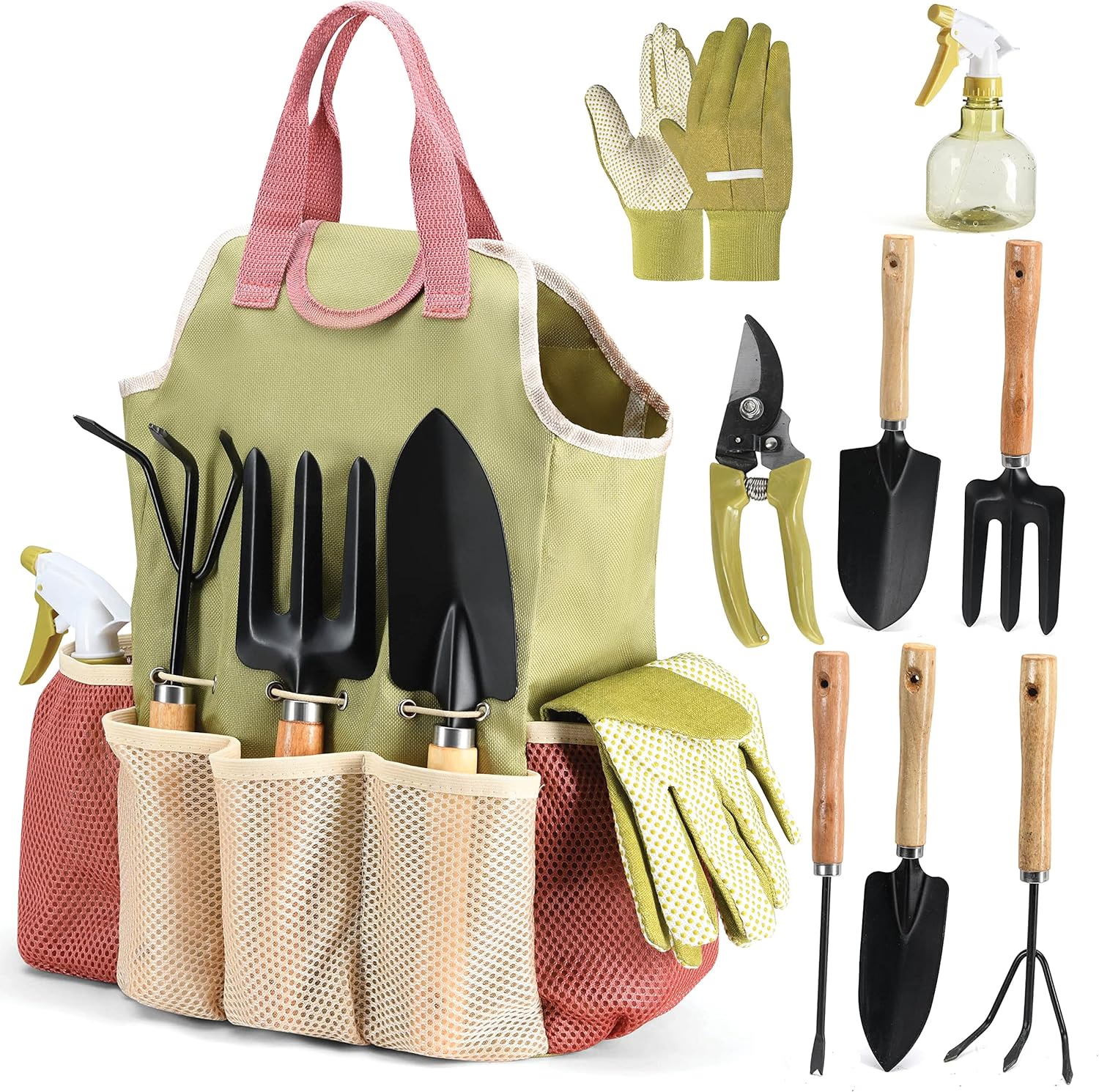
PLAY22 Gardening Tools Set of 10
A 10-piece hand tool set with a carry bag — trowel, transplanter, pruners and weeder. Suited to repotting and general container work.
View on Amazon ↗1. Botanical Overview & Natural Habitat
To successfully cultivate and propagate begonias, we must first understand their evolutionary history. The genus Begonia is one of the largest in the plant kingdom, comprising over 2,000 distinct species native to the moist, tropical, and subtropical understories of Central and South America, Africa, and southern Asia.
Because they evolved beneath dense forest canopies, begonias adapted to grow in pockets of highly aerated organic debris, mossy rock crevices, and well-draining forest floors. They are not suited for heavy, compacted soils. Their root systems are exceptionally fine, delicate, and shallow, making them highly sensitive to environmental extremes.
At the root zone (rhizosphere), gas exchange is just as critical as moisture. When potting mix becomes dense, muddy, or suffocated by standing drainage water, fine root hairs quickly suffer from hypoxia (oxygen deprivation), leaving the door wide open for opportunistic fungal pathogens like Pythium and Phytophthora. Conversely, an open, biologically active substrate enables robust nutrient uptake and rapid vegetative vigor.
Understanding the difference between begonia growth habits is crucial for propagation:
- *Cane-like Begonias (e.g., Begonia maculata):* Characterized by upright, bamboo-like stems and asymmetrical, spotted leaves. These propagate exceptionally well via nodal stem cuttings.
- Rhizomatous Begonias (including Rex Begonias): Grown for their breathtaking, multicolored foliage, these plants grow from a creeping, horizontal stem (rhizome) at the soil surface. They possess the unique ability to regenerate entirely from a single leaf blade or petiole cutting.
- Tuberous Begonias: These grow from swollen underground tubers and are highly valued for their large, rose-like summer blooms. They require a distinct winter dormancy period.
"Successful indoor gardening isn't a game of luck—it is the art of respecting root biology and working in harmony with natural physiological cycles."
When you prune a begonia, you are not merely keeping the plant compact; you are harvesting high-viability botanical material. The veins of a begonia leaf contain a dense concentration of totipotent parenchyma cells. When severed and exposed to the right balance of oxygen, humidity, and warmth, these cells undergo dedifferentiation—essentially turning back into stem cells—and form a wound callus. From this callus, adventitious roots and shoot buds emerge, giving rise to an entirely new, genetically identical clone of your mother plant.
2. Essential Environmental & Care Requirements
Before attempting propagation, you must ensure your environment supports active photosynthesis and cell division. A stressed parent plant produces weak cuttings, and a poor rooting environment will rot your propagules before they can form a callus.
To give your begonias the ideal foundation for growth, maintain a temperature range between 65°F and 78°F (18°C to 26°C). Avoid dropping below 55°F (13°C), as cold temperatures slow down metabolic enzymes and induce dormancy or rot.
To help you manage these critical conditions, refer to this breakdown of optimal environmental parameters:
Remember that indoor plants do not follow our calendar; they respond to environmental cues. During the active growing season of spring and summer, your begonias will consume water and nutrients much faster than in the low-light days of winter. Always use your fingers or a moisture meter to assess the substrate before watering.
3. Step-by-Step Cultivation, Feeding & Propagation
If you want to turn your discarded begonia trimmings into an endless supply of free plants, follow this systematic, botanically proven propagation protocol. This guide combines stem cutting and leaf-wedge propagation techniques to maximize your success rate.
Step 1: Sanitize Your Tools and Select Your Material
Always sterilize your pruning shears or razor blade with 70% isopropyl alcohol before making any cuts. This simple step prevents the transmission of systemic viral and bacterial pathogens. Select a healthy, pest-free parent plant that has been thoroughly watered 24 hours prior. This ensures the plant tissues are fully hydrated and cellular turgor pressure is high.
Step 2: Harvest the Cuttings
- For Cane Begonias (Stem Cuttings): Locate a healthy stem with at least 2 to 3 nodes. Make a clean, diagonal cut 0.25 inches (6 mm) below a node. The diagonal cut increases the surface area for water absorption. Remove the lower leaves, leaving only 1 or 2 leaves at the top to reduce transpirational water loss.
- For Rex and Rhizomatous Begonias (Leaf Wedge Cuttings): Snip a mature, healthy leaf where the leaf stem (petiole) meets the main plant. You can propagate this leaf whole by inserting the petiole directly into your medium. Alternatively, perform a "wedge cutting": lay the leaf flat on a clean surface and cut it into wedge-shaped pieces, ensuring that each wedge contains a portion of a primary leaf vein. New roots and plantlets will emerge directly from these severed vein junctions.
Step 3: Optimize Container Aeration and Substrate Texture
Ensure your propagation containers or nursery pots have generous drainage holes. Fill them with an incredibly airy, lightweight propagation medium.
- Recommended Mix: 50% coarse perlite or pumice and 50% damp peat moss or coco coir.
- This specific blend prevents compaction, retains a thin film of moisture around the cuttings, and ensures maximum oxygen levels at the callusing site.
Step 4: Insert and Secure the Propagules
Gently insert your prepared cuttings into the propagation medium.
- For stem cuttings, bury at least one node beneath the surface, as this is where the concentration of root-forming cells is highest.
- For leaf wedges, insert the cut vein end about 0.5 inches (1.2 cm) deep into the medium at a slight angle, securing it in place. Firm the substrate gently around the cuttings to ensure continuous contact.
Step 5: Stabilize the Micro-Environment
Begonia cuttings lack root systems to absorb water, making them highly vulnerable to drying out. To prevent wilt, place the entire propagation tray or pot inside a clear plastic humidity dome or a sealable plastic bag. This creates a miniature greenhouse that traps humidity. Position the setup in a warm area (70°F to 75°F / 21°C to 24°C) that receives bright, indirect light.
Step 6: Hardening Off and Nutrition
Open the humidity dome for 10 minutes every few days to exchange stagnant air and prevent fungal growth. Within 3 to 4 weeks, you will see fine root systems developing. Once roots are at least 1 inch (2.5 cm) long, gradually open the dome over the course of a week to acclimate the young plants to typical household humidity.
Once acclimated, you can pot them up and begin a gentle nutrition routine. During active vegetative growth, nourish with a half-strength, organic liquid fertilizer to gently support cell division and leaf growth without burning the delicate new root hairs.
💡 Pro-Tip: Always hydrate your plants and cuttings with room-temperature water (68°F to 72°F / 20°C to 22°C). Icy tap water induces thermal root shock, constricts vascular tissues, and halts nutrient absorption and cellular division for several hours.
⚠️ Important Caution: Never let your pots or propagation trays stand in saucer runoff water for more than fifteen minutes. Stagnant water quickly creates anaerobic conditions in the root zone, suffocating root cells and rapidly inviting devastating root rot pathogens like Pythium.
For more advanced insights into plant care, check out the RHS Guide on Begonia Propagation, which offers excellent scientific overviews of plant breeding.
4. Common Problems, Pests & Troubleshooting
Even experienced growers encounter challenges when cultivating and propagating begonias. Because of their soft succulent stems and thin foliage, begonias can quickly fall victim to physiological stress and pests if their environment goes off balance.
Physiological Stress and Cultural Issues
- Browning, Crispy Leaf Margins: This is a classic sign of low humidity (below 40%) or underwatering. The plant cannot draw up water fast enough to satisfy transpirational demands, causing the outermost cells of the leaves to collapse and die.
- Remedy: Place a humidifier nearby, group your plants closer together to create a microclimate, and ensure you are watering as soon as the top soil feels dry.
- Yellowing Lower Leaves and Mushy Stems: This points directly to overwatering, compacted soil, and subsequent root hypoxia. When roots lack oxygen, they rot, turning dark brown and mushy, and lose their ability to transport water up to the leaves.
- Remedy: Immediately stop watering. Unpot the plant, trim away any dark, decayed roots using sanitized shears, and repot into a fresh, highly aerated substrate amended with 30% perlite and orchid bark.
Common Pests
- *Fungus Gnats (Bradysia species):* These small, dark flies thrive in continuously wet, organic soils. While the adults are mostly an annoyance, their microscopic larvae live in the soil and feed on delicate begonia root hairs, stunting growth.
- Remedy: Let the top 2 inches (5 cm) of soil dry out completely between waterings. Treat the soil with beneficial nematodes or water with a biological larvicide containing Bacillus thuringiensis israelensis (Bti).
- *Mealybugs (Pseudococcidae):* These soft-bodied, cottony pests love to hide in the deep crevices of begonia leaf petiole junctions and under leaves, sucking vital sap from the plant's vascular system.
- Remedy: Dip a cotton swab in 70% isopropyl alcohol and dab it directly onto the pests to dissolve their protective waxy coating. For larger outbreaks, apply an insecticidal soap or organic neem oil spray, ensuring thorough coverage of all leaf crevices.
Fungal Diseases
- *Powdery Mildew (Podosphaera species):* This disease presents as white, powdery patches on the leaf surfaces. It is triggered by high humidity combined with stagnant, still air.
- Remedy: Space your plants out to improve air circulation and use a small oscillating fan nearby. Prune away heavily infected leaves and treat the remaining foliage with a potassium bicarbonate or copper-based fungicide spray.
5. Frequently Asked Questions
When is the best time of year to propagate begonias?
Early spring through mid-summer represents the ideal window for propagating begonias. During this period, the mother plant is in its active metabolic phase, meaning hormone levels (specifically auxins, which stimulate root growth) are at their highest. The warm ambient temperatures and extended daylight hours fuel rapid cell division, allowing your cuttings to root and establish far more quickly than in the autumn or winter months.
How long does it take for begonia cuttings to grow roots?
Under optimal conditions—temperatures of 70°F to 75°F (21°C to 24°C), high humidity, and bright, indirect light—you will typically see root initiation within 10 to 14 days. Within 21 to 30 days, the root system should be robust enough (at least 1 to 2 inches or 2.5 to 5 cm in length) to handle transplanting into a permanent, highly aerated soil mix.
Can I propagate any type of houseplant using leaf cuttings?
No, leaf cutting propagation is a highly specialized biological trait. Only certain plant families—such as Begoniaceae (Begonias), Gesneriaceae (African Violets), and Crassulaceae (Succulents)—possess the necessary totipotent cells along their leaf veins to regenerate both roots and shoot buds from leaf tissue. For most other common houseplants, such as Philodendrons, Monsteras, and Pothos, you must use a stem cutting that contains an active node with pre-existing axillary buds.
Why are my begonia cuttings rotting in water instead of rooting?
If your cuttings are turning mushy and black in water, it is due to a lack of dissolved oxygen and the presence of anaerobic bacteria. To prevent this, change the water every 2 to 3 days to keep oxygen levels high. Additionally, ensure your cutting tools are thoroughly sterilized before taking cuttings, and keep the setup in a warm, bright location. If water propagation continues to fail, switch to a damp, sterile medium like perlite or sphagnum moss, which naturally allows for much better gas exchange around the stem.
Can begonias grow in low light conditions inside the house?
While begonias can tolerate moderate shade, placing them in a truly dark corner will lead to weak, leggy growth, pale leaves, and a higher risk of root rot due to slow water uptake. To keep your plants compact, vibrant, and healthy, aim for bright, indirect light. If you lack natural light, using a simple LED grow light positioned 12 to 18 inches (30 to 45 cm) above your plants for 12 hours a day works beautifully.
For additional, highly detailed information on begonia care across different climates, refer to the Clemson University Cooperative Extension sheet, which contains excellent diagnostic tables and cultivar recommendations.
Have you tried this propagation technique with your own houseplants? Share your results with our global grower community on the Community Forum, explore more expert guides on Plant Tips, or visit our Home Page for comprehensive plant care archives.
📋 Table of Contents ▼ Click to expand
PlantSavvyWorld
Editorial team
PlantSavvyWorld is an independent botanical education project. Articles are drafted with AI assistance, then edited and checked against university extension services, botanical garden collections and other published horticultural sources.
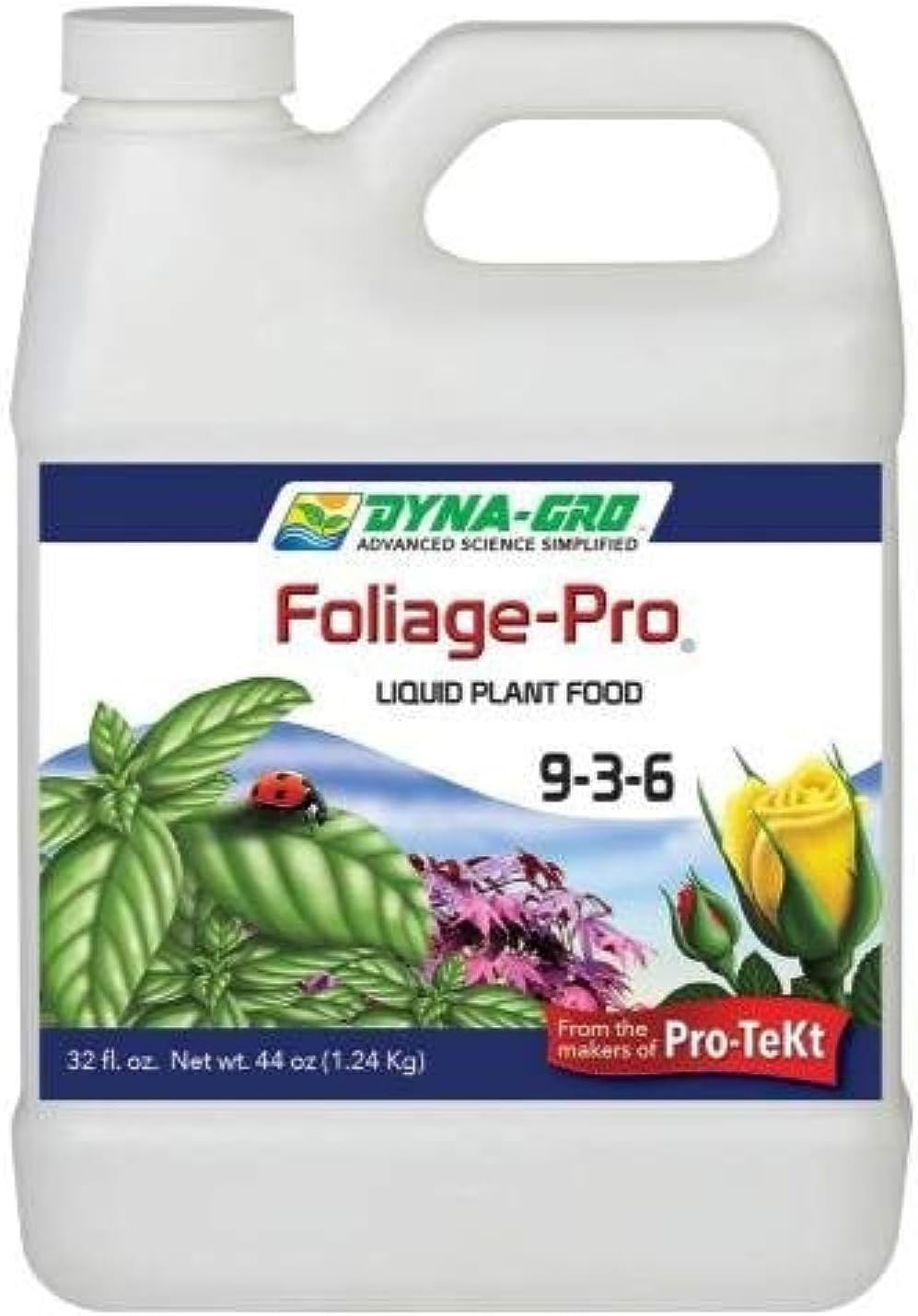
Organic Liquid Plant Food (FoxFarm)
A liquid organic plant food. Applied at label rate during active growth; most houseplants do better at reduced strength and not at all in winter.
View on Amazon ↗
PlantSavvyWorld
Editorial team
PlantSavvyWorld is an independent botanical education project. Articles are drafted with AI assistance, then edited and checked against university extension services, botanical garden collections and other published horticultural sources.
💬 Discussion