


Why a Brutal Haircut Saved My Leggy Asparagus Fern: The Botanical Secret Behind Pruning
Written with AI assistance, edited and checked against horticultural sources.
It was only after diving deep into botanical science and consulting fellow enthusiasts in our Community Forum that I realized the harsh truth: I was killing it with kindness. I was terrified of taking scissors to its frail-looking vines, but that exact fear was keeping the plant trapped in a downward spiral. Let me share the botanical breakthrough that completely changed how I handle leggy foliage.
1. Botanical Overview & Natural Habitat
To understand why my drastic pruning experiment worked, we first have to look at the deceptive biology of this plant. Despite its delicate appearance and common name, the Asparagus Fern is not a true fern. True ferns reproduce via spores, lack specialized floral tissues, and belong to ancient plant divisions like Pteridophyta. The Asparagus Fern actually belongs to the Asparagaceae family—making it a close relative of culinary asparagus (Asparagus officinalis) and robust garden lilies.

PLAY22 Gardening Tools Set of 10
A 10-piece hand tool set with a carry bag — trowel, transplanter, pruners and weeder. Suited to repotting and general container work.
View on Amazon ↗The Anatomy of an Imposter: Cladodes vs. True Leaves
What look like delicate fern fronds or soft needles are not leaves at all. Scientifically, they are cladodes (or cladophylls)—flattened, modified photosynthetic stem branches. The plant's true leaves are virtually microscopic, reduced to tiny, scale-like structures hugging the main stems. These structural stems often feature sharp, recurved spines that help the plant scramble up neighboring vegetation in the wild.
Native to the humid sub-tropical forests, rocky hillsides, and coastal thickets of Southern Africa, Asparagus setaceus has evolved to survive periods of erratic rainfall and shifting light canopy levels. According to research compiled by the Missouri Botanical Garden, these native environments demand extreme physiological flexibility—a trait written directly into the plant's underground architecture.
Underground Tubers and Meristematic Energy Storage
This botanical classification changes everything about how the plant stores energy and handles trauma. Unlike true ferns that rely strictly on delicate frond crowns, the Asparagus Fern utilizes an extensive underground network of specialized storage organs.
Beneath the soil line lies the secret to this plant's incredible resilience: a dense matrix of fleshy tubers and thick rhizomes. These underground structures act as biological vaults, storing immense reserves of water, complex carbohydrates, and essential minerals.
When an Asparagus Fern goes leggy and yellow, it is wasting massive amounts of cellular energy trying to maintain dying, unproductive stems instead of utilizing its robust underground tubers.
When upper foliage becomes damaged, etiolated (stretched due to light deprivation), or aged, it transitions from an energy "source" (producing sugars via photosynthesis) to an energy "sink" (consuming resources without returning value). By leaving leggy, yellowing stems intact, you force the plant to distribute its metabolic energy thinly across hundreds of exhausted nodes. When I finally gathered the courage to give mine what looked like a brutal, near-total haircut, I wasn't destroying it—I was triggering a biological reset button. Cutting back the top growth breaks apical dominance, signalling to the subterranean meristematic tissue that it is time to flush out dense, vibrant new shoots.
2. Essential Environmental & Care Requirements
While aggressive pruning acts as the catalyst for structural renewal, keeping your Asparagus Fern dense, green, and thriving over the long term requires meeting its baseline environmental parameters.
Light Requirements
Asparagus Ferns thrive in bright, indirect sunlight. Aim for light levels between 1,000 and 2,500 foot-candles (roughly 10,000 to 27,000 lux). An east-facing window sill or a spot set back 3 to 5 feet (0.9 to 1.5 meters) from an unshaded south- or west-facing window is ideal. Direct mid-day sun will bleach and scorch the delicate cladodes within 48 to 72 hours, turning them pale yellow or straw-brown. Conversely, keeping the plant in deep shade forces stems to stretch out searching for light, causing severe legginess within 3 to 4 weeks.
Temperature and Atmospheric Moisture
- Optimal Temperature: Keep ambient temperatures between 65°F and 75°F (18°C to 24°C) during the active growing season. Nighttime temperatures should not drop below 55°F (13°C).
- Relative Humidity: Maintaining relative ambient humidity between 50% and 70% prevents tip browning. If ambient room humidity drops below 40% (common during winter heating cycles), place the pot over a tray filled with pebbles and water, or operate a cold-mist humidifier nearby.
Soil Composition and Moisture Control
The growing medium must balance rapid moisture retention with aggressive drainage. A standard heavy potting soil will compact over time, starving the tuberous root system of oxygen and inviting anaerobic rot pathogens like Pythium. Prepare a soil mixture of:
- 50% high-grade sphagnum peat moss or coconut coir
- 30% coarse perlite or pumice
- 20% rich organic compost or leaf mold
Maintain a soil pH range of 6.0 to 6.8 for optimal nutrient bioavailability.
💡 Pro-Tip: Stop relying on daily surface misting! Misting provides only a temporary spike in ambient humidity lasting 10 to 15 minutes and does nothing to hydrate the root system. Instead, perform deep waterings until liquid drains freely from the pot bottom, then allow the top inch of soil to dry slightly before watering again. Your subterranean root tubers need access to both water and oxygen to sustain healthy growth.
3. Step-by-Step Cultivation, Feeding & Propagation
Pruning an Asparagus setaceus is less about cosmetic trimming and more about strategic resource allocation. Below, we compare how different common indoor houseplants respond to pruning before walking through the exact hard-cut execution protocol.
Comparison: Pruning Strategies for Common Indoor Plants
Step-by-Step Protocol to Reset Your Leggy Asparagus Fern
If your plant is looking sparse, yellow, or woody, follow this tested step-by-step procedure to safely execute a full physiological reset:
- Sterilize your tools: Wipe bypass pruning shears or dedicated micro-tip scissors with 70% isopropyl alcohol. Sanitizing your blades prevents cross-contaminating open plant wounds with viral or fungal pathogens.
- Expose the soil crown: Trace straggly, yellowing stems down to where they emerge from the potting substrate. Clear away dead cladodes or fallen debris from the surface soil line to increase airflow.
- Execute the chop: Cut all leggy, brown, or sparse stems down uniformly, leaving just 1 to 2 inches (about 3 to 5 cm) protruding above the soil line. Do not be squeamish; the subterranean tubers are packed with energy and expect this periodic biomass reset.
- Adjust watering temporarily: Because the plant temporarily lacks foliage to transpire water into the air, its water uptake will decrease by 50% to 70%. Reduce watering volume slightly so the soil remains barely moist rather than soggy, preventing tuber decay while new stems form.
- Optimize recovery environment: Position the container in a warm location (70°F to 75°F / 21°C to 24°C) receiving indirect light. This thermal energy fuels rapid cellular division at the underground basal nodes.
- Apply recovery nutrition: Exactly 14 days after the chop—when small, pinkish-green spear tips begin breaking through the soil—feed the plant with a balanced, liquid nitrogen fertilizer (such as a 10-10-10 formula) diluted to half-strength (e.g., 1/2 teaspoon per gallon of water).
⚠️ Important Caution: Keep in mind that Asparagus setaceus sap contains toxic steroid saponins, and its small berries are harmful to cats, dogs, and humans if ingested. Additionally, mature stems develop sharp, microscopic thorns that can cause localized mechanical dermatitis. Always wear protective gardening gloves and long sleeves during major pruning sessions, and keep trimmings away from curious pets.
Root Division & Propagation
Unlike pothos or philodendrons, you cannot propagate an Asparagus Fern from stem cuttings. Stem trimmings lack the specialized meristematic tissue required to initiate adventitious root growth. To propagate a expanding plant:
- Unpot the fern during spring repotting (every 2 to 3 years).
- Gently tease apart the root ball, identifying natural cluster divisions.
- Use a clean, sharp knife to slice through the dense rhizome mass, ensuring each separated section retains at least 3 to 5 viable storage tubers and an intact cluster of basal shoot buds.
- Pot each division into fresh, well-draining soil in containers measuring 4 to 6 inches (10 to 15 cm) in diameter.
4. Common Problems, Pests & Troubleshooting
Even with ideal structural care, indoor environments present challenges. Use this practical diagnostic breakdown to address common issues:
1. Mass Cladode Dropping (Needle Shedding)
- Symptom: The floor or table surrounding your pot is covered in tiny green or yellow needles.
- Cause: Sudden environmental shock, low ambient humidity (<35%), or chronic under-watering. When root tubers run out of moisture, the plant sheds outer photosynthetic structures to prevent systemic desiccation.
- Solution: Perform a 20-minute bottom-watering soak by placing the pot in a tub of lukewarm water. Relocate the plant away from cold window drafts or warm air vents.
2. Pale, Stretched, Etiolated Vines
- Symptom: Stems grow 3 to 6 feet (0.9 to 1.8 meters) long with 2 to 4 inches (5 to 10 cm) of bare stem between tiny cladode clusters.
- Cause: Severe light deprivation. The plant is spending energy producing structural cellulose to search for an overhead light canopy.
- Solution: Perform a rejuvenating hard prune to soil level and immediately relocate the pot to an area receiving 1,000–2,000 foot-candles of bright indirect light.
3. Indoor Pest Infestations
- *Spider Mites (Tetranychidae):* Microscopic pests that thrive in warm, dry air. Look for fine webbing between stem joints and speckled, dull foliage. Wash the plant under a lukewarm shower spray, then apply organic insecticidal soap or a 1% solution of cold-pressed neem oil every 7 days for three consecutive weeks.
- *Scale Insects (Coccidae):* Small, brown, dome-shaped bumps anchored along main woody stems. Dip a cotton swab in 70% isopropyl alcohol and dab each scale insect directly to dissolve their protective waxy shell.
According to pest management documentation from the Royal Horticultural Society, maintaining high ambient atmospheric moisture and wiping foliage regularly is the most effective preventative measure against indoor sap-sucking pests. For step-by-step pest control strategies, browse our dedicated Plant Tips archive.
5. Frequently Asked Questions
Will cutting my Asparagus Fern to the soil line actually kill it?
No, it will not kill a established plant. Because Asparagus Ferns possess robust underground tuber systems packed with stored water and carbohydrates, cutting away top growth acts as a physiological stimulus. It removes unproductive energy sinks and triggers dormant subterranean basal buds to erupt into a dense flush of fresh fronds within 14 to 28 days.
How often should I prune an Asparagus Fern?
You do not need to prune it drastically very often—typically, a full reset chop is only required every 1 to 3 years when the plant becomes excessively leggy, root-bound, or yellowed from aging inner stems. Regular seasonal maintenance involves simply snipping away individual dry tips, yellowing vines, or unruly stray stems at their base as needed.
Why are the needles on my Asparagus Fern turning yellow and dropping?
Yellowing needles are usually caused by low ambient humidity, insufficient light, or erratic watering habits. If the entire plant looks dull and sparse despite good care, those stems have reached the end of their structural lifecycle. The plant is pulling nutrients out of old tissue to support new subterranean shoots, indicating it is ready for a rejuvenating hard prune.
Can I propagate my Asparagus Fern from stem cuttings in water?
No, stem cuttings of Asparagus setaceus will not produce roots in water or soil. The stems lack the meristematic crown tissue necessary to generate new root systems. To create new individual plants, you must divide the underground root ball and tuber system during spring repotting, ensuring each division retains viable tubers and basal crown buds.
Do Asparagus Ferns produce real flowers and seeds indoors?
Yes, under ideal bright light conditions, mature Asparagus setaceus plants produce tiny, greenish-white, bell-shaped flowers in late summer. If pollinated, these blooms develop into small, round berries that ripen from green to dark purple-black. Each berry contains 1 to 3 black seeds that can be harvested, soaked in water for 24 hours, and germinated in warm seed-starting mix at 70°F to 75°F (21°C to 24°C).
📋 Table of Contents ▼ Click to expand
PlantSavvyWorld
Editorial team
PlantSavvyWorld is an independent botanical education project. Articles are drafted with AI assistance, then edited and checked against university extension services, botanical garden collections and other published horticultural sources.
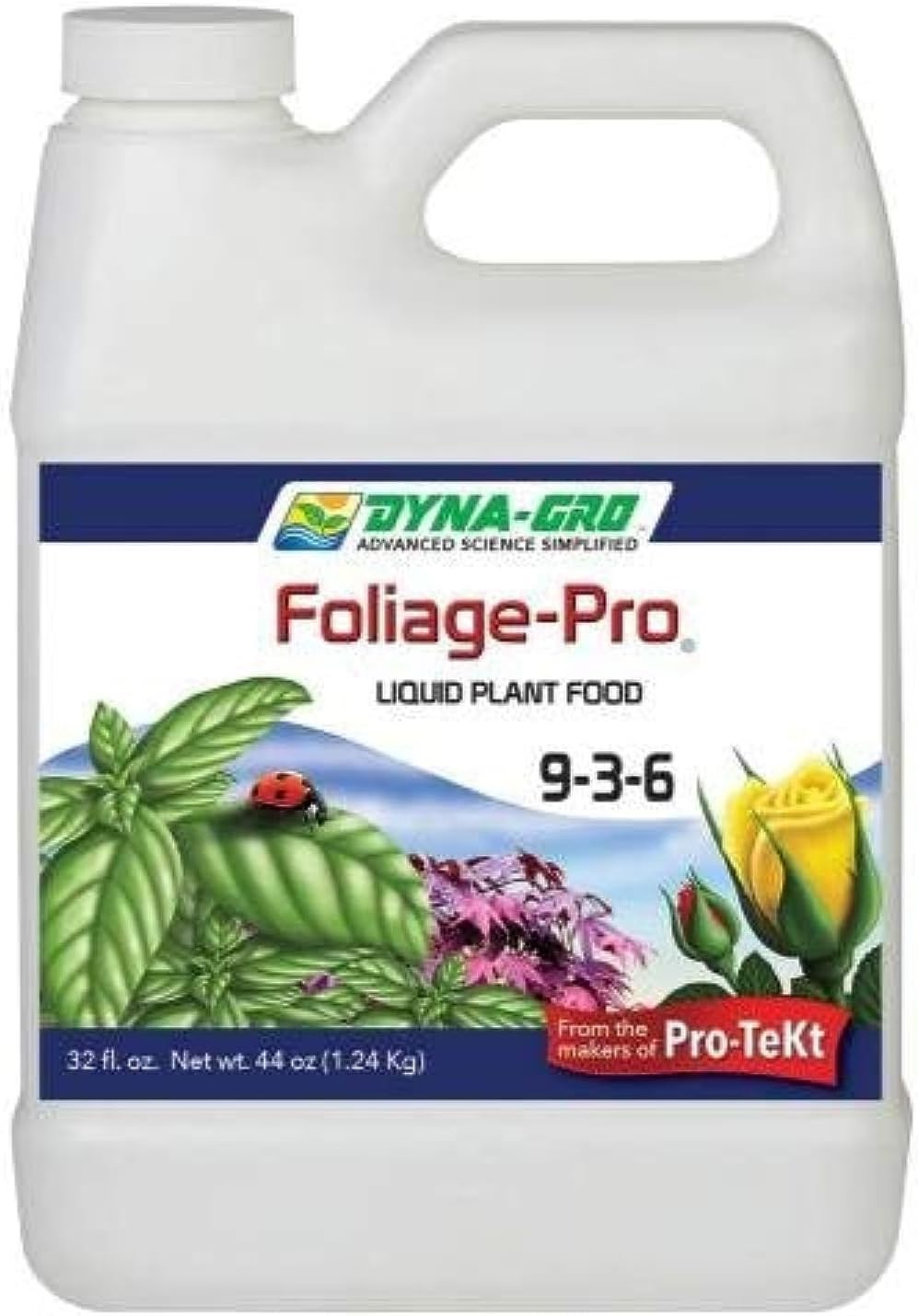
Organic Liquid Plant Food (FoxFarm)
A liquid organic plant food. Applied at label rate during active growth; most houseplants do better at reduced strength and not at all in winter.
View on Amazon ↗
PlantSavvyWorld
Editorial team
PlantSavvyWorld is an independent botanical education project. Articles are drafted with AI assistance, then edited and checked against university extension services, botanical garden collections and other published horticultural sources.
💬 Discussion