


Unlocking the Soapy Secret of Your Yucca Plant: Ethnobotany and Care
Written with AI assistance, edited and checked against horticultural sources.
Moments later, when I washed my soil-covered hands with tepid tap water over the sink near the severed root fragment, a delicate, silky lather instantly formed between my palms. Intrigued, I dove deep into historical botanical literature and plant biochemistry to understand the exact mechanics behind this reaction. What I discovered changed how I view this common indoor architectural plant: my structural centerpiece was harboring an ancient, natural surfactant synthesized through millions of years of evolutionary defense.
1. Botanical Overview & Natural Habitat
To understand why your indoor Yucca plant can produce suds, we must examine its cellular biology, chemical profile, and native environment. The genus Yucca belongs to the family Asparagaceae (subfamily Agavoideae) and encompasses approximately 40 to 50 species of perennial trees and shrubs native to the hot, arid, and semi-arid regions of North America, Central America, and the Caribbean.
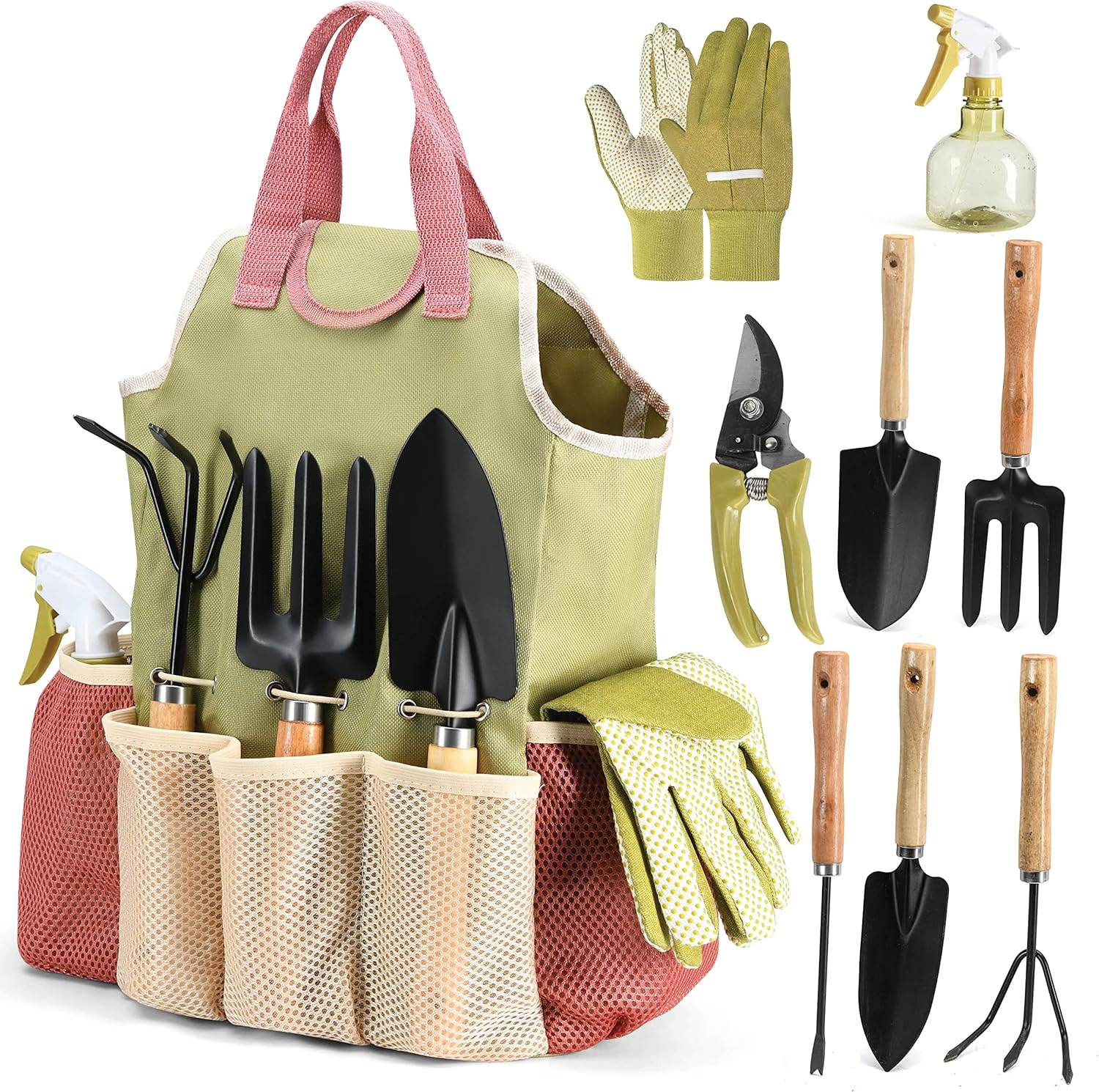
PLAY22 Gardening Tools Set of 10
A 10-piece hand tool set with a carry bag — trowel, transplanter, pruners and weeder. Suited to repotting and general container work.
View on Amazon ↗Indigenous peoples across these regions long understood what modern science, documented in resources like the Missouri Botanical Garden, confirms today: the fibrous roots and stems of Yucca species are rich in secondary plant metabolites known as saponins. The term "saponin" originates directly from the Latin word sapo, meaning soap.
From a biochemical standpoint, saponins are amphiphilic glycosides consisting of a fat-soluble (lipophilic) aglycone core—either a triterpenoid or a steroidal structure—attached to one or more water-soluble (hydrophilic) sugar moieties (such as glucose, galactose, or rhamnose). When these molecules are released from damaged plant cell membranes and dissolved in water, their dual-affinity structure lowers the liquid's surface tension from its baseline of approximately 72.8 mN/m down to less than 40 mN/m. When agitated mechanically, they trap air bubbles within micro-emulsions, creating a persistent, natural cleansing foam.
Evolutionarily, this biochemical mechanism acts as chemical armor. Because Yuccas evolved in nutrient-sparse deserts where water loss is critical, they cannot afford to lose stored carbohydrates to soil pathogens, wood-rotting fungi, or soil-dwelling insects. Saponins disrupt the cell membranes of invading fungal hyphae (Phytophthora and Fusarium species) and deter chewing insects by disrupting their digestive lining.
"Plants are not merely passive green decorations; they are sophisticated chemical factories producing intricate secondary metabolites that have sustained human civilization for millennia."
Historically, Native American tribes including the Navajo, Hopi, and Zuni harvested and processed species such as Yucca baccata (Banana Yucca) and Yucca elata (Soaptree Yucca). They peeled, grated, and pounded the fleshy roots in water to formulate natural shampoos for ceremonial washings, gentle soaps for woven textiles, and poultices for skin irritations.
2. Essential Environmental & Care Requirements
While knowing your Yucca possesses built-in cleaning chemistry is fascinating, maintaining a robust specimen inside your living space requires mimicking the environmental parameters of its native Mexican and Central American habitats. Yucca elephantipes is popular because it tolerates low ambient humidity, but it has zero tolerance for soggy roots, low light, or poorly drained substrates.
To establish an thriving indoor environment, adhere strictly to these key growth parameters:
- Light Intensity: Yuccas demand high solar irradiance. Provide a minimum of 6 to 8 hours of direct, unshaded sun daily. Position your plant within 2 feet (60 cm) of an unshaded south- or west-facing window. If indoor ambient light falls below 1,000 lux (approx. 100 foot-candles), the plant will quickly drop foliage and develop weak, elongated stems.
- Substrate Aeration: Standard houseplant potting mixes retain far too much moisture. Formulate a quick-draining matrix comprising 40% organic compost or leaf mold, 40% coarse pumice or perlite, and 20% coarse granite sand. The target pH range should sit between 6.0 and 7.5.
- Thermal Margins: Maintain daytime indoor temperatures between 65°F and 85°F (18°C to 29°C). Nighttime temperatures can safely drop to 50°F (10°C). Keep foliage out of direct cold drafts from air conditioning units or unsealed winter window frames.
- Container Selection: Always select heavy unglazed terracotta or ceramic pots equipped with multiple, unobstructed bottom drainage holes (at least 0.75 inches or 2 cm in diameter). Terracotta allows soil moisture to evaporate laterally through porous clay walls, protecting the root system.
💡 Pro-Tip: Yucca stems automatically grow toward light through asymmetrical auxin distribution (phototropism). If your indoor tree begins leaning toward your window, rotate the container 90 degrees clockwise every 7 to 10 days. This simple task ensures a balanced, straight trunk structure without placing mechanical stress on the primary root anchor.
3. Step-by-Step Cultivation, Feeding & Propagation
Proper watering and routine care for an indoor Yucca differ significantly from soft-stemmed foliage plants like Monstera or Pothos. Yuccas act more like true succulents; their thick trunks and roots hold substantial water reserves.
Step-by-Step Irrigation Protocol
- Assess Soil Hydration: Insert a clean 10-inch (25 cm) wooden dowel or moisture probe 3 to 4 inches (7.5 to 10 cm) deep into the potting mix near the center of the pot. Withdraw the stick. If soil particles adhere or the wood feels damp, withhold water for another 4 to 6 days. The top 50% of the container depth must dry out completely.
- Water Preparation: Fill your watering vessel 24 hours prior to application using filtered or tap water. Leaving water out allows dissolved chlorine to evaporate and brings the liquid temperature to room level (68°F to 72°F / 20°C to 22°C), preventing thermal shock to the root system.
- Execute Deep Drenching: Pour water evenly around the trunk circumference until liquid drains freely from the bottom exit holes. Continue until approximately 10% to 15% of the total applied volume runs through into the collection tray.
- Drainage Evacuation: Allow the pot to sit for 15 to 20 minutes to complete runoff. Drain the saucer completely; never leave your Yucca sitting in standing water.
- Seasonal Adjustment: Reduce watering frequency during the low-light winter dormancy period (typically November through February). Water only once every 4 to 6 weeks, depending on ambient room humidity and temperature.
Fertilization Schedule
Yuccas are light feeders. Apply a balanced liquid houseplant fertilizer with a nitrogen-phosphorus-potassium (NPK) ratio of 10-10-10, diluted to half-strength (approx. 250 ppm N), once every 4 to 6 weeks from April through September. Do not fertilize late in autumn or throughout winter, as unassimilated nutrient salts will build up in the root zone and cause foliage leaf-tip necrosis.
Propagation via Cane Cuttings and Offsets
Propagating Yucca elephantipes is straightforward using stem/cane cuttings or offset pups:
- Harvesting Cuttings: Using a sterilized, sharp pruning saw or bypass pruners, slice off a firm stem segment 6 to 12 inches (15 to 30 cm) long, or slice off side offset pups right at the junction of the main trunk.
- Callus Formation: Place the cut stems in a warm, shaded, well-ventilated location for 3 to 5 days. Allowing the raw tissue cut to callus over prevents fungal pathogens from entering the open stem wound.
- Substrate Planting: Dust the lower callus with a 0.1% Indole-3-butyric acid (IBA) rooting hormone powder. Insert the lower 2 to 3 inches (5 to 7.5 cm) of the cutting vertically into a pre-moistened mix of 50% coarse perlite and 50% sand.
- Rooting Conditions: Maintain the cutting at 70°F to 75°F (21°C to 24°C) under indirect bright light. Keep the rooting medium barely damp. Adventitious roots will form within 21 to 30 days.
⚠️ Important Caution: Never attempt to dig up, cut, or harvest roots from a healthy indoor Yucca plant to test or make soap at home. Removing primary root tissue causes severe root loss, opens large wounds to soil fungi like Pythium, and can quickly trigger trunk collapse and plant death.
4. Common Problems, Pests & Troubleshooting
Even resilient Yuccas can run into trouble indoors. Recognizing symptoms early helps you fix cultural issues before the plant suffers permanent structural damage. For broader plant healthcare standards, consult diagnostic resources provided by the NC State University Cooperative Extension.
Pathological & Physiological Issues
- Soft, Squishy Trunk Base: This is the primary symptom of advanced root rot caused by wet, anaerobic soil conditions. Pathogens attack damaged root tissues and travel up into the trunk's vascular system.
- Fix: Immediately stop watering. Unpot the plant, cut away black, decaying roots with disinfected shears, treat remaining roots with a 3% hydrogen peroxide wash, and repot into fresh, dry, high-porosity succulent soil in an unglazed terracotta pot.
- Lower Leaves Turning Yellow: If lower leaves yellow and dry out one by one while new growth emerges at the top crown, this is natural leaf senescence. As the plant grows taller, older lower foliage sheds to direct energy upward.
- Fix: Trim away brown, dry lower leaves close to the trunk using clean pruning shears. If multiple leaves yellow simultaneously and feel limp or mushy, reduce your watering frequency immediately.
- Etiolation (Spindly, Weak Growth): Thin, drooping leaves paired with elongated stem internodes indicate insufficient light.
- Fix: Relocate the plant to a brighter location, ideally within 2 feet of an unshaded south-facing window, or set up a 30-watt full-spectrum LED grow light 12 to 18 inches (30 to 45 cm) above the crown, running for 12 hours daily.
Pest Diagnostics & Eradication
Yuccas kept indoors can attract sap-sucking insects, especially in dry, heated indoor winter air:
- *Scale Insects (Coccidae):* Small, brown, hard-shelled bumps along the leaf midribs and stems. Scale insects pierce tissue walls to consume plant sap, excreting sticky honeydew.
- Eradication: Rub individual scale insects off using a cotton swab dipped in 70% isopropyl alcohol. For larger infestations, spray thoroughly with a 1% concentration horticultural oil or potassium salts of fatty acids (insecticidal soap) every 7 days for 3 consecutive weeks.
- *Mealybugs (Pseudococcidae):* White, cottony wax masses nesting in the tight leaf axils near the trunk growth tip.
- Eradication: Spray leaf axils with a mix of 1 quart of warm water, 1 teaspoon of mild liquid soap, and 1 tablespoon of rubbing alcohol. Repeat the application every 5 days until clear.
- *Spider Mites (Tetranychidae):* Fine webbing underneath leaf bases combined with stippled, faded yellow foliage foliage points to spider mites, which thrive in dry environments.
- Eradication: Wipe foliage clean with damp micro-fiber cloths and elevate ambient room relative humidity to 45%–50%. Apply a 0.5% neem oil solution thoroughly over the undersides of leaves twice a week.
5. Frequently Asked Questions
Can I harvest my indoor Yucca plant's roots to make soap or shampoo at home?
Technically, Yucca roots contain concentrated saponins that produce soapy suds when crushed in water. However, harvesting roots from an indoor houseplant will severely damage its root system, create severe stress, and invite lethal fungal rots like Phytophthora. Enjoy this chemical adaptation conceptually, and purchase sustainably harvested commercial Yucca schidigera root powder if you want to experiment with DIY herbal soaps.
Why are the lower leaves of my Yucca plant turning yellow and dropping off?
Gradual yellowing and dropping of lower foliage is a normal part of the plant's natural growth cycle. As the central trunk grows taller, older lower leaves shed to direct metabolic resources to upper new growth. However, if multiple leaves turn yellow rapidly, feel soft, or look pale, it is usually a sign of overwatering or inadequate light exposure.
How much light does a Yucca plant need to survive indoors?
Yuccas require bright, direct light to thrive long-term. They perform best when receiving at least 6 to 8 hours of direct sunlight daily near an unshaded south- or west-facing window. While a Yucca can survive in medium indirect light for several months, extended low-light exposure leads to drooping, thin leaves, pale colors, and eventual stem failure.
Is Yucca elephantipes toxic to household pets like cats and dogs?
Yes. According to ASPCA veterinary toxicology resources, all parts of Yucca elephantipes contain steroidal saponins that are toxic to cats, dogs, and horses if eaten. If ingested, saponins cause intestinal irritation, drooling, vomiting, diarrhea, and loss of coordination. Keep Yuccas out of reach of curious pets, or choose non-toxic houseplants if pets chew on foliage.
How do I fix a soft, squishy trunk on my indoor Yucca?
A soft or spongy trunk indicates advanced tissue decay caused by root rot from overwatering. If only a small upper branch is soft, cut it back to firm, pale green wood using a disinfected pruning saw. If the lower trunk near the soil line is soft, save the healthy top portion by taking a cane cutting: cut off firm upper stem sections, allow them to callus for 3 to 5 days, and root them in clean, sandy potting mix. The rotten base must be discarded.
📋 Table of Contents ▼ Click to expand
PlantSavvyWorld
Editorial team
PlantSavvyWorld is an independent botanical education project. Articles are drafted with AI assistance, then edited and checked against university extension services, botanical garden collections and other published horticultural sources.
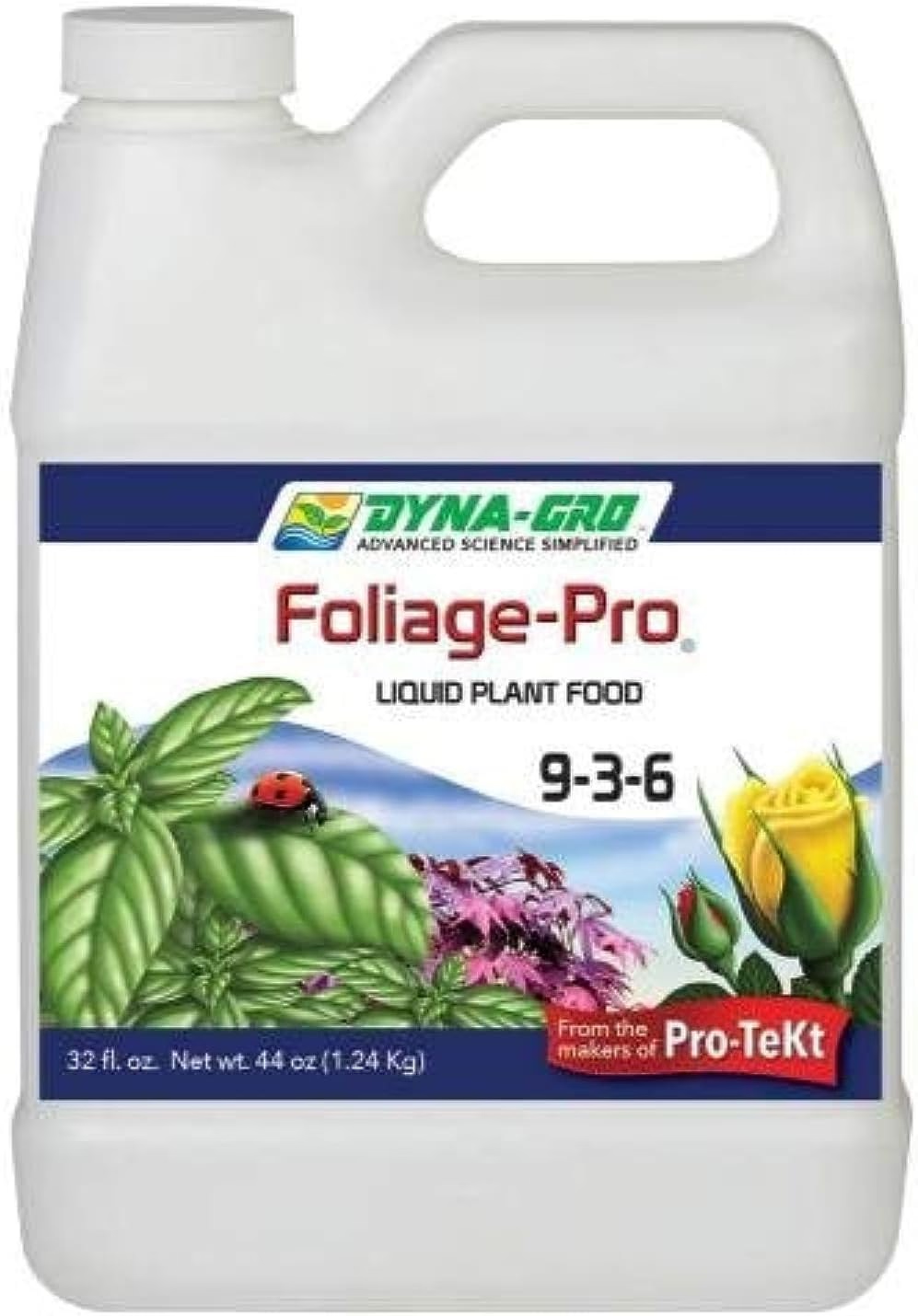
Organic Liquid Plant Food (FoxFarm)
A liquid organic plant food. Applied at label rate during active growth; most houseplants do better at reduced strength and not at all in winter.
View on Amazon ↗
PlantSavvyWorld
Editorial team
PlantSavvyWorld is an independent botanical education project. Articles are drafted with AI assistance, then edited and checked against university extension services, botanical garden collections and other published horticultural sources.
💬 Discussion