


Don't pour that "dirty" fish tank water down the drain!
Written with AI assistance, edited and checked against horticultural sources.
It was during one of my weekly aquarium water changes that the botanical connection clicked: I was pouring gallons of microbe-rich, nutrient-dense liquid gold straight down the household drain, while simultaneously feeding my houseplants synthetic chemical salts that burned their delicate root tips.
Repurposing "dirty" fish tank water is one of the most effective, ecologically sound plant care hacks in modern indoor horticulture. It bridges the gap between aquaponics and soil science, delivering bio-available nitrogen, potassium, phosphorus, and beneficial nitrifying bacteria straight to the rhizosphere.

PLAY22 Gardening Tools Set of 10
A 10-piece hand tool set with a carry bag — trowel, transplanter, pruners and weeder. Suited to repotting and general container work.
View on Amazon ↗1. Botanical Overview & Natural Habitat
To understand why aquarium water acts as a natural elixir for potted plants, we must look at how tropical species feed in their wild habitats. In the understory of rainforests or along riverbank ecosystems, plants rarely encounter isolated mineral salts or sterile tap water. Instead, their roots are continuously bathed in organic, nutrient-rich runoff populated by decaying organic matter, aquatic bio-waste, and dynamic colonies of beneficial microorganisms.
When fish eat and excrete waste, they produce un-ionized ammonia ($NH_3$) and ammonium ($NH_4^+$). In an established aquarium, beneficial nitrifying bacteria colonize the filter media and substrate. Gram-negative autotrophic bacteria, specifically Nitrosomonas, oxidize ammonia into nitrite ($NO_2^-$). Subsequently, Nitrobacter and Nitrospira species convert these toxic nitrites into nitrate ($NO_3^-$).
Nitrate is the exact ionic form of nitrogen that land plants absorb most efficiently through active transport in their root cell membranes. In addition to nitrogen, aquarium water accumulates potassium ($K^+$), dissolved phosphorus ($P$), trace amounts of iron ($Fe^{2+}$), calcium ($Ca^{2+}$), and magnesium ($Mg^{2+}$) from fish food breakdown and biological metabolic byproducts.
At the root zone (rhizosphere), gas exchange is just as critical as moisture. When potting mix becomes dense, muddy, or suffocated by standing drainage water, fine root hairs quickly suffer from hypoxia (oxygen deprivation), leaving the door wide open for opportunistic fungal pathogens like Pythium and Phytophthora. Conversely, an open, biologically active substrate enriched with aquarium water enables robust nutrient uptake and rapid vegetative vigor. The beneficial bacteria present in fish tank water actively outcompete harmful soil pathogens, creating a protective biological shield around vulnerable root architecture.
"Successful indoor gardening isn't a game of luck—it is the art of respecting root biology and working in harmony with natural physiological cycles."
When you hydrate your soil with aquarium water, you aren't just watering; you are inoculating the substrate with a living microbiome. This biological activity breaks down trapped organic matter within the soil mix, converting bound minerals into bio-available ions that accelerate cell division, increase chlorophyll density, and promote sturdy structural lignification.
2. Essential Environmental & Care Requirements
While aquarium water provides ideal organic nourishment, it must be paired with optimal environmental factors to achieve maximum botanical vigor. A plant cannot utilize increased nitrogen or beneficial microbes if it is light-starved or trapped in a suffocating, dense potting substrate.
To create an environment where your plants can fully metabolize aquarium-derived nutrients, maintain parameters according to the evidence-based standards outlined below:
Environmental stress directly impacts how efficiently a plant absorbs nutrients. For example, cold drafts cause stomata to close, halting transpirational pull and causing liquid to linger around the root zone for too long. According to extensive research published by the University of Florida IFAS Extension, maintaining optimal root zone temperature and physical soil porosity is essential for preventing root pathogen infection and promoting root hair elongation.
If your indoor climate experiences extreme seasonal shifts, adjust your aquarium water application rate. During lower light periods in late autumn and winter, plant metabolic activity slows down by 40% to 60%, requiring a reduction in both watering volume and nutrient frequency.
3. Step-by-Step Cultivation, Feeding & Propagation
To safely transition your houseplants to an aquarium-water feeding routine without disturbing their physiological equilibrium, follow this systematic, multi-step protocol:
- Harvest Water During Routine Maintenance: Perform your weekly or bi-weekly 10% to 20% aquarium water change. Siphon the water directly from the lower third of the tank, pulling up loose detritus from the gravel or substrate where beneficial microbes and settled nutrients concentrate. Collect the water in a clean, chemical-free bucket.
- Verify Water Safety Parameters: Ensure your aquarium water has not been chemically treated with copper-based medications, anti-fungal treatments, synthetic algae removers, or high doses of aquarium salt (sodium chloride). Test the water temperature to confirm it rests between 68°F and 75°F (20°C to 24°C).
- Optimize Container Aeration: Before applying the nutrient-dense water, inspect your plant containers. Ensure containers have generous drainage holes and amend standard potting mix with 30% coarse perlite, pumice, or fine orchid bark to prevent substrate compaction.
- Stabilize Climate & Micro-Environment: Position your plants at least 3 feet (0.9 meters) away from cold winter drafts, air conditioning vents, and forced-air heating registers to prevent humidity shock and rapid transpiration desiccation.
- Execute a Deep-Drench Hydration: Slowly pour the room-temperature fish tank water over the surface of the potting mix until it evenly saturates the entire root mass. Continue pouring until roughly 10% to 20% of the applied volume drains freely out of the bottom drainage ports. This flushes residual mineral salts while depositing fresh nitrifying microbes.
- Drain Saucers Promptly: Allow the pot to drain completely for 10 to 15 minutes. Empty all standing water from the saucer or catch-tray immediately.
- Utilize for Water Propagation: Pour fresh, well-aerated fish tank water into propagation valls or glass jars when rooting leafy stem cuttings (such as Pothos, Philodendron, or Tradescantia). The natural nitrates and trace hormones present in the water induce adventitious root growth significantly faster than plain tap water.
💡 Pro-Tip: Always hydrate with room-temperature water; icy tap water induces thermal root shock and halts nutrient absorption for hours. Fish tank water naturally sits at ideal room temperature, making it instantly bio-available to sensitive root systems without causing vascular constriction.
⚠️ Important Caution: Never let pots stand in saucer runoff water for more than fifteen minutes; stagnant water creates anaerobic conditions that rapidly cause root rot. Additionally, if your fish tank has recently been treated with synthetic fish medications or salt treatments exceeding 2.0 ppt salinity, discard that water down the drain rather than using it on your indoor plants.
4. Common Problems, Pests & Troubleshooting
While fish tank water is an exceptional natural fertilizer, improper application or underlying biological imbalances can cause unexpected issues. Use this diagnostic matrix to troubleshoot common plant reactions:
Root Rot and Hypoxia (Pythium Infection)
If leaves begin to turn yellow, droop despite wet soil, or feel soft at the soil line, your potting mix is retaining too much moisture, leading to anaerobic conditions. Aquarium water contains living organisms; if poured into stagnant, non-draining soil, those microbes will quickly deplete available oxygen, favoring opportunistic fungi like Pythium.
- Solution: Immediately unpot the plant, trim away mushy black root tissue with sterilized shears, and repot into a fresh mix containing at least 30% perlite or pumice. Resume aquarium water applications only when the top 2 inches (5 cm) of soil have fully dried.
Fungus Gnats (Bradysia spp.)
Fungus gnats thrive in damp organic substrate enriched with decomposing biological matter. If you notice tiny black flies darting around your plant collection after switching to aquarium water, the top layer of soil is remaining wet for too long.
- Solution: Allow the top 2 inches (5 cm) of potting mix to dry out thoroughly between waterings. Apply a thin 0.5-inch (1.3 cm) layer of coarse sand or horticultural grit over the top of the soil to prevent adult flies from laying eggs. For active infestations, treat the soil with biological larvicides like Bacillus thuringiensis israelensis (BTI). The educational resources at the Royal Horticultural Society (RHS) provide comprehensive guidance on biological controls for indoor plant pests without relying on harsh chemical sprays.
Surface Algae Growth
Occasionally, a thin layer of harmless green algae may form on the surface of your potting soil or terracotta pots. This happens when light hits high-nitrate moisture on the surface layer.
- Solution: Gently scuff the top 0.5 inches (1.3 cm) of soil with a hand fork to break up the algae layer and improve surface air exchange. Top-dress the pot with coarse pine bark chips to block direct light from reaching the damp soil surface.
5. Frequently Asked Questions
Can I use dirty fish tank water on all my indoor houseplants?
Yes! It is exceptionally effective for Monsteras, Philodendrons, Pothos, Snake Plants, Ferns, Ficus, and general tropical foliage collections. The low-dosage organic nature of aquarium wastewater makes it safe for almost all terrestrial species. However, avoid using water from brackish tanks or marine salt water aquariums on standard houseplants, as the sodium content will cause severe osmotic burn and leaf drop.
Will using aquarium water make my indoor plants or living room smell bad?
No. Fresh, healthy aquarium water from a well-maintained freshwater tank has a clean, earthy scent similar to rain on fresh soil. As long as your pots have adequate drainage and you do not allow water to pool endlessly in saucer trays, the water absorbs cleanly into the soil substrate within minutes without leaving any residual fishy odors in your home.
Can I use fish tank water if I recently treated my fish with medications?
No. If you have added chemical treatments—such as copper sulfate, formalin, malachite green, methylene blue, or antibiotics—to your aquarium, do not use that water on your plants. Copper and synthetic antibacterial agents can cause acute phytotoxicity, destroy beneficial soil mycorrhizae, and stunt plant growth. Wait until you have performed several water changes and cleared the tank with activated carbon filtration before resuming plant irrigation.
How quickly will I see visible improvements in my plants?
Most foliage houseplants respond within 7 to 14 days with noticeable leaf turgidity, deeper emerald color, and active apical shoot emergence. Plants absorbing natural nitrates demonstrate rapid leaf expansion during their active growth phases because nitrogen is the primary structural building block for chlorophyll synthesis and vegetative cell expansion.
When is the best time of year to implement this watering routine?
Early spring through mid-summer represents the active metabolic window when plants can rapidly utilize increased light and fresh nutrients. During winter dormancy, when light levels decrease and temperatures drop, reduce your hydration frequency accordingly and alternate between aquarium water and plain settled water to avoid over-saturating dormant root zones.
Have you tried this technique with your own houseplants? Share your results with our global grower community on the Community Forum, explore more expert guides on Plant Tips, or visit our Home Page for comprehensive plant care archives.
📋 Table of Contents ▼ Click to expand
PlantSavvyWorld
Editorial team
PlantSavvyWorld is an independent botanical education project. Articles are drafted with AI assistance, then edited and checked against university extension services, botanical garden collections and other published horticultural sources.
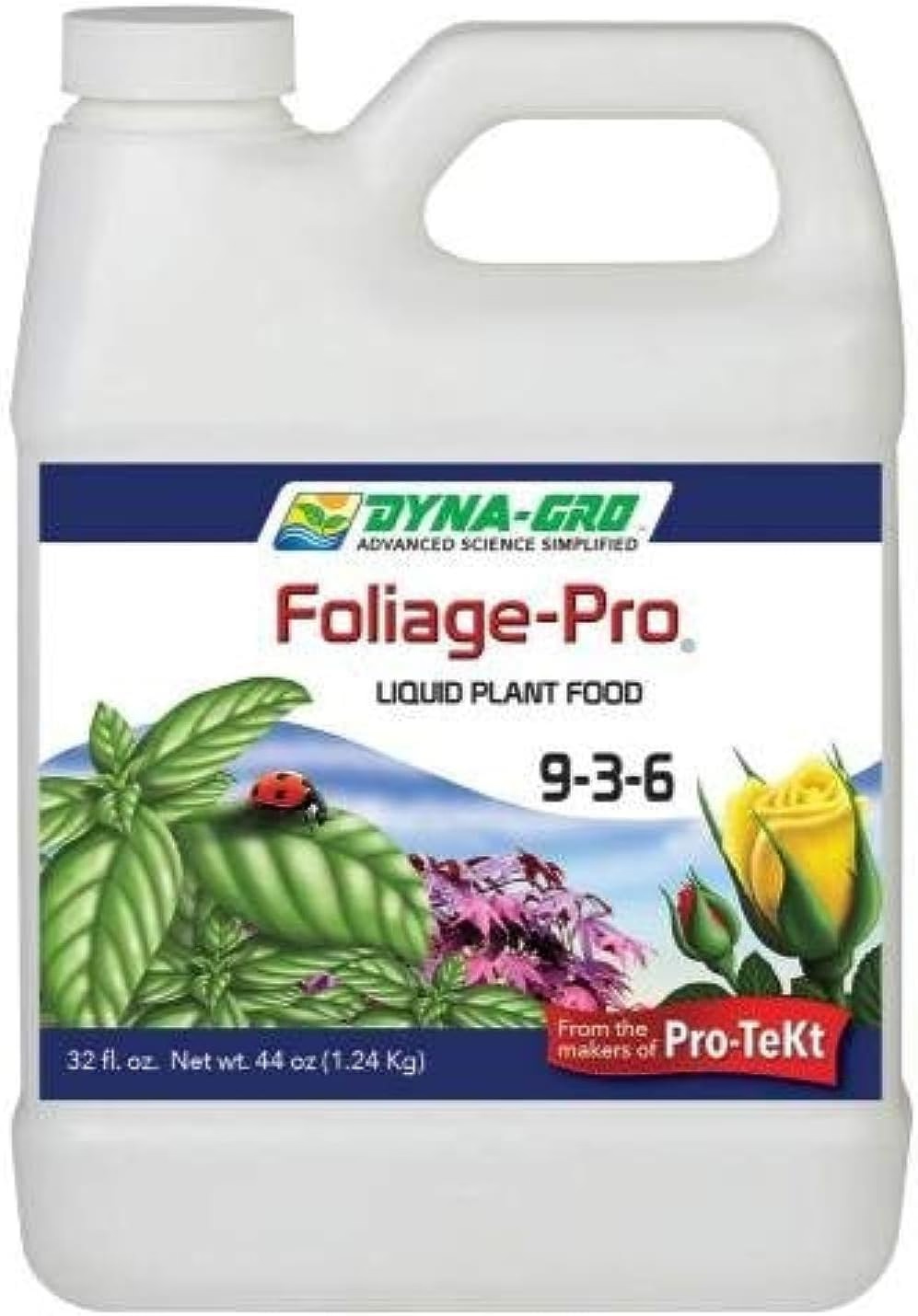
Organic Liquid Plant Food (FoxFarm)
A liquid organic plant food. Applied at label rate during active growth; most houseplants do better at reduced strength and not at all in winter.
View on Amazon ↗
PlantSavvyWorld
Editorial team
PlantSavvyWorld is an independent botanical education project. Articles are drafted with AI assistance, then edited and checked against university extension services, botanical garden collections and other published horticultural sources.
💬 Discussion