

Holiday Plants Care Guide: How to Force Poinsettias to Rebloom & Holiday Cacti ID
Written with AI assistance, edited and checked against horticultural sources.
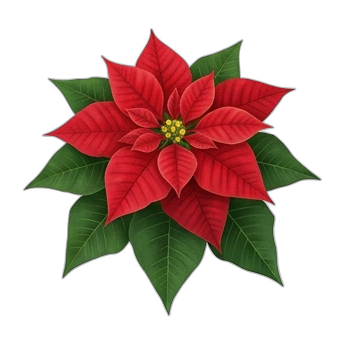
Welcome back to PlantSavvyWorld! Poinsettias require careful management regarding the coming holidays to see vibrant colors emerge. Today, this guide focuses on two of the most iconic holiday stars: the Poinsettia and the Holiday Cactus.
Let’s dive into the wonderful world of holiday botanicals!
1. Botanical Overview & Natural Habitat
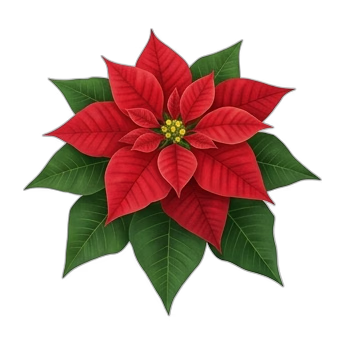
Our first star is the Poinsettia, scientifically known as Euphorbia pulcherrima. Despite its common name and festive association, it’s not a true flower. Those dazzling "petals" are actually modified leaves called bracts, which surround the small, inconspicuous yellow flowers at the center. Native to the tropical forests of Mexico, Euphorbia pulcherrima thrives in warm, humid environments with filtered sunlight. In its natural habitat, it can grow into a large shrub or small tree, reaching heights of up to 10 to 13 feet (3 to 4 meters). The vibrant colors, most commonly red but also found in shades of pink, white, and even a marbled cream, are a result of photoperiodism – their response to the length of daylight.
The other holiday darlings we'll discuss are the Holiday Cacti, a group belonging to the genus Schlumbergera. These are epiphytic or lithophytic cacti, meaning they naturally grow on other plants or rocks in the rainforests of Brazil. Unlike their desert-dwelling cousins, Schlumbergera species are adapted to humid, shady conditions. They have flattened, segmented stems that resemble leaves and produce stunning, tubular flowers, typically in shades of pink, red, orange, and white. Common varieties include Thanksgiving Cactus (Schlumbergera truncate), Christmas Cactus (Schlumbergera x buckleyi), and Easter Cactus (Schlumbergera gaertneri), though often they are collectively referred to as "Holiday Cacti" due to their similar blooming periods and care needs. The key to identifying them lies in the shape of their stem segments and the edge of these segments. Thanksgiving Cacti have pointed or claw-like notches, while Christmas Cacti have more rounded, scalloped edges. Easter Cacti have more sharply serrated edges.
A Quick Comparison Table
| Feature | Poinsettia (Euphorbia pulcherrima) | Holiday Cactus (Schlumbergera spp.) |
|---|---|---|
| Origin | Tropical forests of Mexico | Rainforests of Brazil |
| Growth Habit | Shrub or small tree | Epiphytic or lithophytic |
| "Flower" Parts | Modified leaves (bracts) surrounding small flowers | Tubular flowers emerging from stem tips |
| Light Needs | Bright, indirect light; short-day plant for bract color | Bright, indirect light; requires specific day/night cycles for blooming |
| Watering Needs | Keep soil consistently moist but not waterlogged | Allow soil to dry slightly between waterings |
| Temperature | Prefers 65-70°F (18-21°C) during day, cooler at night; sensitive to drafts | 65-75°F (18-24°C) is generally ideal; can tolerate cooler temperatures |
2. Essential Environmental & Care Requirements
Achieving that spectacular holiday display hinges on providing the right environmental conditions. Both Poinsettias and Holiday Cacti have specific needs that, once understood, make them remarkably rewarding to grow.
For Poinsettias, the magic word is photoperiodism. These plants are "short-day" plants, meaning they require a specific period of uninterrupted darkness to trigger the development of their colorful bracts.
- Light: During the day, Poinsettias thrive in bright, indirect sunlight. Think of a south or west-facing window where they receive plenty of light but are shielded from harsh, direct midday sun. Too little light will result in leggy growth and poor color development. Too much direct sun can scorch the leaves.
- Temperature: Poinsettias are tropical plants and prefer consistent warmth. Ideal daytime temperatures are between 65-70°F (18-21°C). They are quite sensitive to cold and drafts, so keep them away from leaky windows, heating vents, and doors that open frequently. Nighttime temperatures can be slightly cooler, around 60-65°F (15-18°C), but avoid dropping below 55°F (13°C).
- Watering: The key to Poinsettia watering is consistency. They like their soil to be kept evenly moist but not soggy. Allow the top inch (2.5 cm) of soil to dry out before watering thoroughly. It’s crucial to discard any excess water that collects in the saucer to prevent root rot. Wilting is a sign they are too dry, while yellowing leaves can indicate overwatering.
- Humidity: As tropical natives, Poinsettias appreciate a bit of humidity. You can increase humidity by placing the pot on a pebble tray filled with water (making sure the pot isn't sitting directly in the water) or by misting the leaves lightly, especially in dry indoor environments.
Holiday Cacti, on the other hand, have slightly different needs, though they also benefit from careful attention to light and water.
- Light: These cacti prefer bright, indirect light year-round. Direct sunlight, especially harsh afternoon sun, can scorch their delicate stems. An east-facing window is often ideal, or a location that receives bright light for most of the day but is filtered during the hottest hours. For encouraging bloom on Holiday Cacti, a period of shorter days and longer nights is also essential, similar to Poinsettias but often starting a bit earlier.
- Temperature: Holiday Cacti are also happy in average home temperatures, typically between 65-75°F (18-24°C). They can tolerate cooler temperatures, and a slight drop in nighttime temperature (around 55-65°F or 13-18°C) can actually help encourage blooming. Like Poinsettias, they should be protected from extreme cold and drafts.
- Watering: Holiday Cacti have a more relaxed watering schedule than Poinsettias. They prefer to dry out slightly between waterings. In the growing season (spring and summer), water thoroughly when the top 1-2 inches (2.5-5 cm) of soil feel dry. During their dormant period (late fall and winter), reduce watering significantly, allowing the soil to dry out more between waterings. Overwatering is a common mistake and can lead to root rot, which is especially problematic for cacti.
- Humidity: While not as demanding as Poinsettias, Holiday Cacti do appreciate some humidity, especially if you live in a dry climate. Misting occasionally or using a pebble tray can be beneficial.
Essential Care Parameters: A Quick Reference
| Parameter | Optimal Condition | Common Mistake | Why It Matters |
|---|---|---|---|
| Light (Poinsettia) | Bright, indirect light (10 hrs/day) | Too little light, or scorching direct sun | Affects bract color intensity and overall plant health. |
| Darkness (Poinsettia) | 14 hours of uninterrupted, pitch-black darkness (8-10 weeks) | Light exposure during the dark period | Essential for triggering bract development and color. |
| Temperature (Both) | 65-70°F (18-21°C) daytime; slightly cooler at night | Exposure to drafts, extreme heat, or cold | Cold snaps can damage leaves and flowers; extreme heat can stress the plant. |
| Watering (Poinsettia) | Consistently moist soil, top inch dry before watering | Overwatering or allowing to dry out completely | Prevents root rot and wilting, ensuring consistent moisture for bract development. |
| Watering (Holiday Cactus) | Soil dries slightly between waterings | Overwatering, especially during dormancy | Prevents root rot; crucial for allowing the plant to rest and prepare for blooming. |
| Humidity (Both) | Moderate to high (40-60%) | Very dry air | Mimics their native environment, preventing leaf tip browning and promoting overall health. |
3. Step-by-Step Cultivation, Feeding & Propagation
Successfully nurturing these holiday beauties involves a consistent approach to their care, from initial setup to encouraging future blooms and even propagating new plants.
Forcing Poinsettias to Rebloom
The existing article provided a fantastic starting point for forcing poinsettias to rebloom. Let's expand on that to make it a robust protocol. This process requires dedication and precision, but the reward of seeing those vibrant colors return is absolutely worth it!
The Photoperiodic Protocol for Poinsettias:
- Timing is Everything (Early October): Begin the process approximately 8-10 weeks before you want your poinsettia to display color. This typically means starting around October 1st.
- Darkness is Key (Daily): For the next 8-10 weeks, your poinsettia must receive 14 hours of uninterrupted, complete darkness every single night. This means from approximately 6:00 PM to 8:00 AM. The darkness must be absolute – even a brief exposure to artificial light can disrupt the process. A closet, a dark room, or covering the plant with a light-proof box are all viable options. Ensure there are no cracks where light can penetrate.
- Light is Essential (Daily): During the remaining 10 hours of daylight, the plant needs bright, indirect sunlight. Position it in a location where it receives plenty of light, but avoid direct, harsh afternoon sun.
- Temperature Management: Maintain consistent daytime temperatures between 65-70°F (18-21°C). Cooler nighttime temperatures are acceptable, ideally around 60-65°F (15-18°C), but avoid any temperature drops below 55°F (13°C).
- Watering During Induction: Continue to water your poinsettia as needed, keeping the soil consistently moist but not waterlogged. Allow the top inch (2.5 cm) of soil to dry out before watering.
- Fertilizing: During the growing season (spring and summer), a balanced liquid fertilizer (e.g., 20-20-20) applied every 2-4 weeks will encourage healthy foliage growth. However, stop fertilizing entirely once you begin the short-day treatment in October. Fertilizing during this sensitive period can interfere with bract development.
- Observation: By late November, you should begin to see the bracts changing color and developing their brilliant hues. The plant will then hold its color throughout the holiday season.
⚠️ Important Caution: The absolute darkness is non-negotiable for successful reblooming. Even a small amount of ambient light can prevent the bracts from developing their color. Be meticulous about this crucial step.
Holiday Cactus Care & Encouraging Blooms
Holiday cacti bloom naturally in response to shorter days and cooler temperatures, typically in late fall or early winter. To encourage a spectacular display, follow these guidelines:
Holiday Cactus Blooming Protocol:
- Short Day/Long Night Treatment (Late September/Early October): Similar to poinsettias, Holiday Cacti require a period of shorter days and longer nights to trigger blooming. Starting around late September or early October, expose your plant to at least 13-14 hours of uninterrupted darkness per day for about 6-8 weeks. This can be achieved by placing the plant in a dark closet or covering it with a dark cloth from approximately 5:00 PM to 7:00 AM.
- Daylight Hours: During the remaining daylight hours, provide bright, indirect light.
- Temperature: A slight drop in nighttime temperature to 55-65°F (13-18°C) during this induction period can further encourage blooming, though it's not strictly necessary if the day/night light cycle is maintained.
- Watering During Induction: Reduce watering during this period, allowing the soil to dry out more thoroughly between waterings. This mimics their natural drier period before flowering.
- Fertilizing During Induction: If you’ve been fertilizing your Holiday Cactus during its growing season (spring/summer), reduce or stop fertilizing altogether during the short-day treatment to allow the plant to focus its energy on flowering.
- Post-Induction Care: Once you observe flower buds forming, you can return the plant to its normal light and watering schedule. Avoid moving the plant or disturbing the developing buds, as this can cause them to drop.
Propagation
Both Poinsettias and Holiday Cacti can be propagated, allowing you to share the festive spirit or expand your own collection.
Propagating Holiday Cacti: This is generally the easiest of the two to propagate.
- Take Cuttings: In the spring or early summer, select a healthy stem segment. Gently twist or cut off one or two segments.
- Allow to Callus: Leave the cut end of the segment exposed to the air for a few days to a week until a callus (a dry, scab-like layer) forms. This prevents rot.
- Plant the Cutting: Insert the callused end into a pot filled with a well-draining potting mix, such as a cactus/succulent blend. You can plant 2-3 segments per small pot.
- Water Sparingly: Water very lightly initially, and then only when the soil is dry.
- Provide Light: Place the pot in bright, indirect light.
- Rooting: Roots should form within a few weeks. Once the cutting shows new growth, it’s considered established and can be treated like a mature plant.
Propagating Poinsettias: While more challenging than Holiday Cacti, Poinsettias can be propagated from stem cuttings, ideally in late spring or early summer after the plant has finished flowering.
- Take Cuttings: Select healthy, non-flowering stems and cut them into 4-6 inch (10-15 cm) lengths, ensuring each cutting has at least 2-3 nodes.
- Remove Lower Leaves: Remove the leaves from the bottom half of the cutting.
- Handle the Sap: Poinsettia sap can be irritating. Wear gloves and work in a well-ventilated area. You can dip the cut end in cool water to stop the sap flow.
- Apply Rooting Hormone: Dip the cut end in rooting hormone powder to encourage faster and more successful rooting.
- Plant Cuttings: Insert the cuttings into pots filled with a moist, well-draining potting mix (a peat and perlite blend works well). You can plant several cuttings per pot.
- Provide Warmth and Humidity: Cover the pots with a clear plastic bag or place them in a propagator to maintain high humidity. Keep them in a warm location with bright, indirect light. Temperatures around 70-80°F (21-27°C) are ideal.
- Watering: Keep the soil consistently moist but not soggy.
- Rooting: Roots should develop in 4-6 weeks. Once established, remove the plastic covering and gradually acclimate them to normal household humidity.
💡 Pro-Tip: For both Poinsettias and Holiday Cacti, the key to long-term success and encouraging repeat blooms is to provide a period of reduced watering and fertilization during their dormancy, typically in late fall. This rest period allows them to store energy and prepare for their next flowering cycle.
4. Common Problems, Pests & Troubleshooting
Even with the best care, plants can sometimes encounter issues. Understanding common problems and their solutions can save your holiday decorations.
Poinsettia Problems:
- Leaf Drop: This is the most common issue and can be caused by several factors:
- Temperature Stress: Sudden changes in temperature, drafts, or exposure to cold (below 55°F/13°C) will cause leaf drop.
- Watering Issues: Both overwatering and underwatering can lead to leaf drop. Ensure you are watering correctly and consistently. Yellowing leaves followed by drop often signal overwatering, while wilting and dry, crispy leaves point to underwatering.
- Low Humidity: Dry air can cause leaf edges to turn brown and drop.
- Light Stress: Insufficient light can also contribute to leaf drop and poor bract color.
- Yellowing Leaves: Usually a sign of overwatering, but can also be due to nutrient deficiencies or insufficient light. Check soil moisture first.
- Leggy Growth: This occurs when the plant doesn't receive enough light. It will have long stems with few leaves.
- White Sap: The milky sap exuded from cut stems is a natural characteristic of Euphorbia. It can be an irritant, so wear gloves and wash hands after handling.
Holiday Cactus Problems:
- Rotting Stems/Roots: This is almost always due to overwatering. Ensure the soil dries out between waterings and that your pot has adequate drainage.
- Bud Drop: Can be caused by sudden temperature changes, drafts, inconsistent watering, or moving the plant during bud formation.
- Stunted Growth: May be due to insufficient light, lack of nutrients, or being root-bound.
- Soft, Mushy Stems: A severe sign of overwatering and root rot.
Common Pests:
Both Poinsettias and Holiday Cacti can be susceptible to common houseplant pests.
- Spider Mites: Tiny, reddish-brown mites that spin fine webs. They thrive in dry conditions. Look for stippling on leaves and fine webbing.
- Solution: Increase humidity, wash plants thoroughly with water, and use insecticidal soap or neem oil.
- Mealybugs: Small, white, cottony insects that cluster in leaf axils and on stems.
- Solution: Dab with rubbing alcohol using a cotton swab, wash the plant, and use insecticidal soap or neem oil.
- Scale Insects: Small, immobile bumps that attach to stems and leaves.
- Solution: Scrape them off with your fingernail or a soft brush. Treat with horticultural oil or insecticidal soap.
💡 Pro-Tip: Regularly inspect your plants for any signs of pests or disease. Early detection is key to successful treatment. A gentle shower with plain water can help dislodge many common pests and also boost humidity.

5. Frequently Asked Questions
How do I keep my poinsettia alive after the holidays?
Keeping a poinsettia alive and thriving after the festive season requires a shift in focus from bloom production to healthy foliage growth. Once the bracts begin to fade and drop (usually by late January or February), prune the plant back by about half to encourage bushier growth. Reduce watering and stop fertilizing. Move it to a location with bright, indirect light and maintain average home temperatures. Begin regular watering and fertilizing again in spring as new growth appears.
My holiday cactus didn't bloom this year. What went wrong?
The most common reason for a holiday cactus not blooming is a lack of a proper "short-day" treatment. They need a period of at least 6-8 weeks of short days (13-14 hours of darkness) and longer nights, often combined with cooler temperatures, to initiate flowering. Ensure your plant received this period of darkness starting in late September or early October. Other factors include stress from inconsistent watering, temperature extremes, or being repotted too late in the season.
Can I leave my poinsettia outside in the summer?
Yes, you absolutely can! Poinsettias benefit greatly from spending the summer outdoors in a location protected from harsh, direct sunlight and strong winds. They should be in a spot with bright, indirect light. This outdoor period is excellent for them to build strength and grow vigorously. Bring them indoors before the first frost, typically in early to mid-fall. If you plan to rebloom them, this is the perfect time to start the short-day treatment once they are back inside.
How often should I repot my holiday cactus?
Holiday cacti generally prefer to be slightly root-bound, so frequent repotting isn't necessary. Repotting every 2-3 years is usually sufficient. The best time to repot is in the spring, after they have finished blooming and before they enter their active growing season. Choose a pot that is only one size larger than the current one, and use a well-draining cactus or succulent potting mix. Ensure the pot has drainage holes.
Caring for holiday plants can be an incredibly rewarding experience, transforming them from fleeting decorations into cherished additions to your home year after year. With a little understanding of their specific needs – the precise photoperiodism of poinsettias and the blooming triggers of holiday cacti – you can enjoy their vibrant beauty throughout the seasons.
For more in-depth gardening advice and resources, I highly recommend exploring the expertise at Penn State Extension — Gardening and the RHS Gardening Advice website.
Happy growing, and may your holidays be filled with botanical beauty!
Tags:
🌿 Related Plants You Might Like
PlantSavvyWorld
Editorial team
PlantSavvyWorld is an independent botanical education project. Articles are drafted with AI assistance, then edited and checked against university extension services, botanical garden collections and other published horticultural sources.